
PL. —Cosmos bipinnatusBotanical illustration — drop image
Peak bloom windowZone 6b · frost-offset weeks
Winter
Not in bloom
Spring
In bloom
Summer
Peak bloom
Fall
Peak bloom
Peak bloom
In bloom
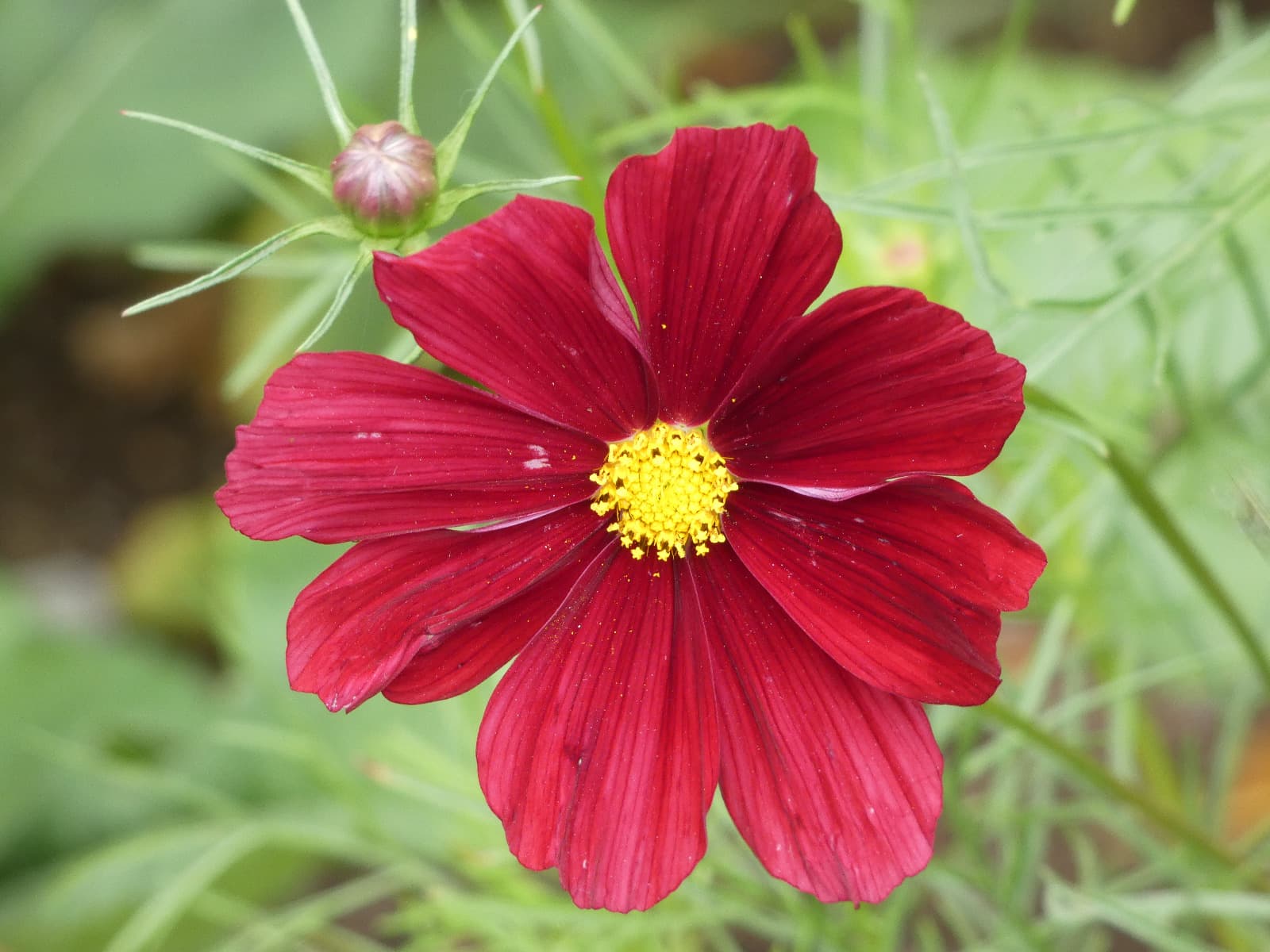 'Rubenza' — opens brick-red and darkens to deep maroon as each bloom ages, giving a two-tone effect across the same plant. Photo: SpicyPhoto, CC0.
Background
Cosmos is the easiest cut flower in the garden — direct sow, ignore, harvest. Unlike most cutting flowers, it actually performs better in poor soil: rich soil pushes leafy growth at the expense of blooms. Sow successively from last frost through midsummer for non-stop colour.
The ferny, fine foliage is beautiful as filler on its own. Self-seeds prolifically; let a few go to seed at the end of the season and you'll likely have volunteers the following spring.
Good companions
Care guide
SunFull sun
WaterLow — drought tolerant once established
SoilPoor to average; too rich = lots of foliage, few flowers
Spacing12–18 inches
Height3–4 feet
Zone2a – 11b
Direct sow
winter
sowSoak seeds overnight in late winter before starting them indoors
spring
sowDirect sow after last frost in average to poor soil — soak seeds overnight first
summer
cutCut frequently to prevent self-seeding and prolong bloom
fall
watchLeave a few seed heads for self-seeding volunteers next year
Pests
Aphids
Aphididae →Symptoms
Clusters of small soft insects on new growth and flower buds.
Treatment
Knock off with a strong jet of water. Ladybirds and lacewings are natural predators. Insecticidal soap as last resort.