
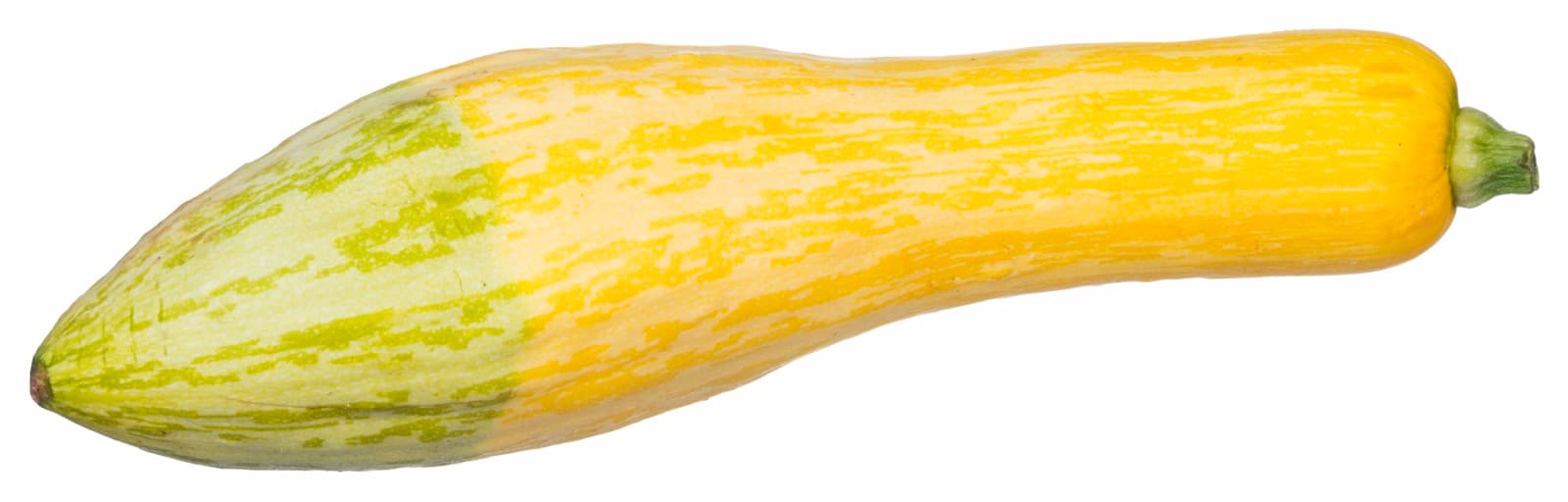
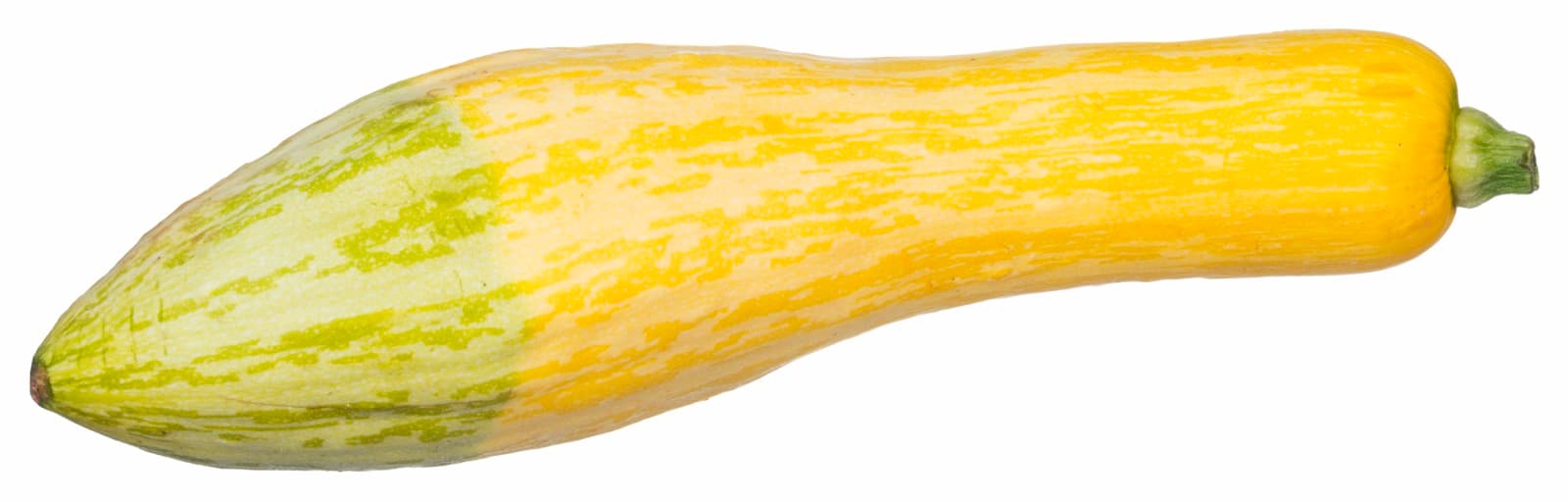
Summer squash - the yellow straightneck and crookneck types - is grown for immature fruit picked while the skin is still tender and the seeds soft, unlike winter squash, which is left to mature and cure. It is one of the fastest and most productive crops in the garden, going from seed to harvest in about 50–60 days on a compact bush plant. A few plants will out-produce most households, so two or three is plenty.
The single rule that matters is to pick early and pick often: harvest fruit at six to eight inches, every day or two at peak season, and the plant keeps setting more. Leave a fruit to swell into a marrow and production stalls. Direct sow after the last frost once the soil has warmed, keep the soil evenly moist, and watch the base of the stems for squash vine borer and the leaves for powdery mildew as summer wears on. Succession sow once more in midsummer to replace plants that tire or fall to borers.
Powdery mildew
White or grey powdery coating on leaves - usually starting on older growth in humid conditions or when nights cool.
Improve air circulation by thinning plants. Apply neem oil or potassium bicarbonate spray at first sign. Avoid overhead watering.