
 Batten Blooms
The Clematis Growing Guide
Almost everything that goes wrong with a clematis comes down to one question: which of the three pruning groups is it? Each group flowers on different wood and wants the knife at a different time of year - cut the wrong one in winter and you lose the season’s flowers. Here is how to tell them apart and prune each on time, wherever you garden.
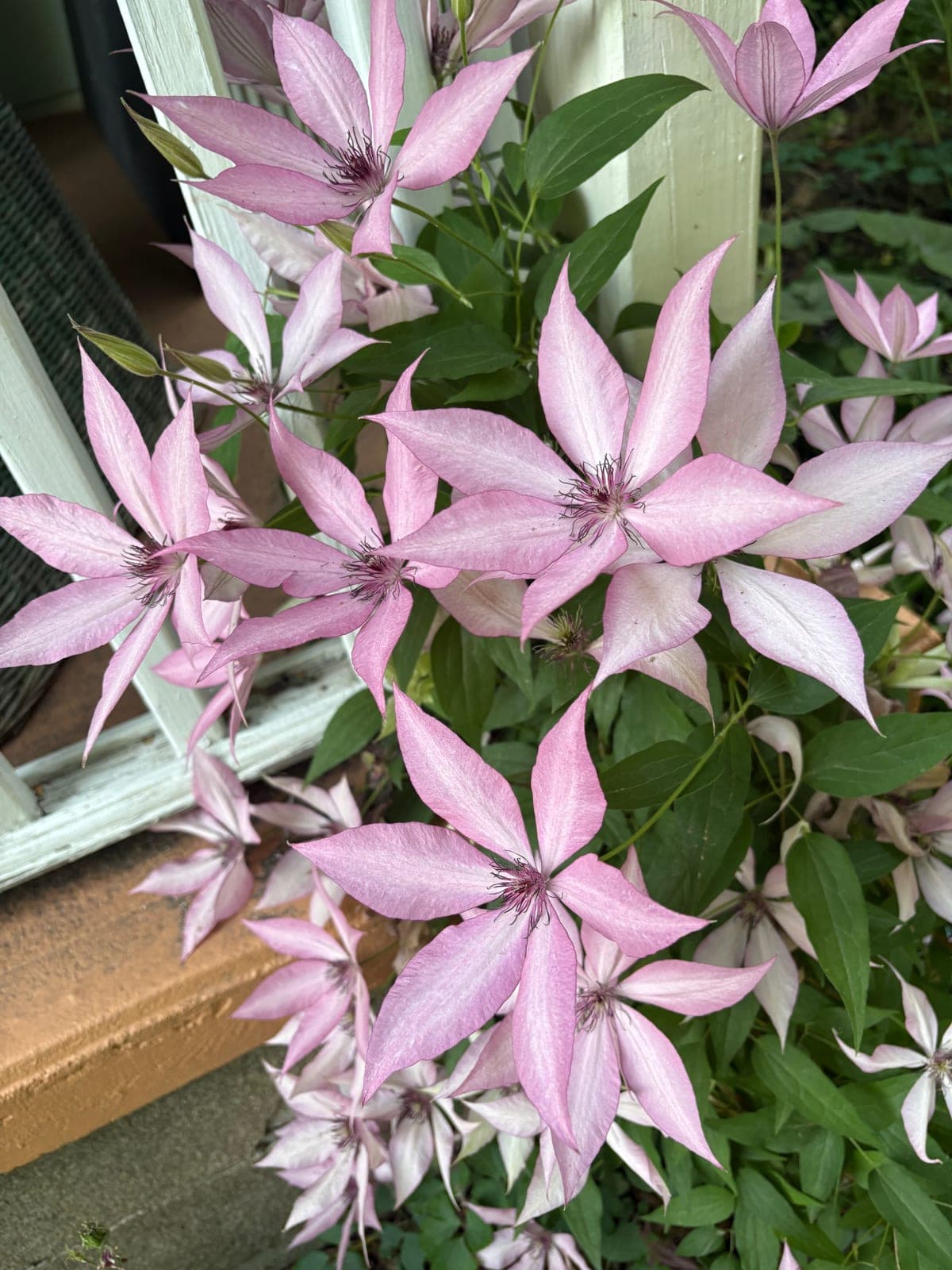
Old wood vs new wood
A clematis either flowers on stems it grew last year (old wood) or on growth it makes fresh this season (new wood) - or both. That single fact decides everything about when you can safely cut it.
Timing is everything
Right cut, wrong week and you still lose the flowers. Each group has its own window - relative to your frost dates, not the calendar - so the correct week in a cold zone differs from a mild one.
When in doubt, wait
Not sure of the group? Leave it for a year and watch when it flowers: early on old stems points to Group 1 or 2; late on fresh growth points to Group 3. Then prune to match.
Find your group, prune by your frost dates
Each pruning window below is anchored to your last spring frost - never a fixed date - so it works wherever you garden. Add your ZIP to translate the windows into your own months and see which one is open now.
Every window is timed to your frost dates, so the right week here is a different week elsewhere.
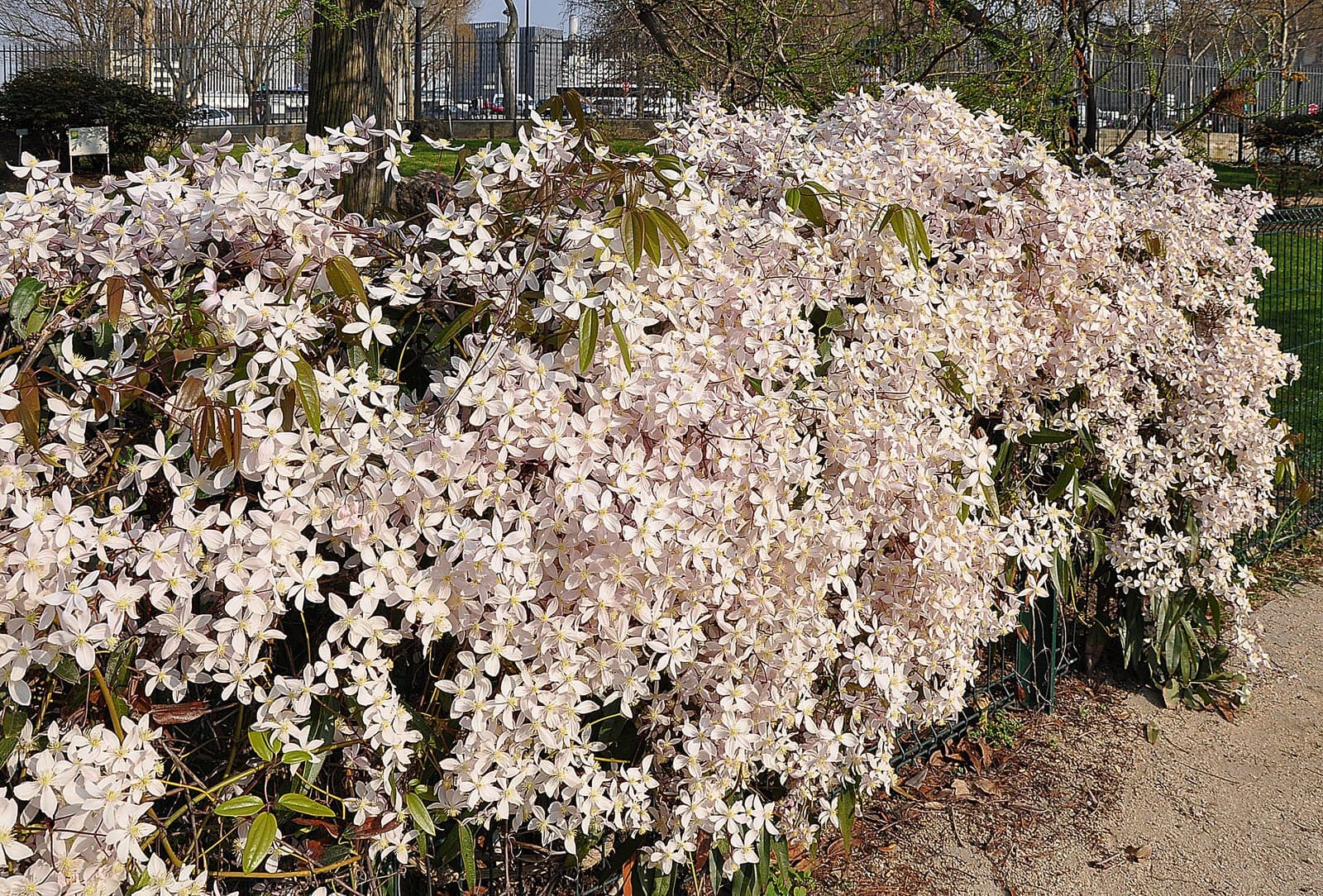
Early-flowering
The spring vines that bloom on last year's wood.
Flowers on
Old wood - stems grown the previous season.
Blooms
Early to mid spring, often in a single generous flush.
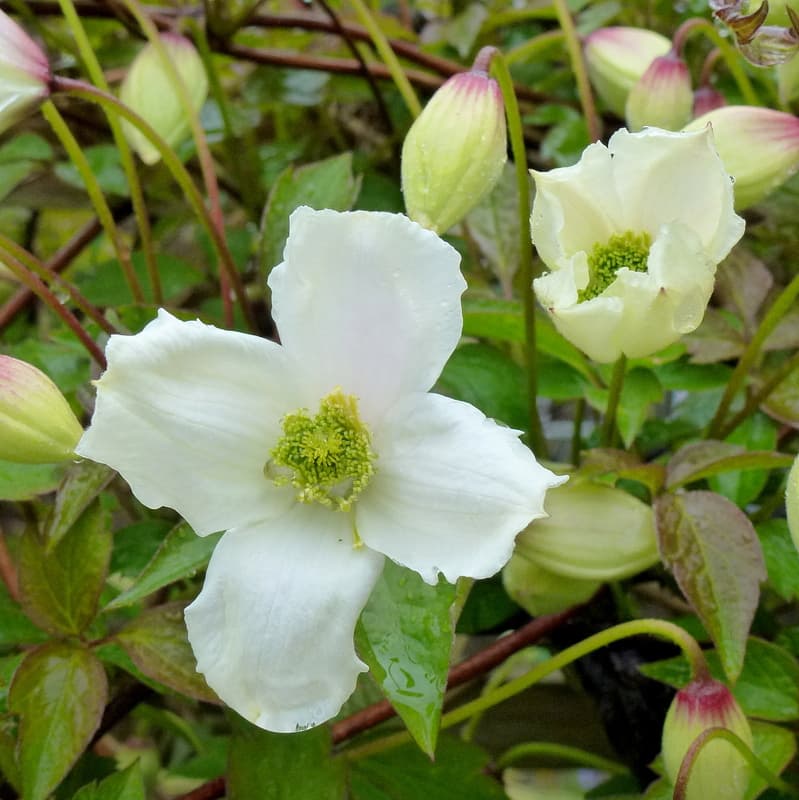
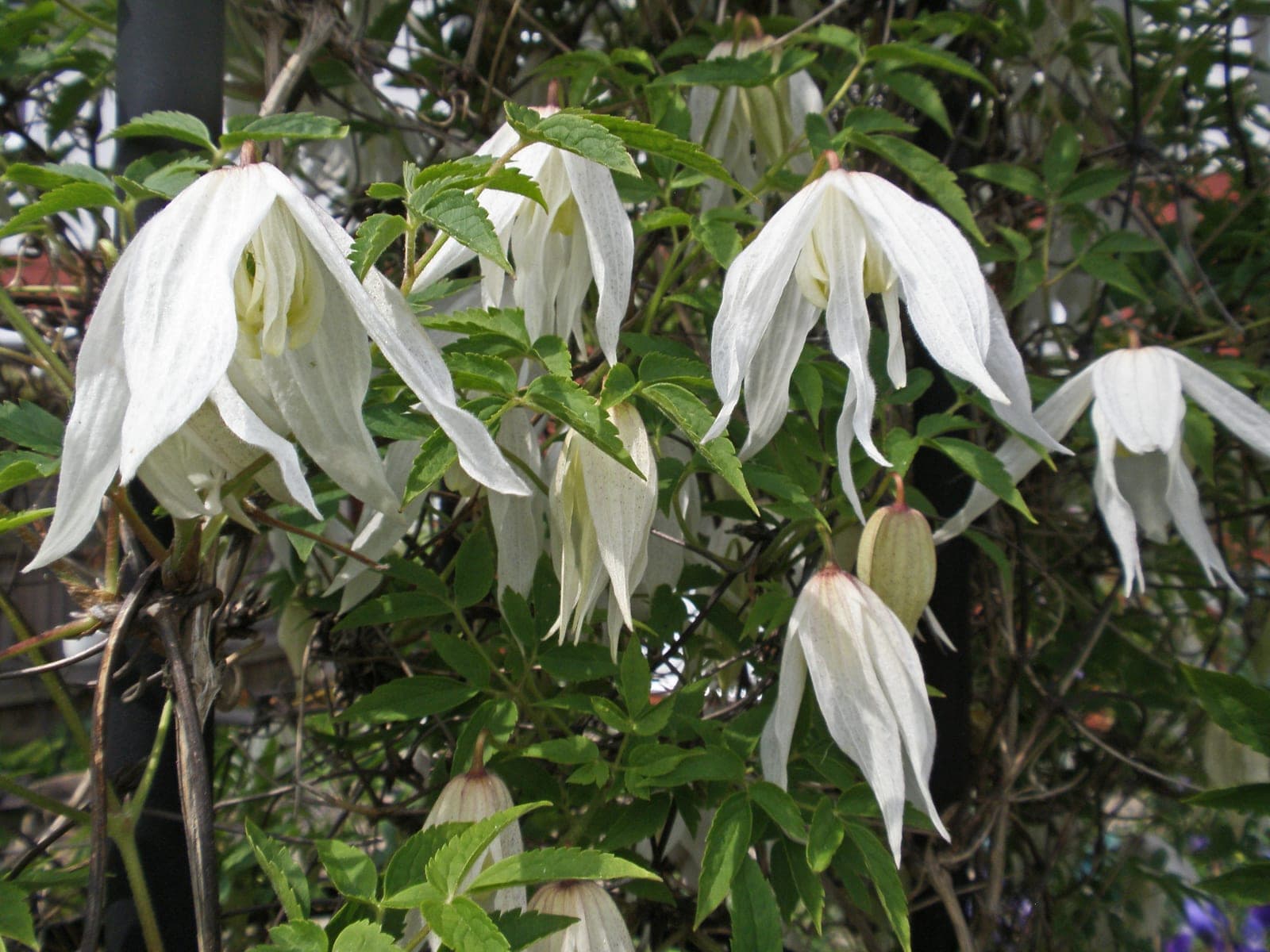
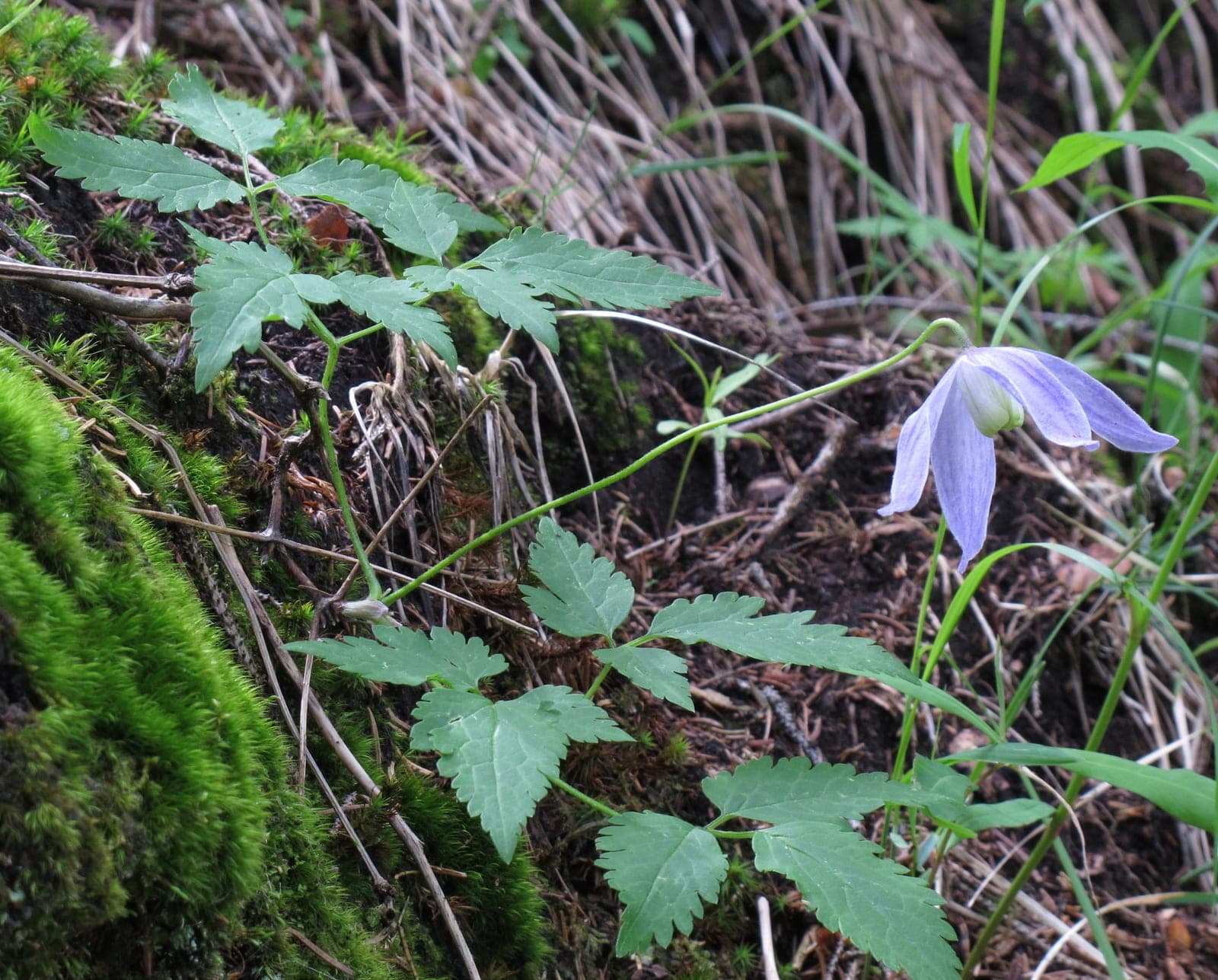
These are the vigorous early bloomers - the montanas, alpinas, and evergreen armandii types. They flower on wood they made the year before, so every stem standing in spring is carrying this season's buds. Left alone they pile up into a huge, billowing tangle, which is exactly what many gardeners want from them on a fence or large arbour.
The rule: Prune only if you need to - and only straight after flowering, never in winter.
When to prune
Only window - right after bloom
8–12 weeks after last frost
Once the spring flush fades, tidy or reduce size immediately. Cutting now gives the plant the whole rest of the season to grow and ripen the wood that will carry next spring's flowers. Remove dead or tangled stems and shorten over-reach to fit the space.
Cut a Group 1 in late winter and you remove the very wood that was about to flower - you will get a healthy green vine and almost no blooms that year.
Large-flowered hybrids
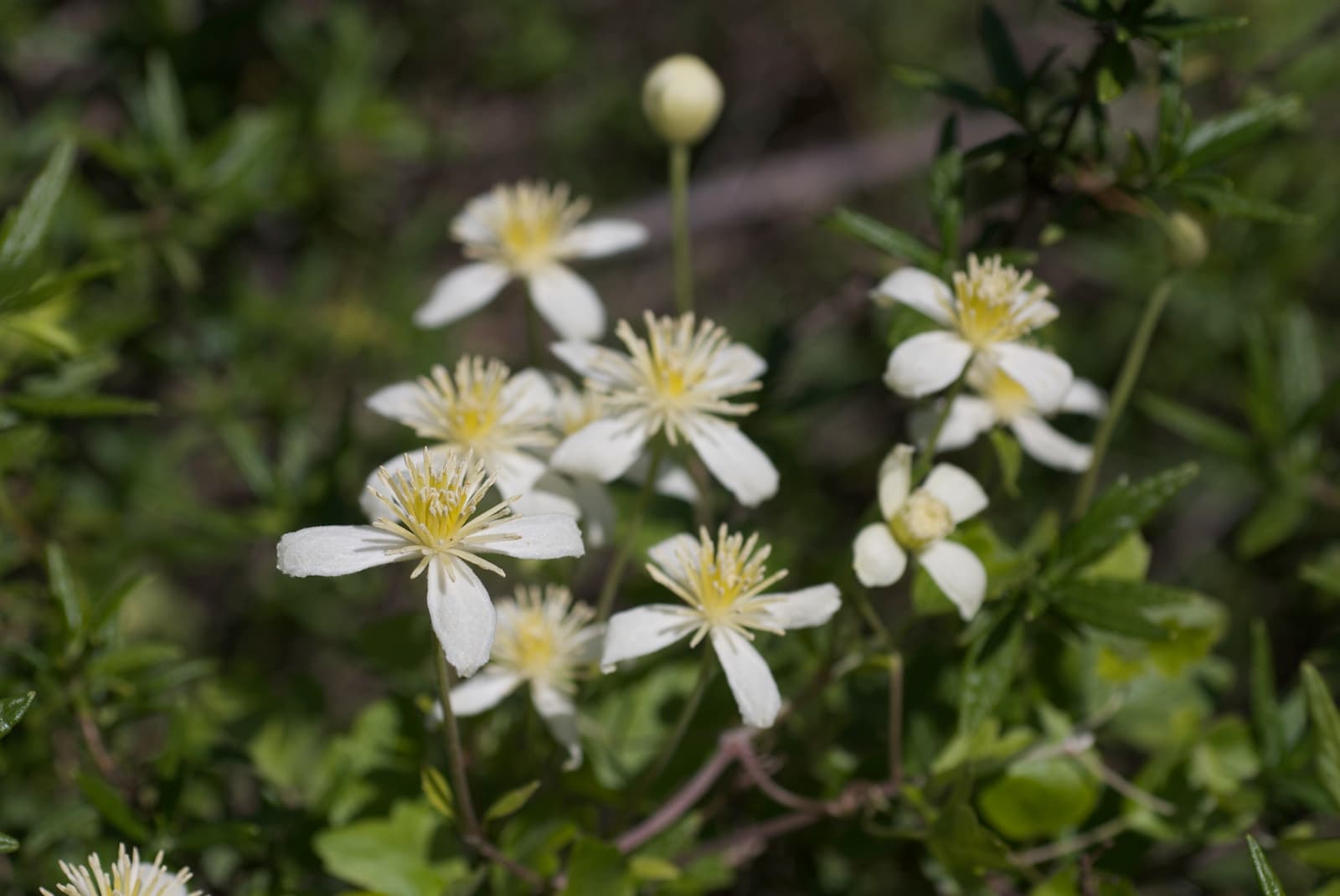
The big-flowered showpieces that bloom twice.
Flowers on
Both old and new wood.
Blooms
An early-summer flush on old wood, then a lighter second flush on new growth in late summer.
The classic large-flowered hybrids - saucer-sized blooms in early summer, often with a second showing later. Because they flower on both old and new wood, they want only a light, tidying hand: take too much and you sacrifice the early flush, take nothing and the plant grows leggy and bare at the base.
The rule: A light prune before growth starts: remove dead stems, shorten the rest to the first strong pair of fat buds.
When to prune
Main prune - late winter / early spring
3–6 weeks before last frost
Before the buds break, work down each stem from the top until you reach a strong, plump pair of buds, and cut just above them. Remove anything dead, weak, or tangled. This is a tidy-and-shape cut, not a hard cut - you are keeping most of the framework.
Optional - after the first flush
10–13 weeks after last frost
Once the early-summer flowers fade, you can lightly shear the spent growth to encourage a stronger second flush on new wood. Skip this and you still get a second showing, just a softer one.
Hard-cutting a Group 2 to the ground in winter is the single most common clematis mistake - it costs you the entire early-summer flush, the reason you grew it.
Late-flowering
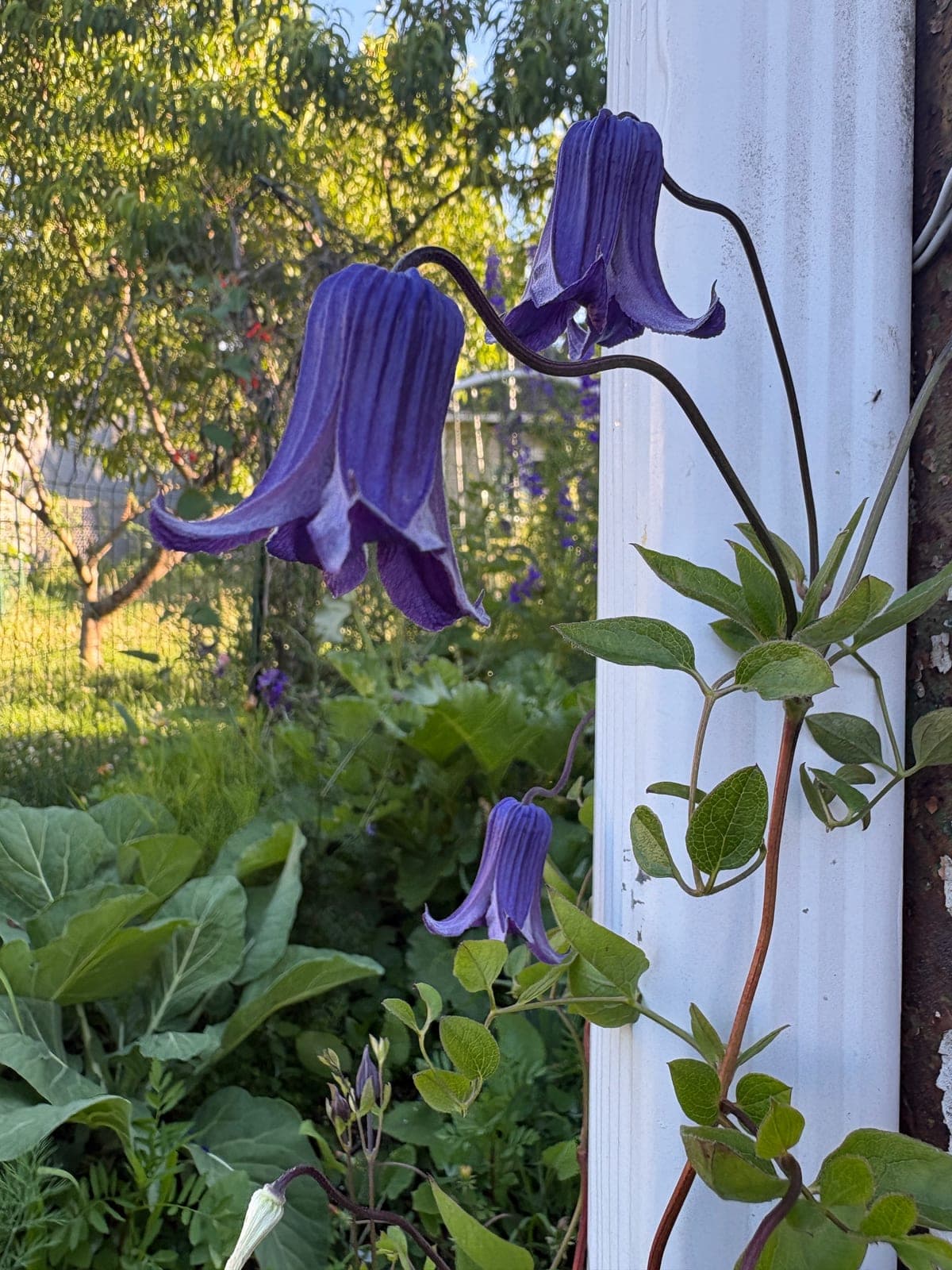
The hard-prune workhorses that bloom on the new year's growth.
Flowers on
New wood - entirely this season's growth.
Blooms
Mid summer through autumn, on stems made the same year.
The viticellas, the late hybrids, the herbaceous types like 'Rooguchi' - all of them throw their flowers on growth made fresh each season. That makes them the most forgiving group to prune: there is no old wood to protect, so you simply clear last year's stems and let it start over. They are the easiest clematis to keep tidy and the best partners for threading through roses.
The rule: Cut everything down hard - to 12 inches, or a low pair of buds - before new growth starts.
When to prune
Main prune - late winter
4–7 weeks before last frost
While the plant is still dormant, cut every stem down to a strong pair of buds about 12 inches from the ground (lower for herbaceous types like 'Rooguchi'). It looks brutal, but all of this season's flowers come on the new growth that follows, so a hard reset gives the best display.
Leave a Group 3 unpruned year after year and it turns into a bare bird's-nest of old stems with all the flowers stranded out of sight at the top.
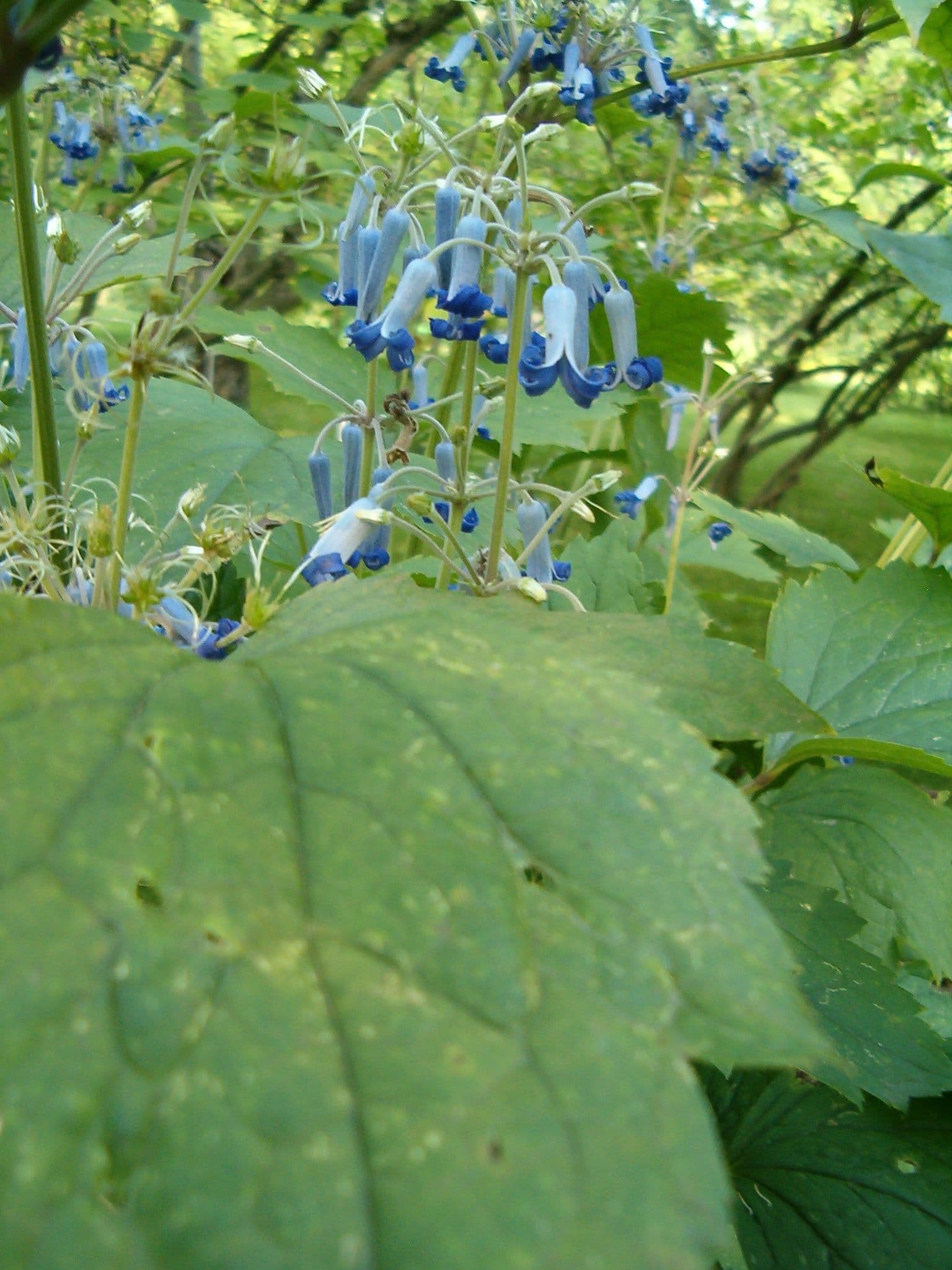
Four rules every clematis lives by
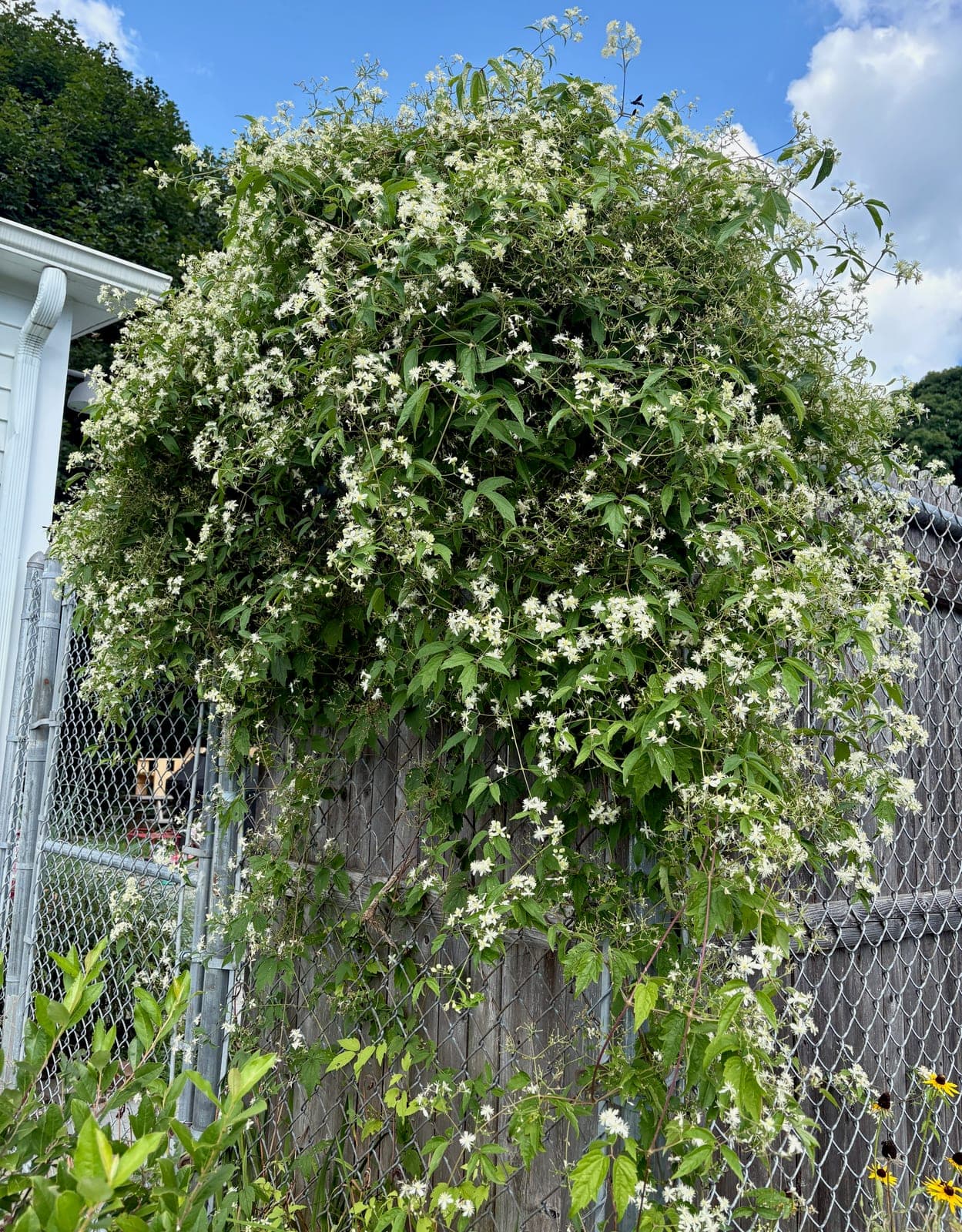
Cool roots, warm top
Clematis want their heads in the sun and their feet in the shade. Mulch deeply at the base, or plant a low companion in front, to keep the root run cool and damp while the vine climbs into the light.
Plant it deep
Set the crown 2–3 inches below soil level - deeper than most plants. The buried buds are the plant's insurance: if wilt or damage takes the top, it re-shoots from below ground.
Don't panic at wilt
Clematis wilt can collapse a healthy stem overnight. Cut the affected stem right back to the base and bin it - thanks to that deep planting, the plant almost always recovers from the protected crown.
Tie in while it's soft
New stems are brittle and snap in wind. Guide and tie them in every couple of weeks through spring while they are still pliable, and they will climb where you want them.
What to plant alongside it
The best clematis companions either share a support structure as a fellow climber, or solve the “cool roots, warm top” rule above by shading the base.
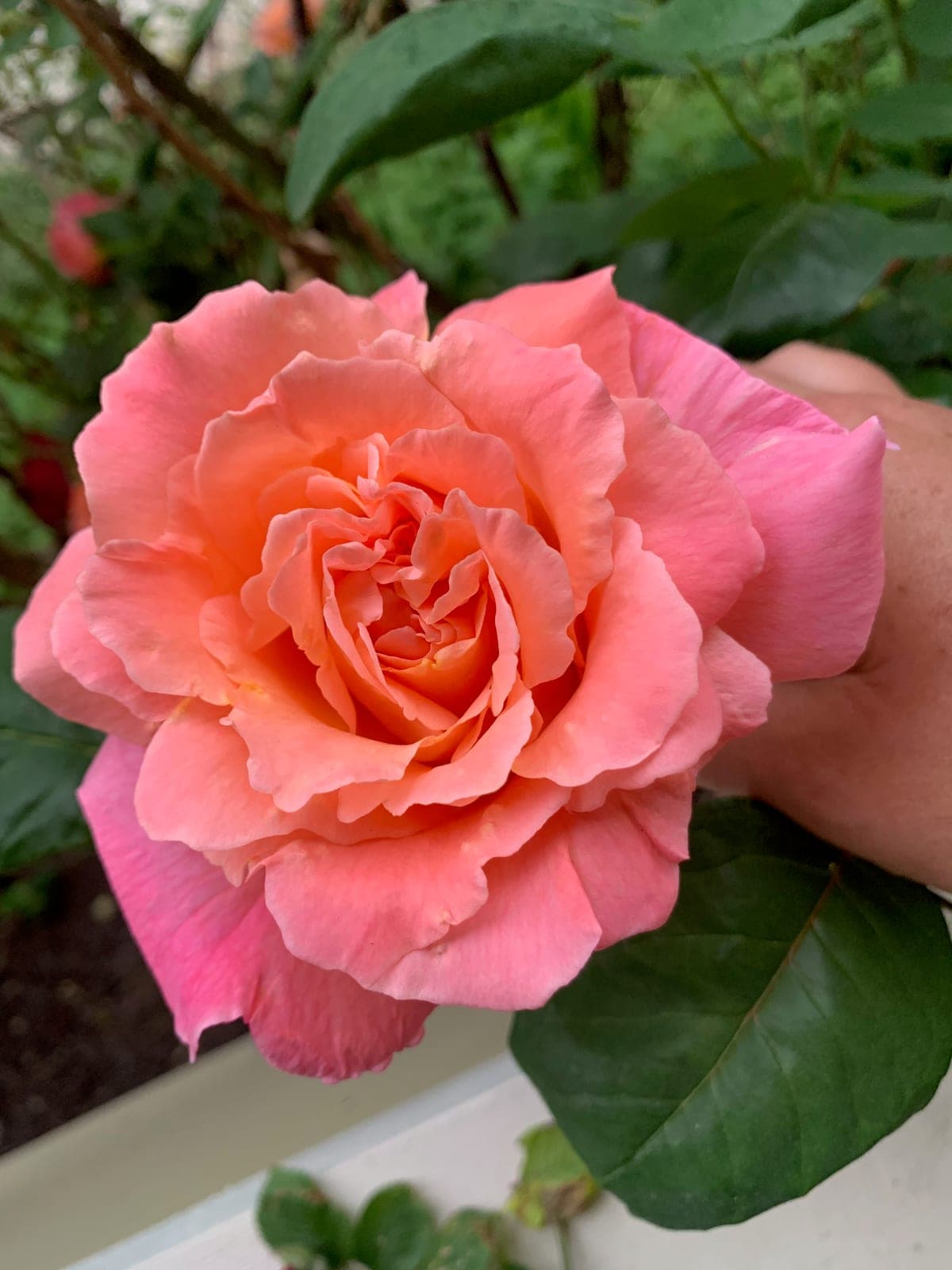
Climbing rose
The classic pairing - thread a late-flowering (Group 3) clematis through a climbing rose's framework and it carries the display on after the rose's main flush, without tangling since it's hard-pruned in late winter, well before the rose leafs out.
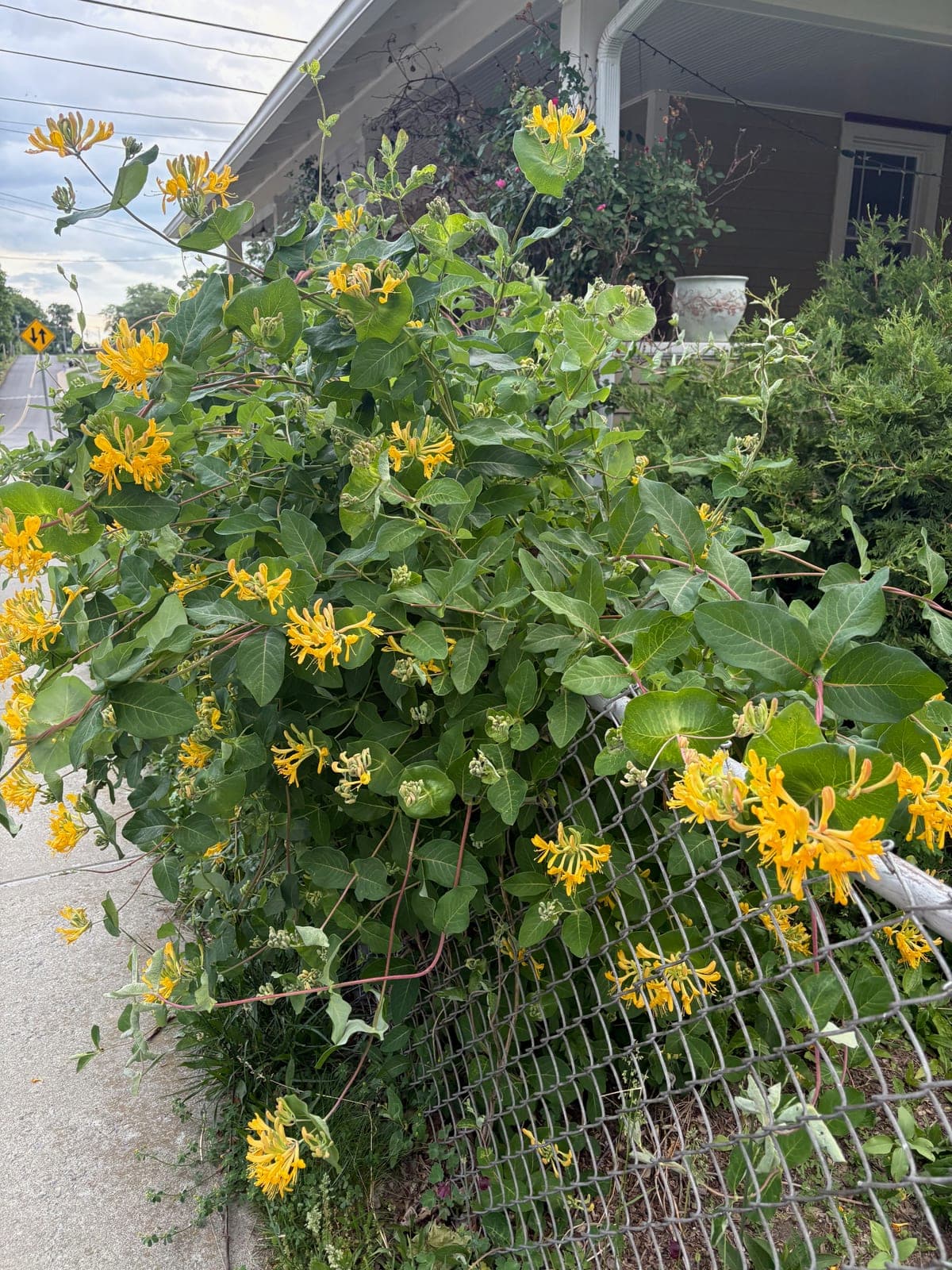
Honeysuckle
A fellow vigorous climber that shares the same fence, arch, or obelisk without competing for it - stagger the bloom times and the support structure earns its keep for months instead of weeks.
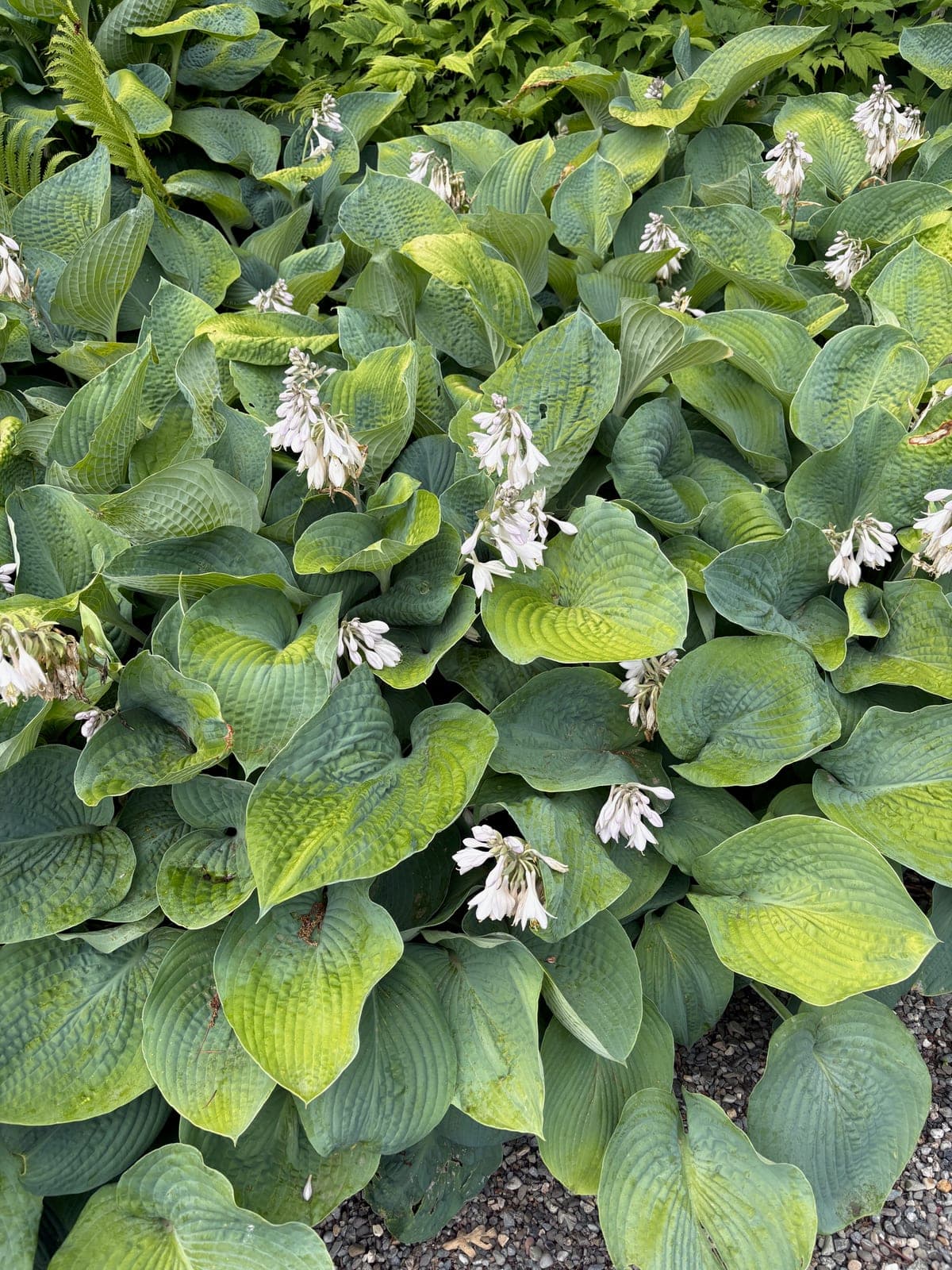
Hosta
A low, broad-leaved shade plant set at the base does exactly what the guide's 'cool roots, warm top' rule asks - it shades the root run while the clematis climbs on into full sun overhead.
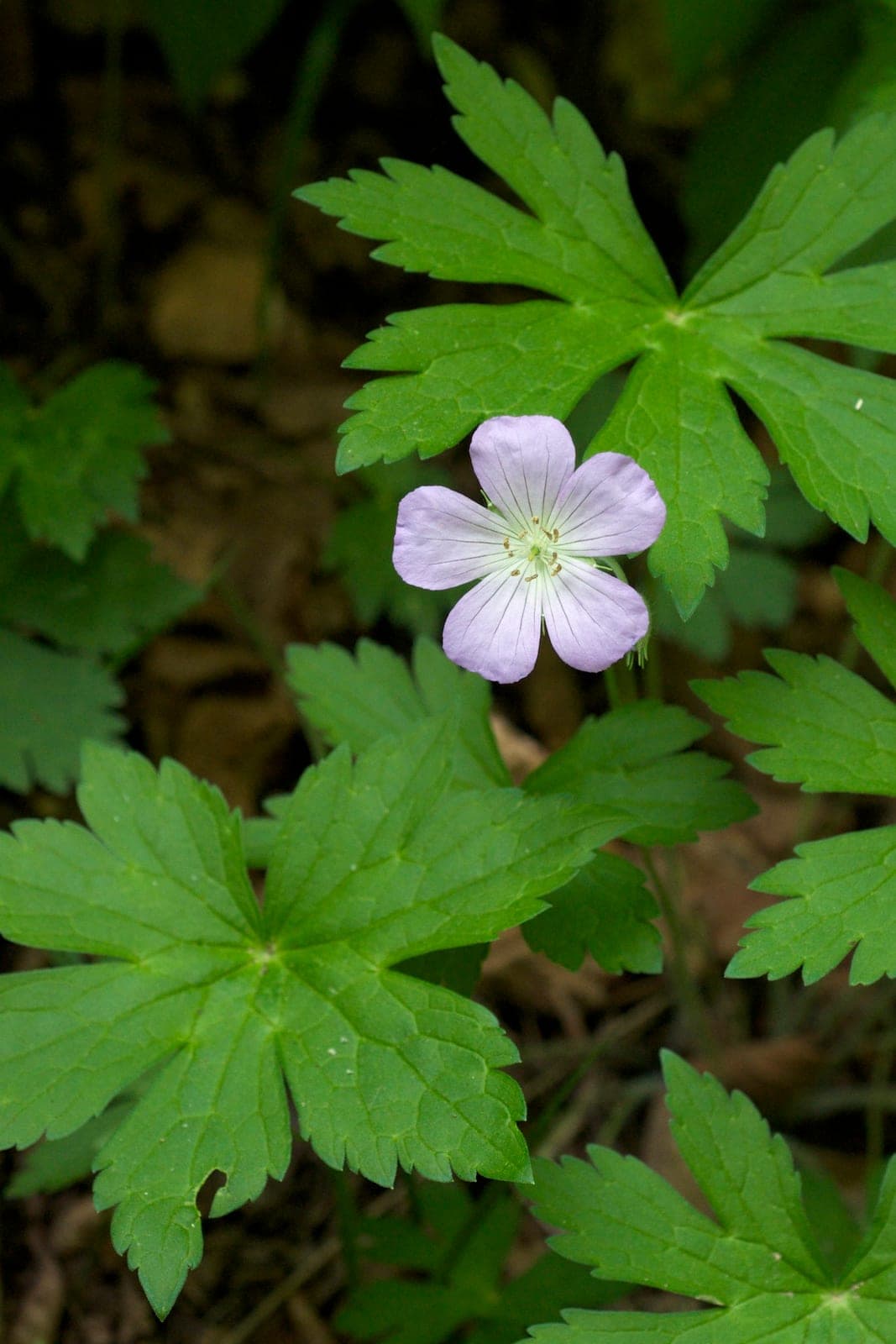
Wild geranium
A low, spreading groundcover that shades and cools the soil at the base without competing for climbing space, and fills in the bare lower stems a clematis leaves behind as it climbs.
Looking for something?
Let us know and we will add it to the list for your garden plan.