
 Batten Blooms
The natural lawn
A lawn does not have to be a monoculture you fight to keep alive. Clover, creeping thyme, and seasonal cover crops turn that flat green carpet into living ground — feeding pollinators, building soil, and asking far less of you in return. Here is how to sow it, wherever you garden.
Biodiversity underfoot
A mixed lawn of clover, herbs, and grass is dozens of species sharing the same ground. That diversity is its own defence — it shrugs off drought, pests, and disease that flatten a single-grass lawn.
Off-season pollinator support
Let a clover or thyme lawn flower and it feeds bees through the shoulder months — early and late in the season, when borders are bare and forage is scarce. Mow high and infrequently and the blooms keep coming.
Cover crops build soil
Resting a patch or starting from bare ground? A cover crop like barley sends roots deep to break compaction and scavenge nutrients, then is cut and left in place to feed the soil — fertility you grow rather than buy.
When to sow, by your frost dates
Cover crops are sown relative to frost, not the calendar — so the right week in Maine is a different week in Georgia. Each window below is anchored to your last spring frost or first fall frost.
Every window below is timed to your frost dates — never a fixed calendar date — so it works wherever you garden. Add your ZIP to translate them into your own months.
The backbone of a natural lawn. Clover pulls nitrogen out of the air and feeds it to the grass around it, so a clover lawn greens up without synthetic fertiliser. Microclover is simply white clover bred for smaller leaves and a tighter, lower habit that blends into turf.
PollinatorsLet a patch flower and it becomes one of the most reliable nectar sources of the season — humming with honeybees and bumblebees through the shoulder months when little else is open. Mow high and infrequently to keep blooms in rotation.
Full care in the field guideBest — late summer / early fall
6–8 weeks before first frost
Sow 6–8 weeks before your first fall frost. Warm soil and cooling air give fast, even germination with fewer competing weeds. This is the window most gardeners should aim for.
Frost-seeding — late winter
6–10 weeks before last frost
Scatter seed onto frozen or thawing ground 6–10 weeks before your last spring frost. The freeze–thaw cycle works the seed into the soil for you — no raking, no tilling.
Spring — northern zones
2–4 weeks after last frost
If you missed fall, sow 2–4 weeks after your last frost once soil holds above 45°F. Keep it evenly moist for the first three weeks while it establishes.
- Broadcast at a light rate and rake in gently — clover seed is tiny and needs only shallow contact with soil.
- Overseed straight into existing turf; you do not need to start a lawn from scratch.
- Keep the top half-inch of soil moist for the first 21 days, then let it fend for itself.
A walkable, drought-proof lawn alternative for sunny, low-traffic ground and the gaps between pavers. Once established it forms a dense aromatic mat that crowds out weeds and almost never needs mowing or watering.
PollinatorsA summer-long sheet of tiny flowers that bees work from morning to dusk — among the best pollinator plantings you can walk on. It carries the nectar season through high summer heat when lawns usually go quiet.
Full care in the field guideBest — late spring into early summer
1–5 weeks after last frost
Sow after all frost has passed, once soil has warmed to 60–70°F. Thyme germinates slowly and needs warmth — surface-sow and press in, but do not bury, as the seed needs light.
Early fall — warm zones
8–10 weeks before first frost
In zones 7 and warmer, sow 8–10 weeks before first frost so seedlings root well before winter. Too late and tender seedlings will not survive the cold.
- Give it full sun and sharp drainage — thyme rots in heavy, wet soil.
- Be patient: germination can take 2–4 weeks and full cover takes a season or two.
- Best for paths, slopes, and low-traffic areas rather than a play lawn.
A fast, cheap soil-builder for a bed you are resting or a lawn you are about to renovate. Barley throws down deep fibrous roots that break up compaction and scavenge leftover nutrients, then is cut or winter-killed and left as a mulch that feeds the soil as it breaks down — the heart of cover-cropping.
PollinatorsNot a nectar plant, but a winter cover gives ground beetles, spiders, and overwintering beneficials the standing cover and undisturbed soil they need to get through the cold — habitat is pollinator support too.
Full care in the field guideBest — fall winter cover
4–8 weeks before first frost
Sow 4–8 weeks before first frost to put on biomass before cold sets in. In cold zones it winter-kills and leaves a protective mulch; in mild zones it overwinters and is cut down in spring.
Early spring — soil building
around last frost (4 weeks before to 2 weeks after)
As a cool-season crop, barley can also go in around your last frost to build soil over a bed you will plant later in summer. Cut it before it sets seed and drop it in place.
- Rake seed into bare or scratched-up soil for good contact, then keep moist until it sprouts.
- Cut or mow before the seed heads mature so it does not reseed where you do not want it.
- Leave the cut tops on the surface as a 'chop and drop' mulch rather than clearing them away.
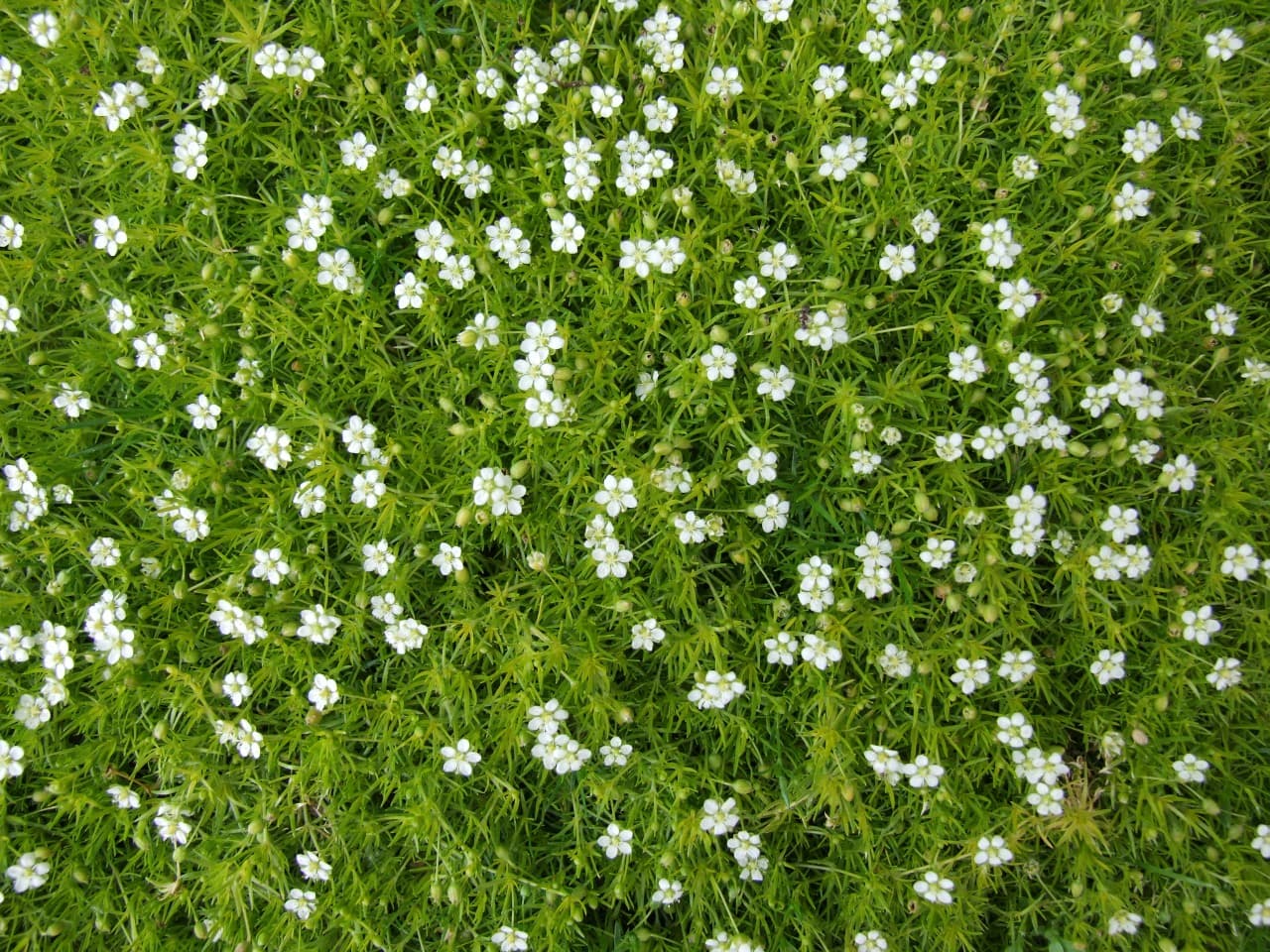
A moss-like mat for stepping stones, paver gaps, and small no-mow patches that get regular moisture. It stays under two inches tall, needs no mowing, and takes light foot traffic once established — best where a natural lawn needs to look tidy in a small, well-watered footprint rather than cover open ground.
PollinatorsA modest but reliable source: tiny white star-shaped flowers cover the mat in early summer, offering a low-traffic patch of forage right at ground level while taller plantings are still filling in.
Full care in the field guideBest — spring after last frost
2–6 weeks after last frost
Set out plugs or divisions once frost danger has passed and soil has warmed. Irish moss establishes from starts, not seed — space plugs 6–12 inches apart and keep evenly moist while roots take hold.
Early fall — warm zones
6–10 weeks before first frost
In zones 7 and warmer, plant 6–10 weeks before first frost so the mat roots in before cold weather. In colder zones, stick to the spring window.
- Give it steady moisture — Irish moss browns out fast in a dry spell and does not recover as readily as most ground covers.
- Good drainage still matters; waterlogged soil rots the mat as quickly as drought scorches it.
- Best for small, well-watered areas — pavers, stepping stones, rock garden edges — not a drought-prone or unattended stretch of lawn.
A fast-spreading, part-shade-tolerant carpet for the areas where clover and thyme struggle — path edges, stepping-stone gaps, and thin turf under trees. It roots as it spreads and shrugs off light foot traffic, filling bare ground quickly once established.
PollinatorsA short but showy burst of small purple-blue flowers blankets the mat for a few weeks in late spring, with scattered rebloom through summer — useful early-season forage in the part-shade spots that sunnier lawn alternatives cannot reach.
Full care in the field guideBest — spring after last frost
2–6 weeks after last frost
Set out plugs or divisions once frost danger has passed. Mazus establishes from starts, not seed — space 12–18 inches apart; it fills in fast, so resist the urge to crowd them closer.
Early fall — warm zones
6–10 weeks before first frost
In zones 7 and warmer, plant 6–10 weeks before first frost so it roots in before cold weather. In colder zones, stick to the spring window.
- Plant where a spreading mat is genuinely wanted — mazus moves into neighboring beds and turf if left unchecked.
- Pull runners that cross into areas it is not wanted rather than letting the mat establish there first.
- Shear lightly after the spring flush to tidy the mat and encourage a second round of bloom.
Get the sowing reminder for your exact zone.
The Garden Digest tier turns this calendar into a weekly almanac built around your plant list and frost dates — telling you the week each cover crop is ready to go in, so you sow on time without watching the calendar.
Looking for something?
Let us know and we will add it to the list for your garden plan.