
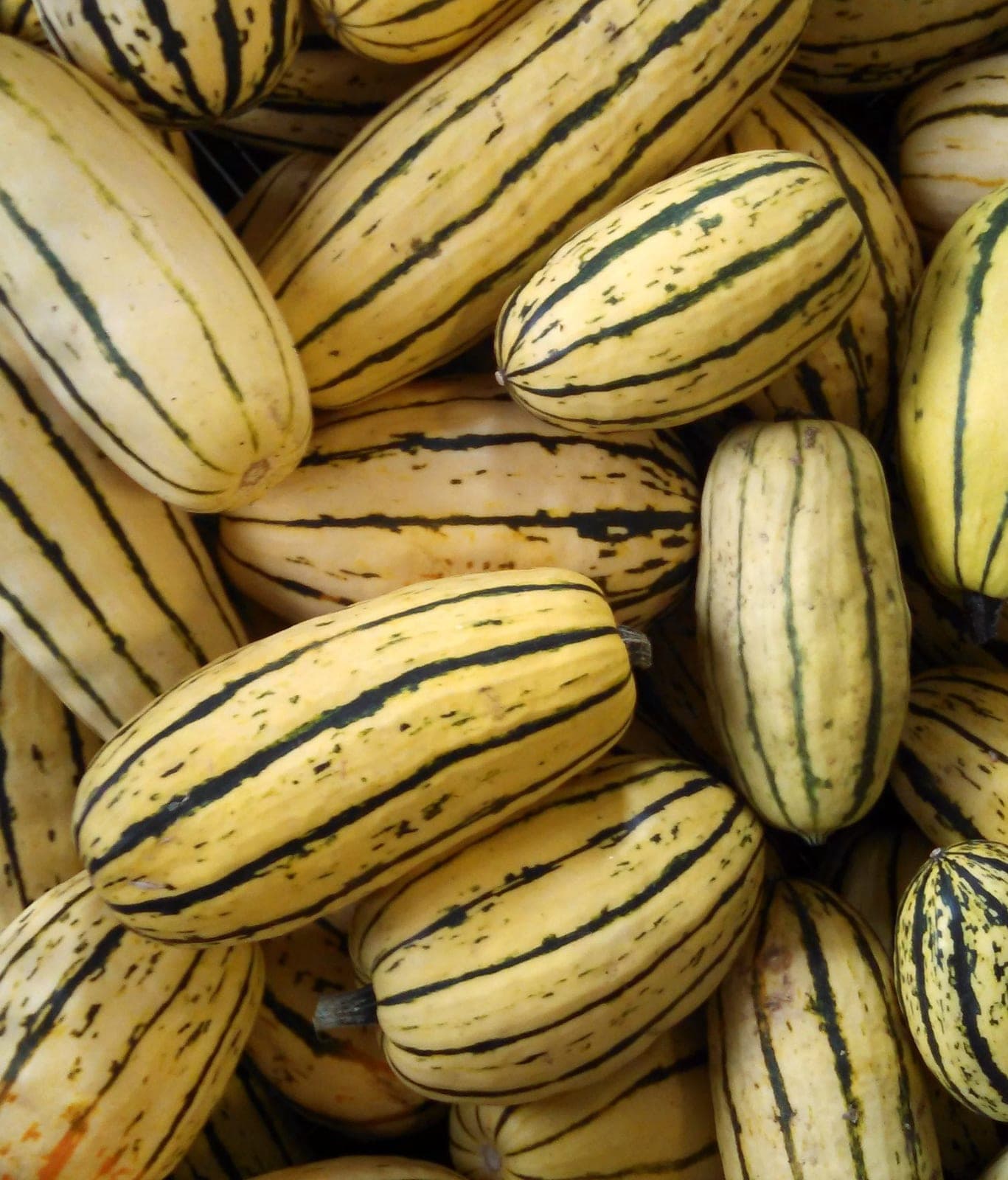
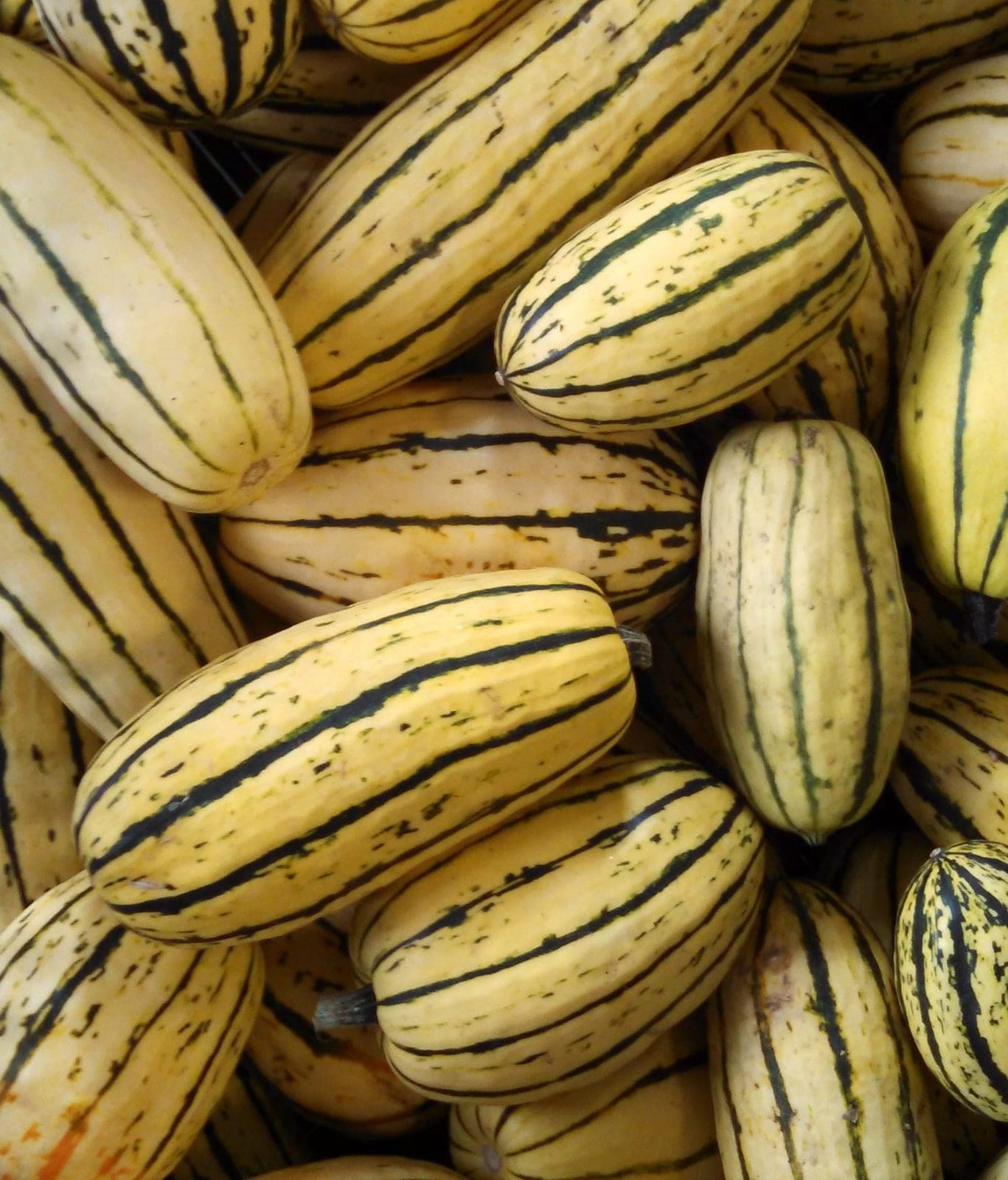
Delicata is a small, oblong winter squash with cream skin striped in green and orange, and sweet, fine-grained flesh that tastes of sweet potato and chestnut. Its great virtue in the kitchen is the thin, tender skin - unlike butternut or other thick-rinded keepers, delicata needs no peeling and can be sliced into rings and roasted whole. It grows on compact, semi-vining plants and matures earlier than most winter squash, around 90–100 days, which makes it a reliable choice in a short season.
Because that thin skin is also its weakness, delicata stores only one to three months rather than all winter, so eat it through autumn rather than holding it for spring. Direct sow after the last frost once the soil is warm, give it room and steady moisture, and harvest in fall when the rind has hardened and the background colour has deepened from pale to cream-gold. Like all Cucurbita pepo it is vulnerable to squash vine borer and powdery mildew; cure the picked fruit in the sun for a week to firm the skin before storing.
Powdery mildew
White or grey powdery coating on leaves - usually starting on older growth in humid conditions or when nights cool.
Improve air circulation by thinning plants. Apply neem oil or potassium bicarbonate spray at first sign. Avoid overhead watering.