
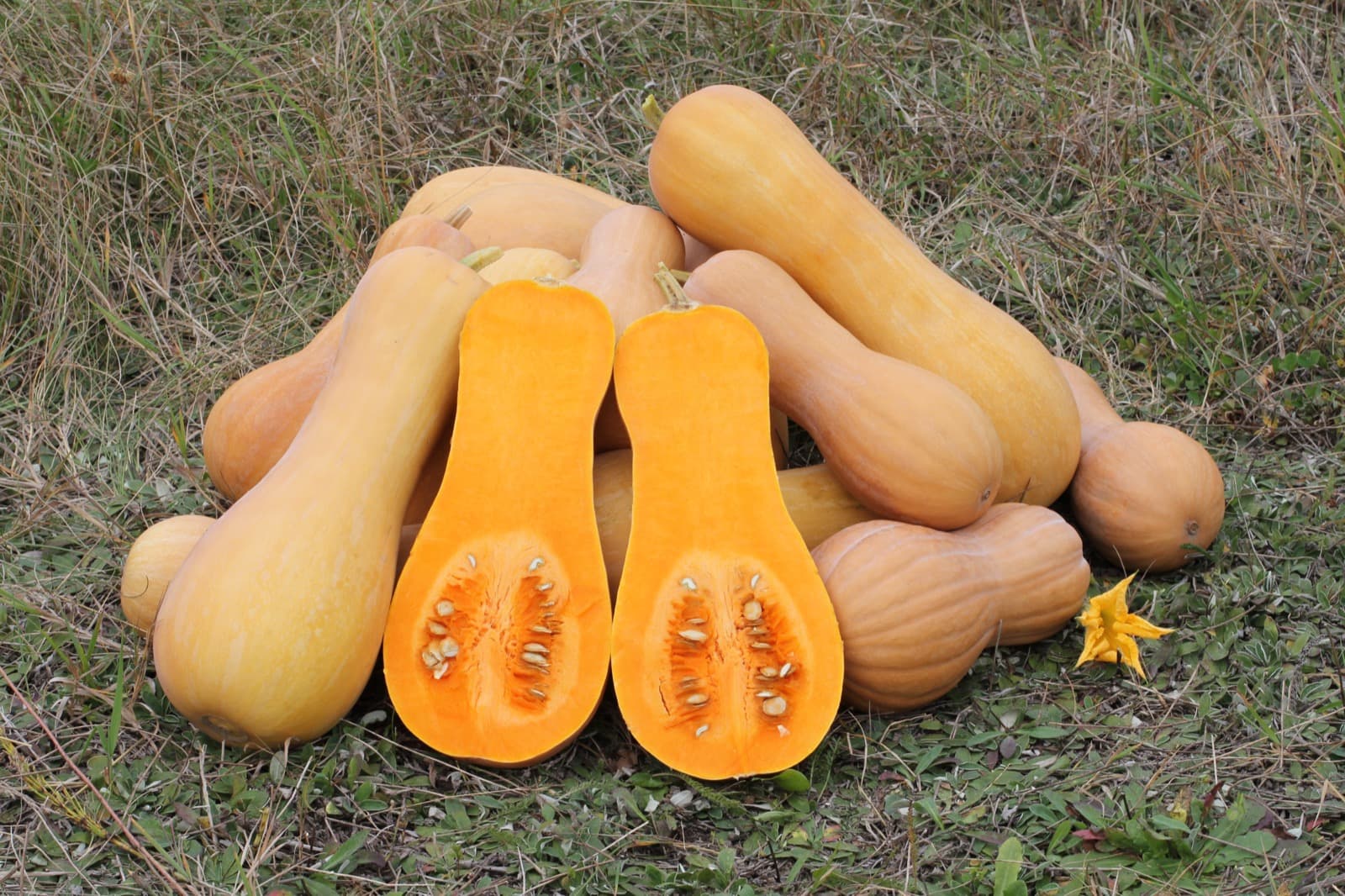
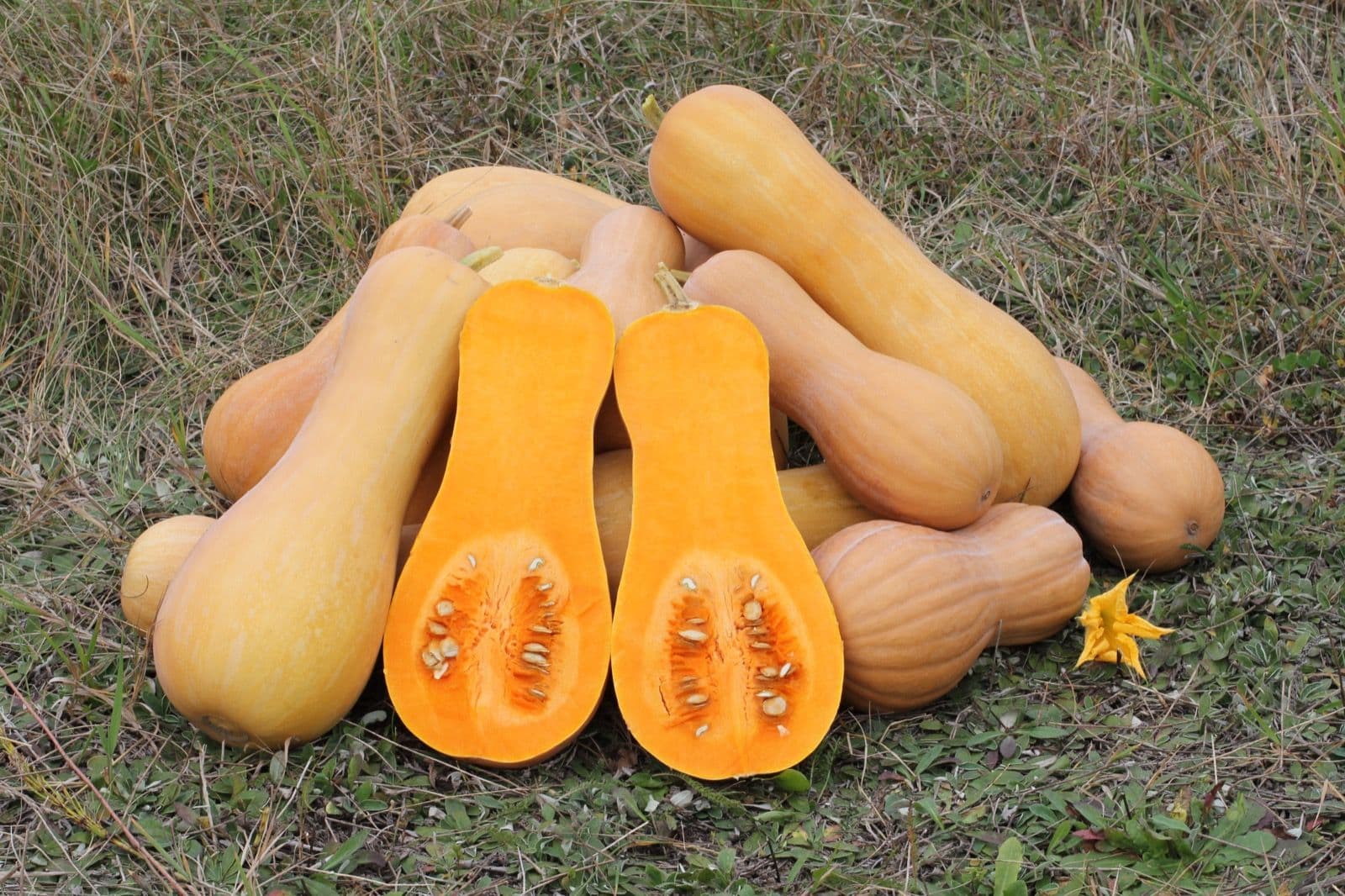
Butternut is the classic keeping squash - a tan, bell-shaped fruit with a long solid neck and dense, sweet orange flesh that deepens in flavour after a few weeks in storage. It belongs to Cucurbita moschata, a group adapted to warmth and notably more resistant to squash vine borer than the pepo squashes, since its solid stems give the borer less to feed on. The trade-off is a long season: butternut needs around 100–110 warm days to ripen fully, so start it promptly and give the vines room to run.
Direct sow after the last frost once the soil is warm, or start indoors a few weeks early in a short season, and keep plants well fed and evenly watered through summer. Harvest in fall when the skin has turned uniformly tan and hard and the stem begins to cork; cut with a few inches of stem attached. Cure the fruit in a warm, dry spot for a week or two, after which it will store for several months in a cool room - one of the best returns on space in the autumn pantry.
Powdery mildew
White or grey powdery coating on leaves - usually starting on older growth in humid conditions or when nights cool.
Improve air circulation by thinning plants. Apply neem oil or potassium bicarbonate spray at first sign. Avoid overhead watering.