
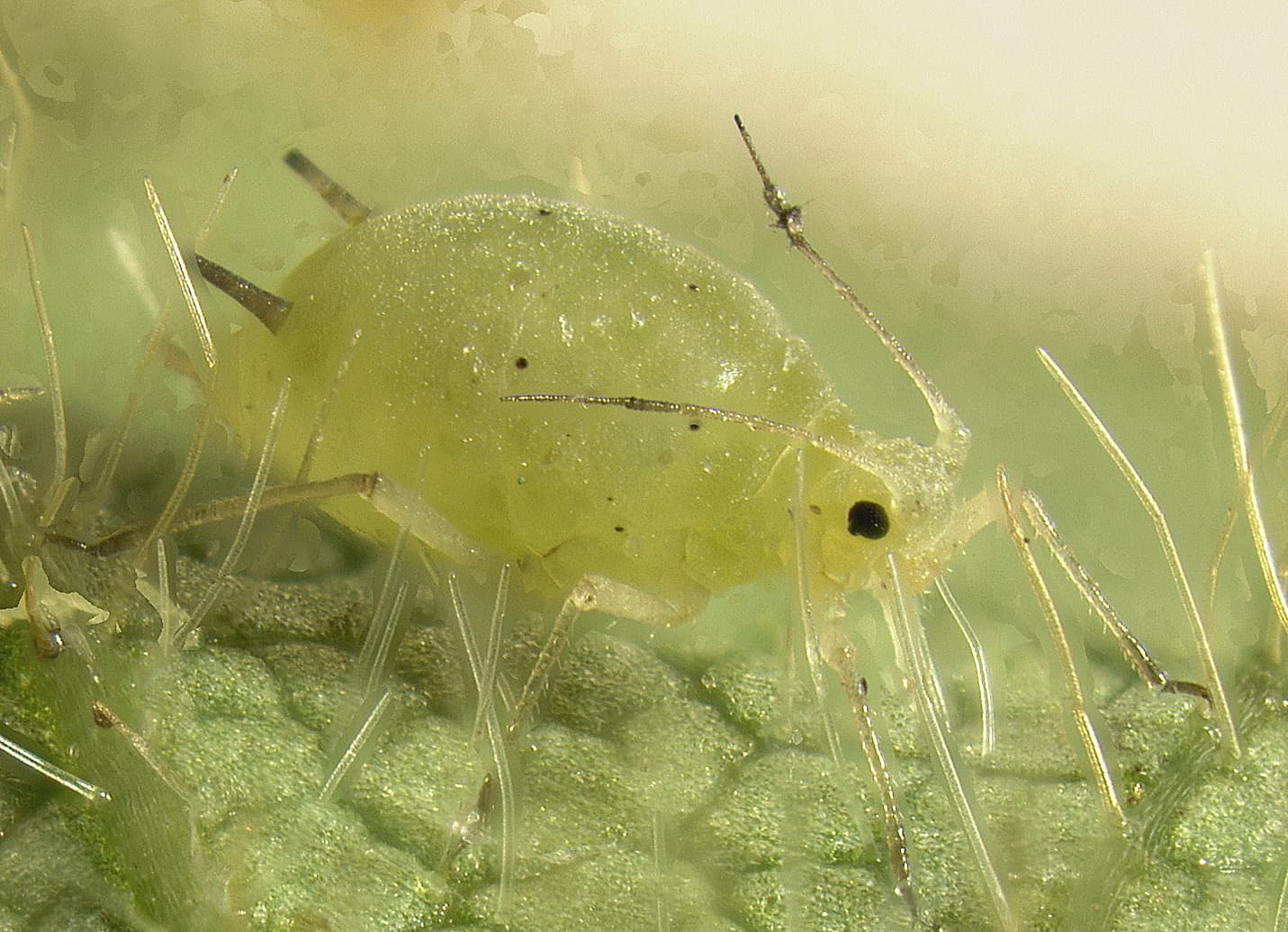
Aphids
Aphids are small, soft-bodied insects in the family Aphididae that feed by piercing plant tissue and extracting sap. With several thousand species, they rank among the most common and widespread garden pests in North America. Most species target specific host plants, though some, like the green peach aphid, feed on a broad range of vegetables, fruits, and ornamentals.
Aphids reproduce extremely fast. During warm months, females give birth to live young without mating, producing multiple overlapping generations per season. Colonies form quickly on new growth, stem tips, and leaf undersides. As they feed, they excrete honeydew, a sticky waste product that coats plant surfaces and promotes sooty mold. Aphids are also the single most important family of plant virus vectors, capable of transmitting dozens of diseases — including cucumber mosaic virus and potato virus Y — as they move between plants.
Despite their pest status, aphid populations serve as a key food source for many beneficial insects, including ladybugs, lacewing larvae, parasitic wasps, and hoverfly larvae. A small, stable aphid colony early in the season can help build predator populations before more damaging pest pressure arrives later in the year.
Aphids are piercing-sucking pests that weaken plants directly through sap removal and indirectly by transmitting plant viruses as they move between hosts.
Clusters of small soft insects on new growth and flower buds.
Knock off with a strong jet of water. Ladybirds and lacewings are natural predators. Insecticidal soap as last resort.