
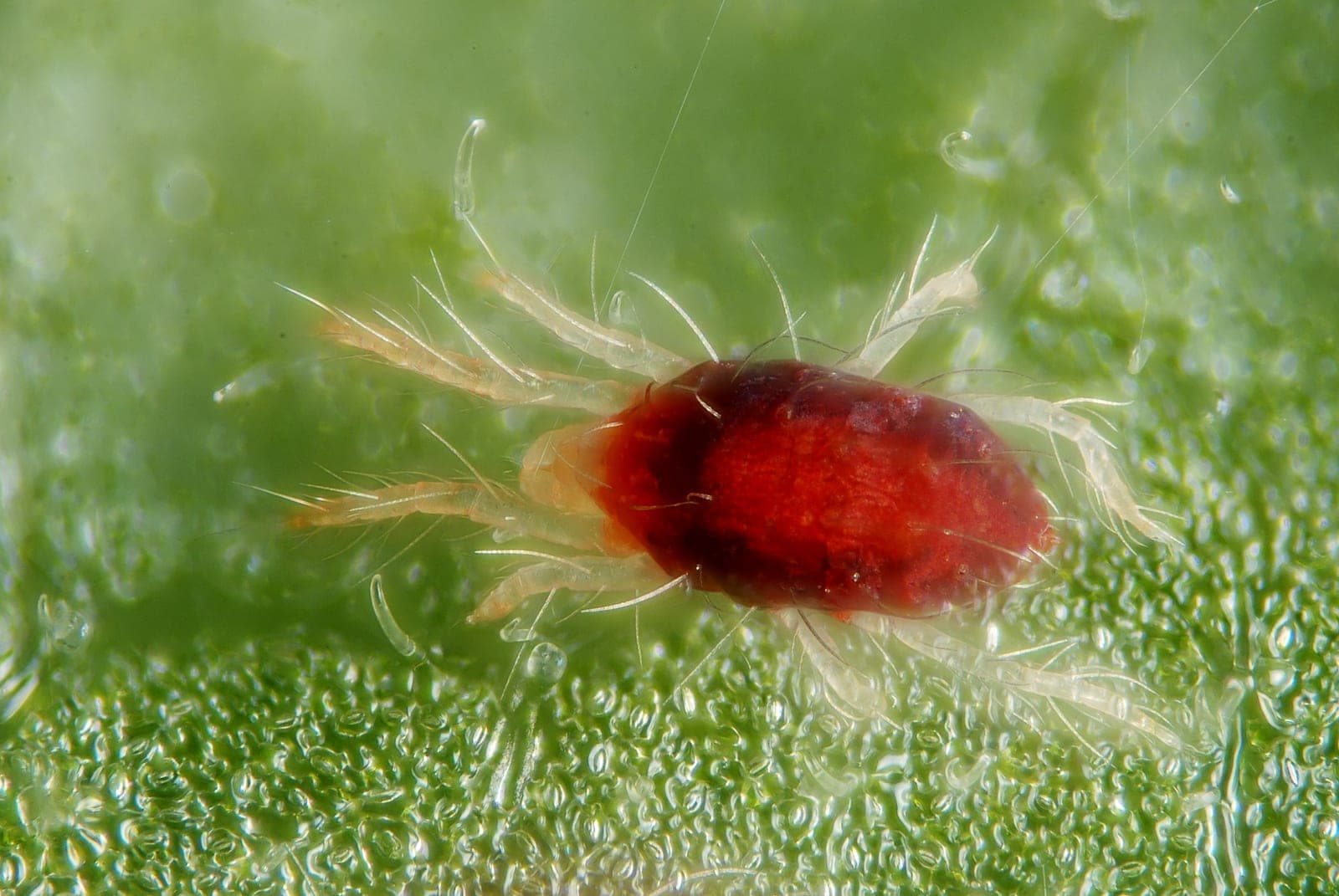
Spider Mites
Two-spotted spider mites are not true insects but are closely related arachnids in the family Tetranychidae. They are among the most damaging garden pests in upstate New York, capable of infesting over 200 plant species including vegetables, fruits, ornamentals, and houseplants brought outdoors for the season. Because they are mites rather than insects, many standard insecticides have little effect on them.
Spider mites feed by piercing individual plant cells and extracting their contents, causing the characteristic stippled, bronzed, or silvery discoloration on leaf surfaces. Populations explode under hot, dry conditions, and a single female can lay up to 100 eggs in her short lifespan, meaning colonies can go from undetectable to severe within a couple of weeks. Fine webbing on the undersides of leaves and between stems is a telltale sign of a heavy infestation. Dusty or drought-stressed plants are especially vulnerable.
Spider mites are foliar pests that reduce plant vigor and yield by extracting cell contents from leaves across a broad range of host plants.
Fine stippling or bronzing on leaves, faint webbing on undersides, foliage drying out during hot, dry weather.
Spray foliage with a strong jet of water to dislodge mites. Apply insecticidal soap or horticultural oil to leaf undersides; repeat every 5–7 days as needed.