
Roses are the defining cut flower of the summer garden — no other plant offers the same combination of form, fragrance, color range, and seasonal span. For the cutting garden, shrub roses and old garden roses with high petal counts and strong fragrance reward more than hybrid teas, which need more intervention to perform. 'David Austin' English Roses are designed for exactly this purpose: fragrant, high-petal, repeat-blooming, and disease-resistant.
Cut when the bud is just beginning to unfurl — fully open blooms are beautiful but short-lived once cut. Remove all foliage that would be below water. Condition in cold water overnight. The key to continuous production is cutting deeply: take stems back to a five-leaflet leaf with an outward-facing bud.
Growing roses? Read the Rose Care Calendar — pruning by class, feeding, pests, climbers, and growing for hips, timed to your frost dates.Powdery mildew
White or grey powdery coating on leaves — usually starting on older growth in humid conditions or when nights cool.
Improve air circulation by thinning plants. Apply neem oil or potassium bicarbonate spray at first sign. Avoid overhead watering.
Botrytis (grey mould)
Grey fuzzy mould on petals and stems, worst in cool wet conditions.
Remove affected parts immediately. Improve air circulation. Avoid overhead watering. Apply copper fungicide if severe.
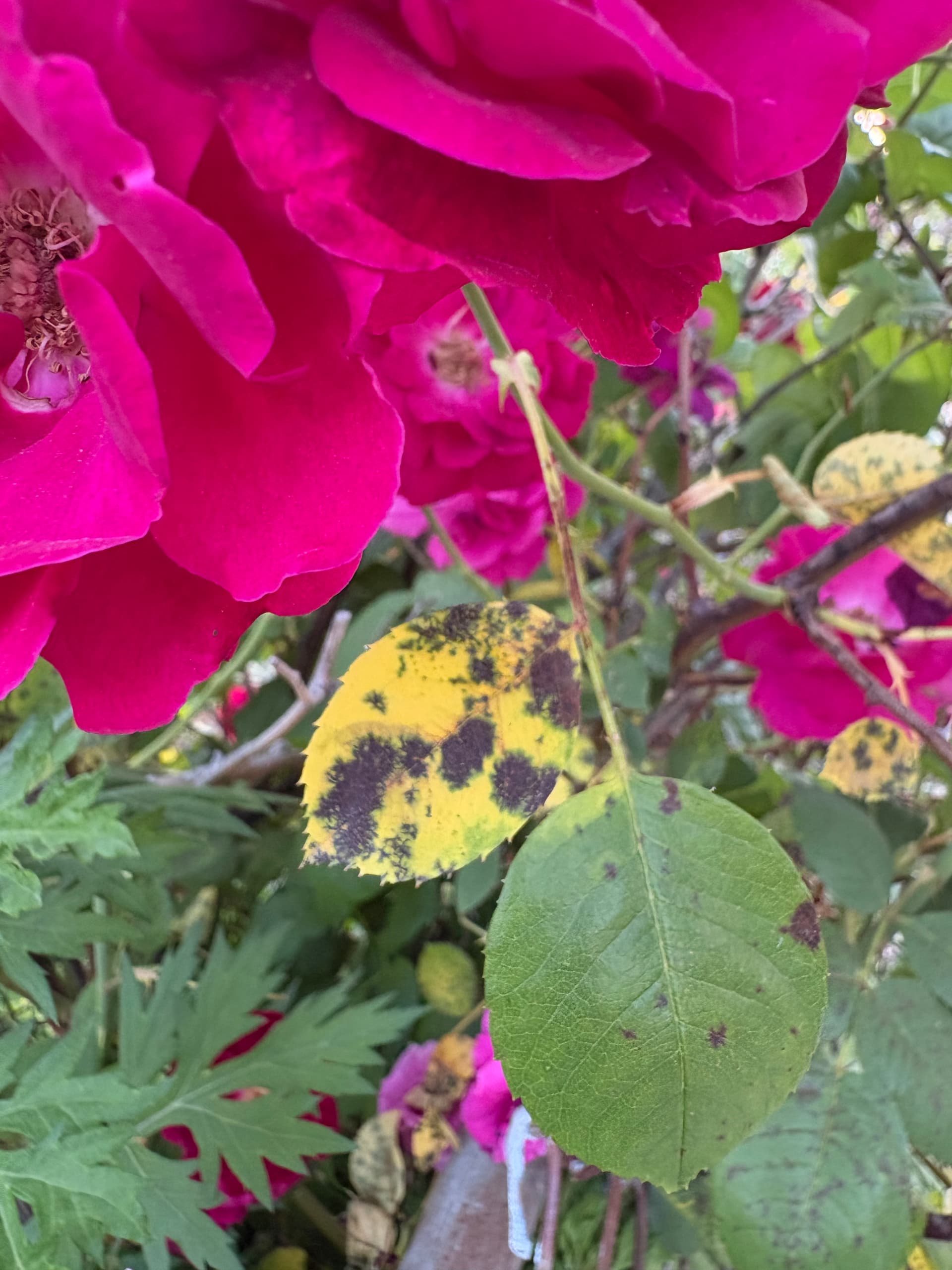
Yellow spot (rose rust)
Bright yellow spots on the upper surface of leaves, with orange-yellow powdery pustules on the underside. Leaves may drop prematurely. Worst in cool, wet springs.
Remove and bin all affected leaves — do not compost. Apply a systemic fungicide (myclobutanil or trifloxystrobin) at first sign and repeat every 10–14 days. Spray preventively from early spring before infection takes hold. Improve air circulation by pruning to an open centre.
Aphids
Aphididae →Clusters of small soft insects on new growth and flower buds.
Knock off with a strong jet of water. Ladybirds and lacewings are natural predators. Insecticidal soap as last resort.
What to do with rose hips
The fruit a rose leaves behind if you stop deadheading in time is one of the richest sources of vitamin C in the garden — and the doorway to tea, syrup, jelly, and a skincare oil.
Miss Willmott's ghost
A silvery, spectral sea holly turns up unbidden in gardens all over England, and the story goes that the woman it is named for put it there herself.