
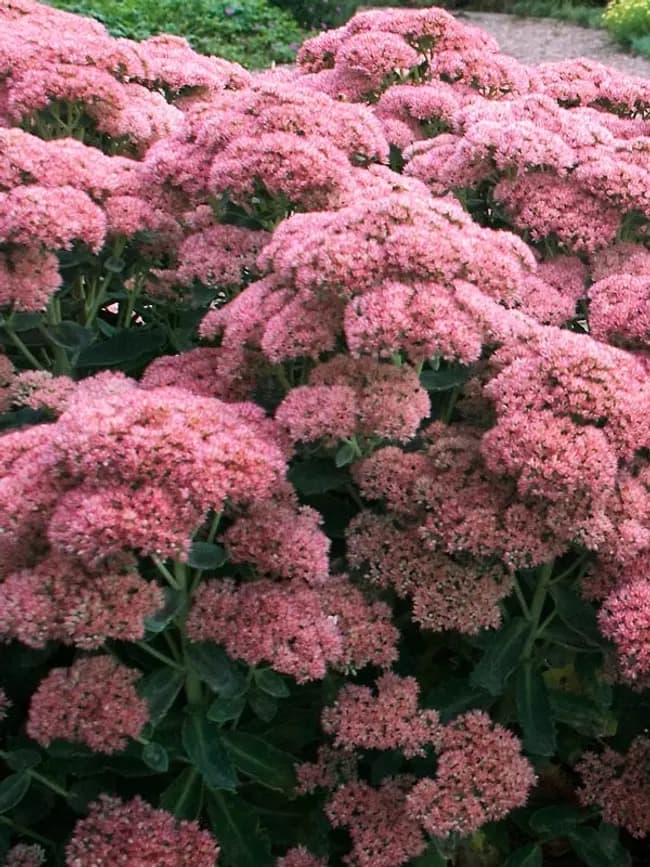
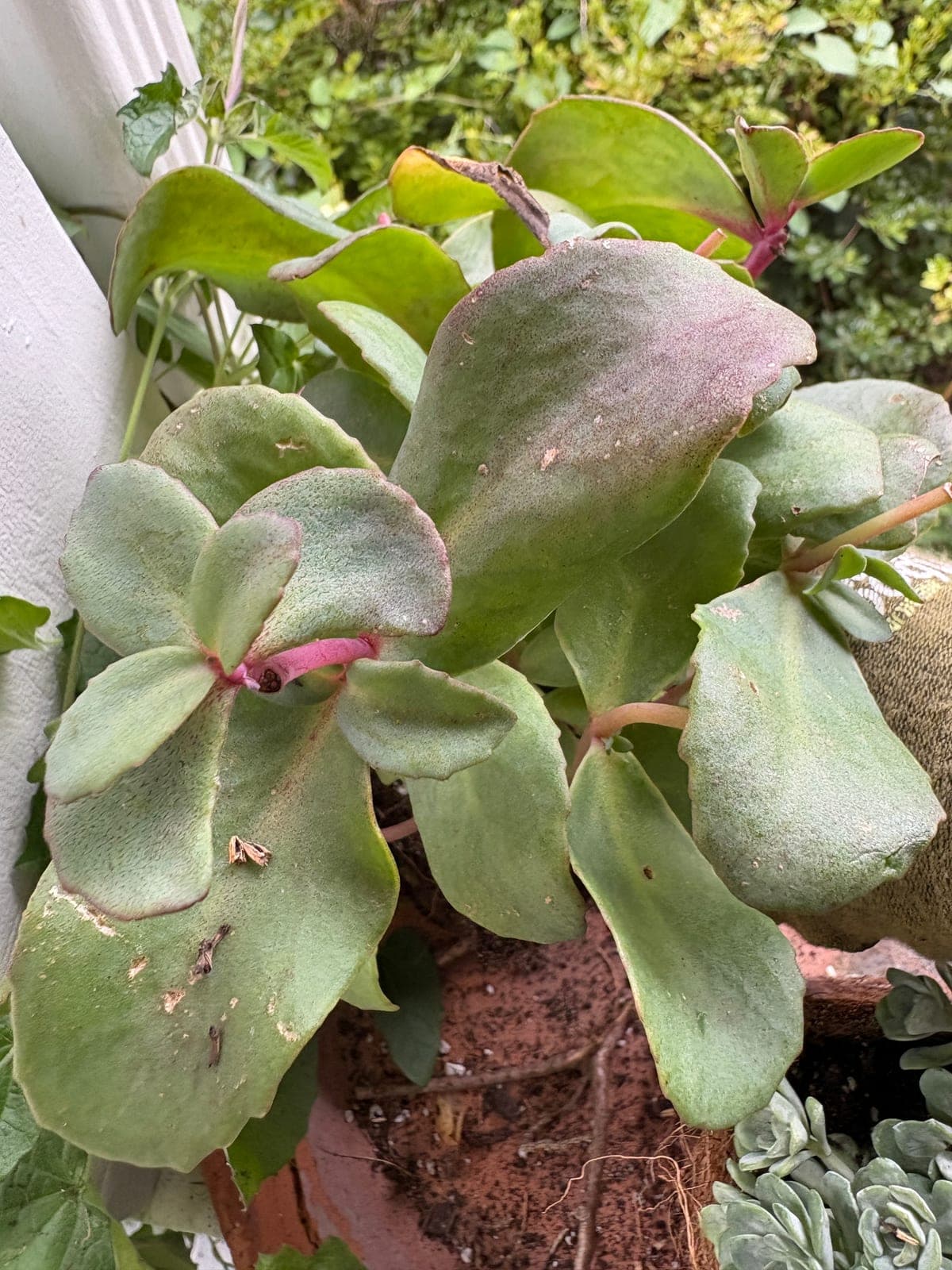
Sedum 'T Rex' is a tall hybrid stonecrop bred for oversized proportions and stiff, self-supporting stems that resist the flopping common in other large sedums. It produces broad, flat-topped heads of rose-pink to dusty rose over bold, blue-green succulent foliage with red-flushed stems from late summer through fall, serving as a reliable late-season nectar source for bees and butterflies when few other perennials remain productive.
Plant in full sun and lean, sharply drained soil. Rich or consistently moist conditions encourage soft growth that collapses under its own weight. Once established, the plant tolerates extended drought and poor soil with minimal intervention. It is fully winter-hardy to zone 3a, dying back completely each year and re-emerging from the crown in mid-spring. Dried stems and heads left standing through winter provide structural interest and overwintering habitat for beneficial insects; cut to ground in early spring before new growth begins.
Sedum telephium, a likely parent species of modern tall sedum cultivars, has a documented history in European folk medicine as a vulnerary - fresh leaves applied topically to minor wounds, burns, and ulcers. Laboratory studies on Sedum genus extracts have confirmed mild anti-inflammatory and antimicrobial activity.
Crown Rot
Lower leaves yellow and wilt; the base of the rosette turns brown and soft, sometimes with white fungal threads at the soil line. Plants collapse in wet conditions.
Remove and destroy affected plants. Improve drainage and avoid overhead watering. Do not mulch directly against the crown. Space plants for airflow and avoid replanting in the same wet spot.
Root rot
Plants wilt, yellow, and stunt even in moist soil; lower stems and roots turn brown, soft, and mushy and the plant may collapse. Most common in heavy, wet, or poorly drained ground.
Improve drainage and stop overwatering, and never plant too deep. Lift and destroy badly affected plants along with the soil around the roots. Grow in raised or free-draining beds to prevent it returning.
Fungal leaf spot
Brown or purplish spots on the leaves, often ringed with a yellow halo, that spread and merge in warm, humid, or wet weather; heavily spotted leaves yellow and drop early.
Pick off spotted leaves and clear fallen debris to remove overwintering spores. Improve air circulation by thinning, and water at the base so foliage dries quickly. If it persists, apply a copper- or sulfur-based fungicide at the first sign.