
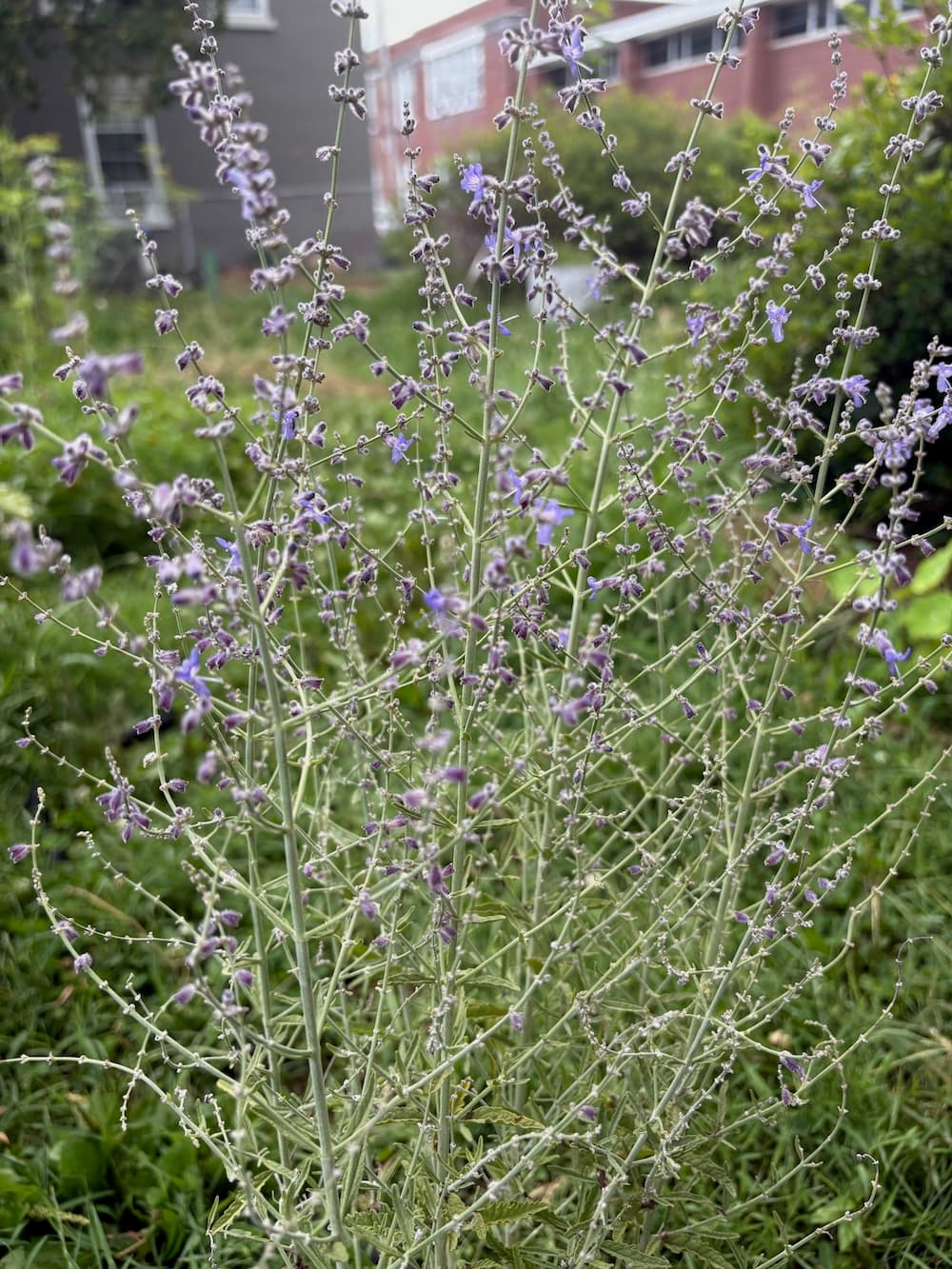
Perovskia atriplicifolia, Russian sage, is a woody-based perennial in the mint family grown for its haze of small lavender-blue flowers held on silvery-white stems above finely cut, aromatic gray-green foliage from midsummer into fall. Native to the dry steppes and rocky hillsides of Central Asia and the Himalayan foothills - not Russia, despite the common name - it forms an airy, upright clump that reads as a soft blue-gray cloud in the border, especially effective massed or paired with warm-colored companions. Recent genetic studies have moved the species into the Salvia genus as Salvia yangii, though it is still sold almost universally under its older name.
It needs full sun and sharp drainage - established plants are highly drought tolerant and rot quickly in soil that stays wet, especially over winter. Unlike many perennials it blooms on new growth, so cut the whole plant back hard to 6–8 inches in early spring once new growth shows at the base; cutting back in fall instead leaves the woody stems to catch snow and protect the crown over winter. It is deer- and rabbit-resistant and tolerates heat, wind, and poor soil better than almost any other flowering perennial.
Root rot
Plants wilt, yellow, and stunt even in moist soil; lower stems and roots turn brown, soft, and mushy and the plant may collapse. Most common in heavy, wet, or poorly drained ground.
Improve drainage and stop overwatering, and never plant too deep. Lift and destroy badly affected plants along with the soil around the roots. Grow in raised or free-draining beds to prevent it returning.
Powdery mildew
White or grey powdery coating on leaves - usually starting on older growth in humid conditions or when nights cool.
Improve air circulation by thinning plants. Apply neem oil or potassium bicarbonate spray at first sign. Avoid overhead watering.