
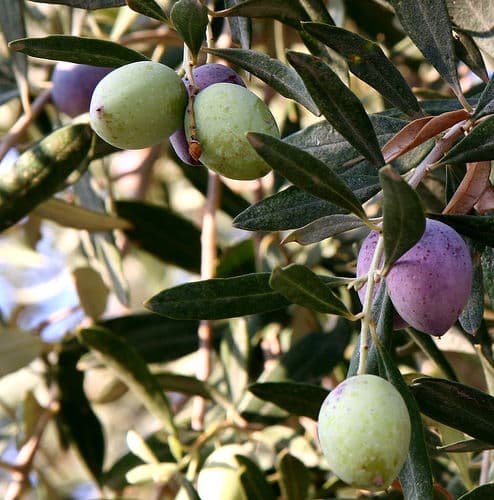
Olive is a slow-growing, long-lived evergreen tree with narrow silver-gray leaves and gnarled, sculptural bark that only gets more characterful with age. Small, fragrant creamy-white flowers appear in loose clusters in early summer, followed by green fruit that ripens to black by fall in climates with a long enough warm season.
It wants heat, full sun, and soil on the lean and dry side - rich or consistently moist ground produces lush foliage but little fruit and weakens the tree's cold tolerance. Olives are marginally hardy outside Zone 8b and suffer real damage below about 15°F, so in the cooler end of their range site them against a warm, sheltered wall. Established trees need little water and even less fertilizer.
Root rot
Plants wilt, yellow, and stunt even in moist soil; lower stems and roots turn brown, soft, and mushy and the plant may collapse. Most common in heavy, wet, or poorly drained ground.
Improve drainage and stop overwatering, and never plant too deep. Lift and destroy badly affected plants along with the soil around the roots. Grow in raised or free-draining beds to prevent it returning.
Verticillium Wilt
Lower leaves yellow and wilt, often on one side of the plant, with brown streaking in the stem and crown tissue when cut open. Plants are stunted and decline over the season.
Remove and destroy affected plants. Avoid planting in soil that has grown infected tomatoes, peppers, or other susceptible crops. Rotate beds and improve drainage; there is no cure once a plant is infected.