
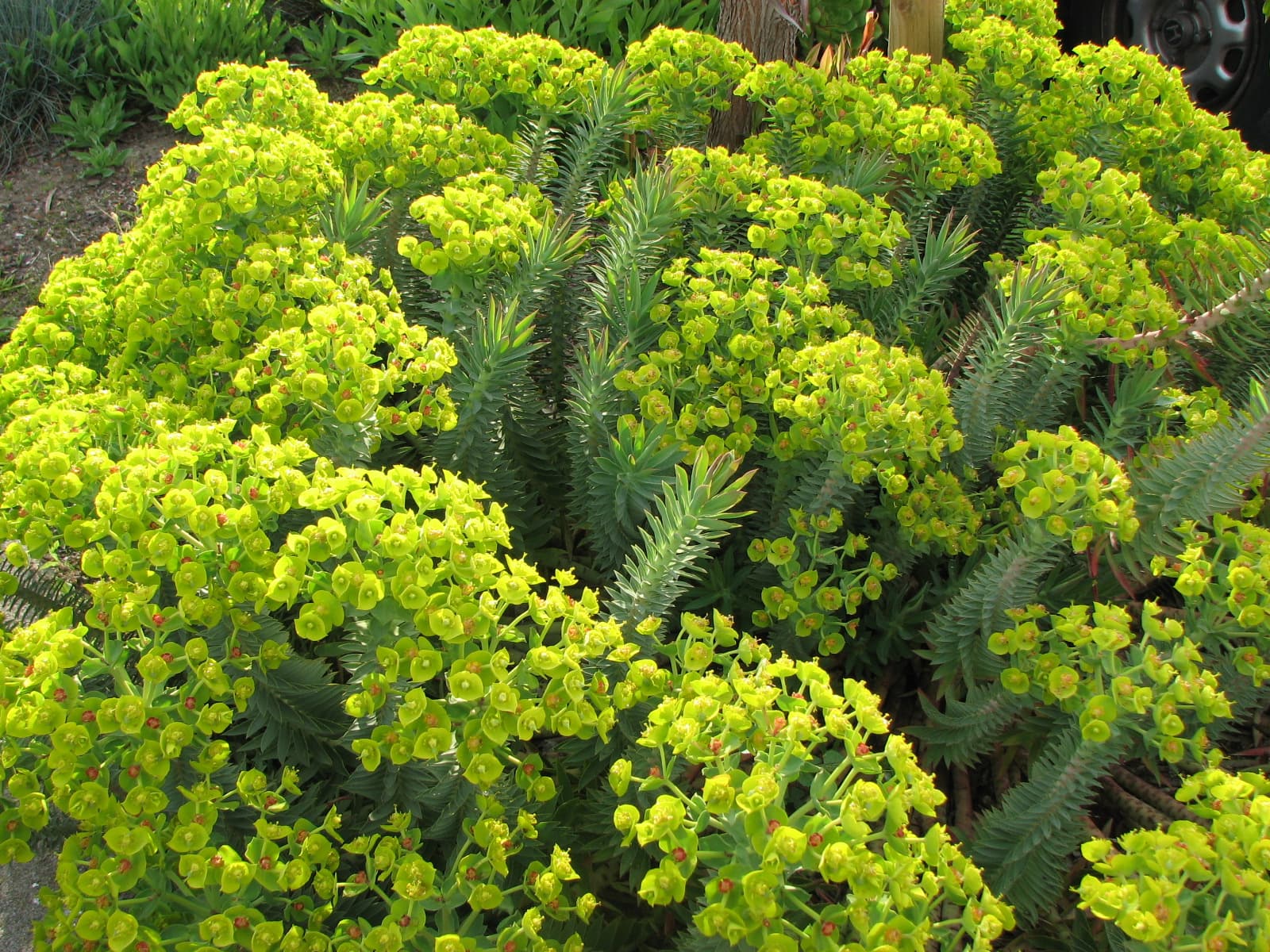
Gopher spurge forms a low, spiraling mound of stiff blue-gray leaves along trailing stems, staying evergreen and architectural through the year. In late winter it tops each stem with a dome of chartreuse-yellow bracts that hold color for weeks - one of the earliest strong color notes in a dry or gravel garden.
It asks for almost nothing once established: lean, sharply drained soil and full sun, with no supplemental water beyond an established root system's reach. Like all euphorbias, the milky sap is a skin and eye irritant, so wear gloves when cutting back old stems. Cut spent flowering stems to the base after bloom - new growth from the crown replaces them for the following year.
Root rot
Plants wilt, yellow, and stunt even in moist soil; lower stems and roots turn brown, soft, and mushy and the plant may collapse. Most common in heavy, wet, or poorly drained ground.
Improve drainage and stop overwatering, and never plant too deep. Lift and destroy badly affected plants along with the soil around the roots. Grow in raised or free-draining beds to prevent it returning.
Crown Rot
Lower leaves yellow and wilt; the base of the rosette turns brown and soft, sometimes with white fungal threads at the soil line. Plants collapse in wet conditions.
Remove and destroy affected plants. Improve drainage and avoid overhead watering. Do not mulch directly against the crown. Space plants for airflow and avoid replanting in the same wet spot.