
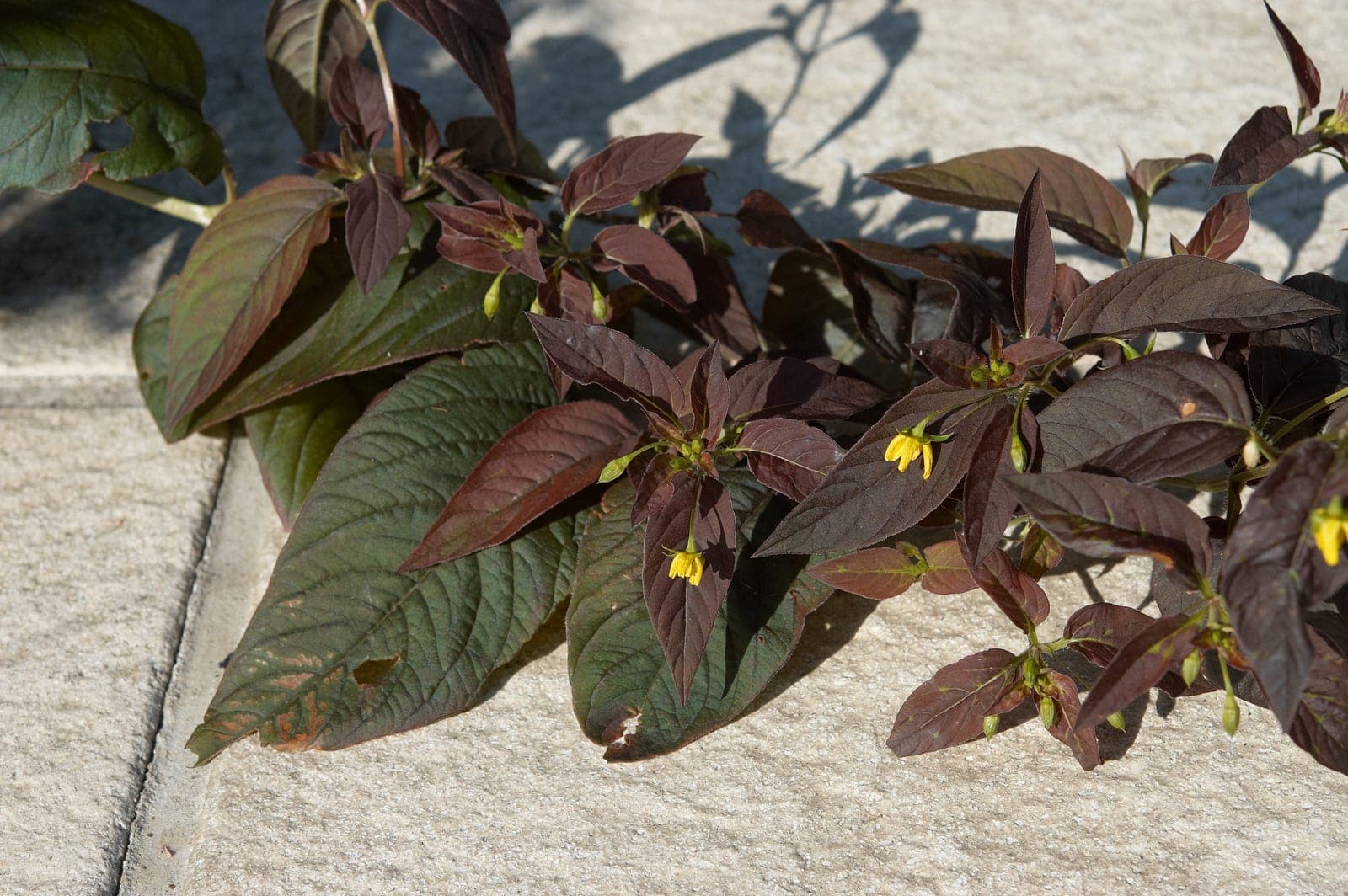
Lysimachia ciliata 'Beaujolais' is a cultivar of fringed loosestrife, a North American native perennial in the primrose family. It is grown primarily for its deep burgundy-purple foliage, which holds color best in full sun. Small, reflexed yellow flowers open in midsummer and contrast sharply against the dark leaves, extending the plant's ornamental value beyond foliage alone.
The plant spreads by rhizomes and colonizes vigorously in moist, fertile soil. It is well suited to rain gardens, pond margins, wet meadow edges, and low-lying spots where drainage is poor. In mixed borders, install root barriers or divide annually to limit spread. Stems die back completely in winter, and foliage often turns coppery-gold before senescence in fall. Prefers near-neutral to slightly acidic soil with reliable moisture.
Lysimachia ciliata has a documented ecological link to oil-collecting bees in the genus Macropis, particularly Macropis nuda in North America. These specialist bees collect floral oils from the reflexed petals to provision their brood cells - a relationship rarely supported by other common garden plants, giving this species genuine value in pollinator-focused plantings.
Ecoregions:Northern ForestsNorthwestern Forested MountainsEastern Temperate ForestsGreat Plains
Rust
Orange to brown raised pustules on the undersides of leaves, with yellow spotting on the upper surface. Heavy infections cause leaves to yellow and drop.
Remove and destroy infected leaves. Avoid overhead watering and improve air circulation. Apply a sulfur or copper-based fungicide if it spreads. Clear plant debris in fall.
Fungal leaf spot
Brown or purplish spots on the leaves, often ringed with a yellow halo, that spread and merge in warm, humid, or wet weather; heavily spotted leaves yellow and drop early.
Pick off spotted leaves and clear fallen debris to remove overwintering spores. Improve air circulation by thinning, and water at the base so foliage dries quickly. If it persists, apply a copper- or sulfur-based fungicide at the first sign.
Root rot
Plants wilt, yellow, and stunt even in moist soil; lower stems and roots turn brown, soft, and mushy and the plant may collapse. Most common in heavy, wet, or poorly drained ground.
Improve drainage and stop overwatering, and never plant too deep. Lift and destroy badly affected plants along with the soil around the roots. Grow in raised or free-draining beds to prevent it returning.