
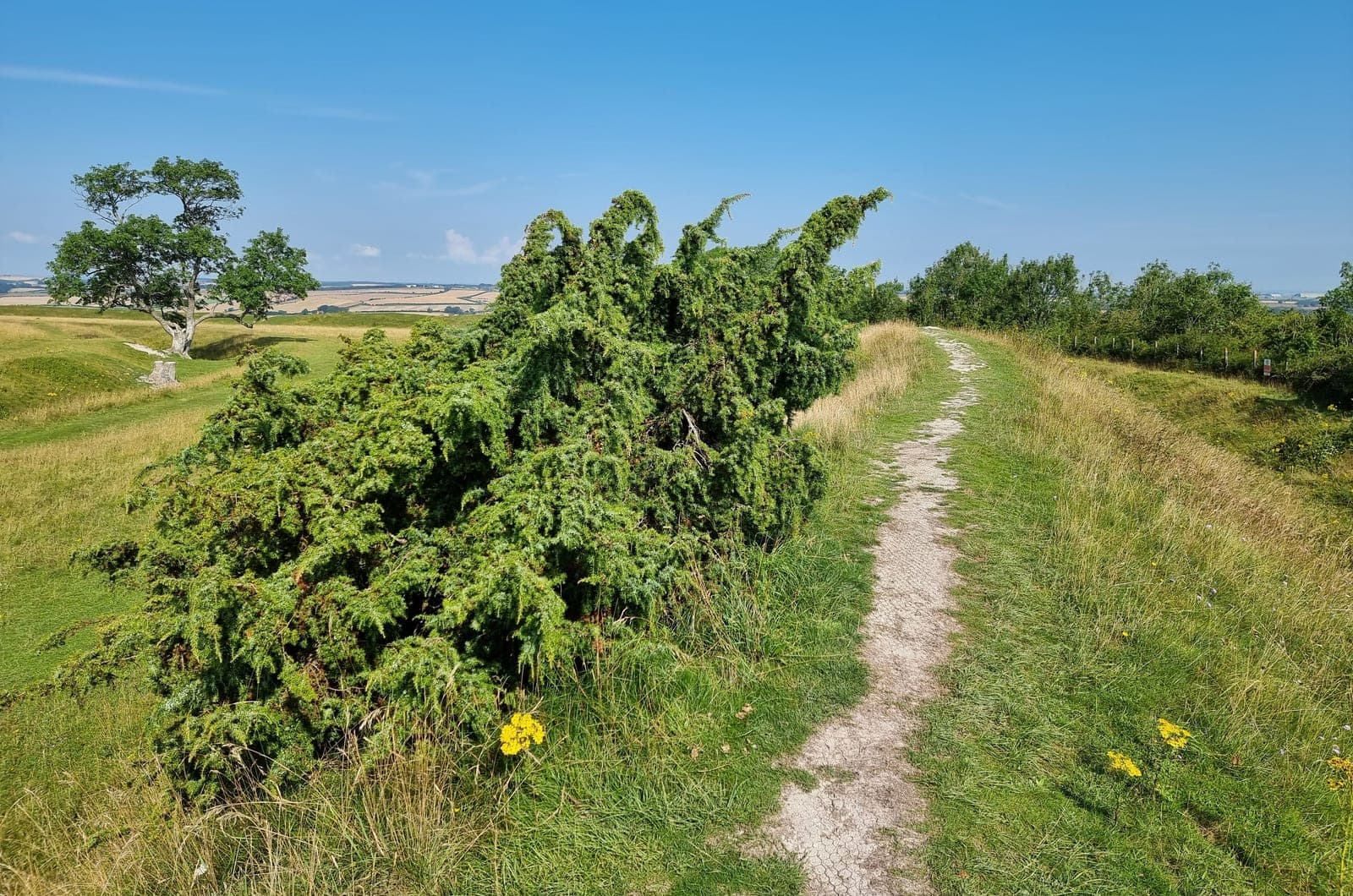
Juniperus communis holds the record as the world's most widely distributed woody plant, native across the cool temperate Northern Hemisphere from subarctic regions to mountain slopes in North Africa and Asia. In cultivation it is a durable, evergreen conifer grown as a shrub for structure, texture, and wildlife value in cold-climate gardens.
The species thrives in rocky, sandy, or nutrient-poor soils and tolerates alkaline conditions and exposed sites where other shrubs fail. It cannot tolerate waterlogged roots; drainage is its primary requirement. Cultivars range from prostrate ground-covering forms under one foot tall to upright specimens exceeding 10 feet. Birds eat the berry-like cones and use the dense, sharp foliage for nesting and shelter. Mulching around the root zone aids establishment, but mounding mulch against the base invites crown rot. The species spreads slowly; select a cultivar matched to the space before planting.
The ripe second-year cones are the primary botanical flavoring in gin and appear throughout European cuisines seasoning game, pork, and fermented foods including sauerkraut. Traditional herbal medicine across the Northern Hemisphere applied the berries as a diuretic and digestive tonic and to address urinary tract complaints and rheumatic conditions; the berry essential oil has demonstrated antimicrobial properties in laboratory studies.
Ecoregions:TaigaNorthern ForestsNorthwestern Forested MountainsMarine West Coast ForestEastern Temperate ForestsGreat PlainsNorth American DesertsTemperate Sierras
Kabatina Twig Blight
Tips of one-year-old shoots turn yellow then straw-brown, most visibly from late winter through early spring. Tiny black pycnidia appear at the boundary of dead and living tissue. Unlike Phomopsis blight, which kills current-season shoots in summer, Kabatina affects previous-year wood and symptoms are most prominent at or before bud break.
Prune affected shoots 2–3 inches below visible symptoms during dry weather; disinfect cutting tools between each cut with 70% isopropyl alcohol. Avoid overhead irrigation. Apply a preventive copper-based or thiophanate-methyl fungicide in early fall before temperatures drop. Thin dense interior foliage to improve air circulation.
Phomopsis Blight
Irregular brown lesions on leaves, stems, and fruit. Stem lesions can girdle the plant, causing wilting above the infection point. Fruit develops sunken, dark, water-soaked spots that expand and rot rapidly in warm, wet conditions. Small black fruiting bodies may be visible inside older lesions.
Remove and destroy all infected tissue. Avoid overhead irrigation and improve air circulation through adequate spacing. Apply copper-based fungicide at first symptoms and repeat every 7–10 days during wet weather. Rotate out of the nightshade family for at least 3 years and start with certified disease-free transplants.
Cedar-Apple Rust
Hard, reddish-brown galls up to 2 inches in diameter form on twigs and small branches. During warm, wet spring weather, galls swell and produce bright orange, gelatinous, finger-like telial horns up to 1 inch long. Repeated infections weaken individual branches. On alternate hosts (apple, crabapple), the disease causes yellow to orange leaf spots, premature defoliation, and distorted fruit.
Prune and bag galls before telial horns emerge in spring; do not compost removed material. Apply a preventive fungicide - myclobutanil or propiconazole - to high-value apple or crabapple hosts nearby during the spring spore release window. Where feasible, avoid siting Juniperus virginiana within several hundred feet of apple orchards. Choosing rust-resistant apple and crabapple cultivars breaks the disease cycle more reliably than chemical control alone.