
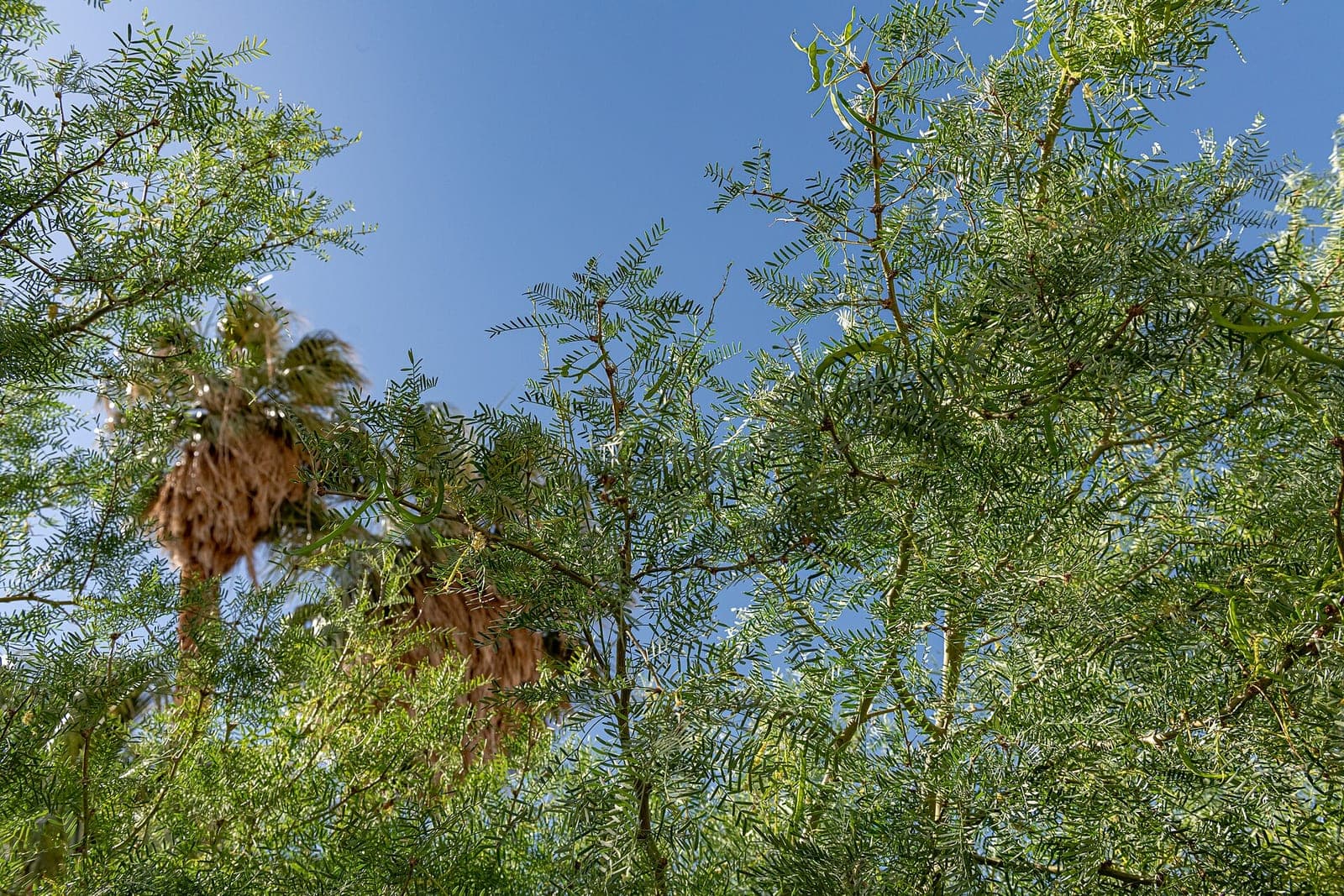
Honey mesquite is a thorny, deciduous legume tree or large shrub native to the Chihuahuan and Sonoran Deserts and the southern Great Plains, ranging from Texas to California and into Mexico. It fixes atmospheric nitrogen through root nodules, improving surrounding soil, and ranks among the most drought-tolerant trees in North America, persisting on fewer than 8 inches of annual rainfall.
The species develops a taproot capable of reaching extraordinary depths - documented examples exceed 50 feet - to access groundwater. In rangeland settings it spreads rapidly when livestock disperse seeds, colonizing former grasslands. In gardens, remove pods before they shatter to limit self-seeding. Tolerates alkaline, saline, and shallow soils. Cold-hardiness is moderate; established trees survive temperatures to 0°F in zone 7 but young specimens benefit from protection in the first winter.
Ripe seed pods are ground into a sweet, protein-rich flour used in flatbreads, pancakes, and confections. The dense heartwood is a standard fuel for smoking meats. Indigenous peoples across the Southwest used bark-exuded gum as a topical treatment for wounds and eye irritation, and prepared leaf or bark decoctions for sore throats, headaches, and gastrointestinal complaints.
Ecoregions:Eastern Temperate ForestsGreat PlainsNorth American DesertsMediterranean CaliforniaTemperate Sierras
Texas Root Rot
Sudden wilting of branches or the entire canopy, often following a wet period. White cottony fungal mats develop on infected roots. Wood at the crown appears dark and water-soaked. Decline can progress to tree death within weeks.
No effective chemical cure exists. Ensure excellent drainage and avoid overwatering. Remove and destroy all infected plant material. Avoid replanting susceptible species in the same soil for several years.
Root rot
Plants wilt, yellow, and stunt even in moist soil; lower stems and roots turn brown, soft, and mushy and the plant may collapse. Most common in heavy, wet, or poorly drained ground.
Improve drainage and stop overwatering, and never plant too deep. Lift and destroy badly affected plants along with the soil around the roots. Grow in raised or free-draining beds to prevent it returning.