
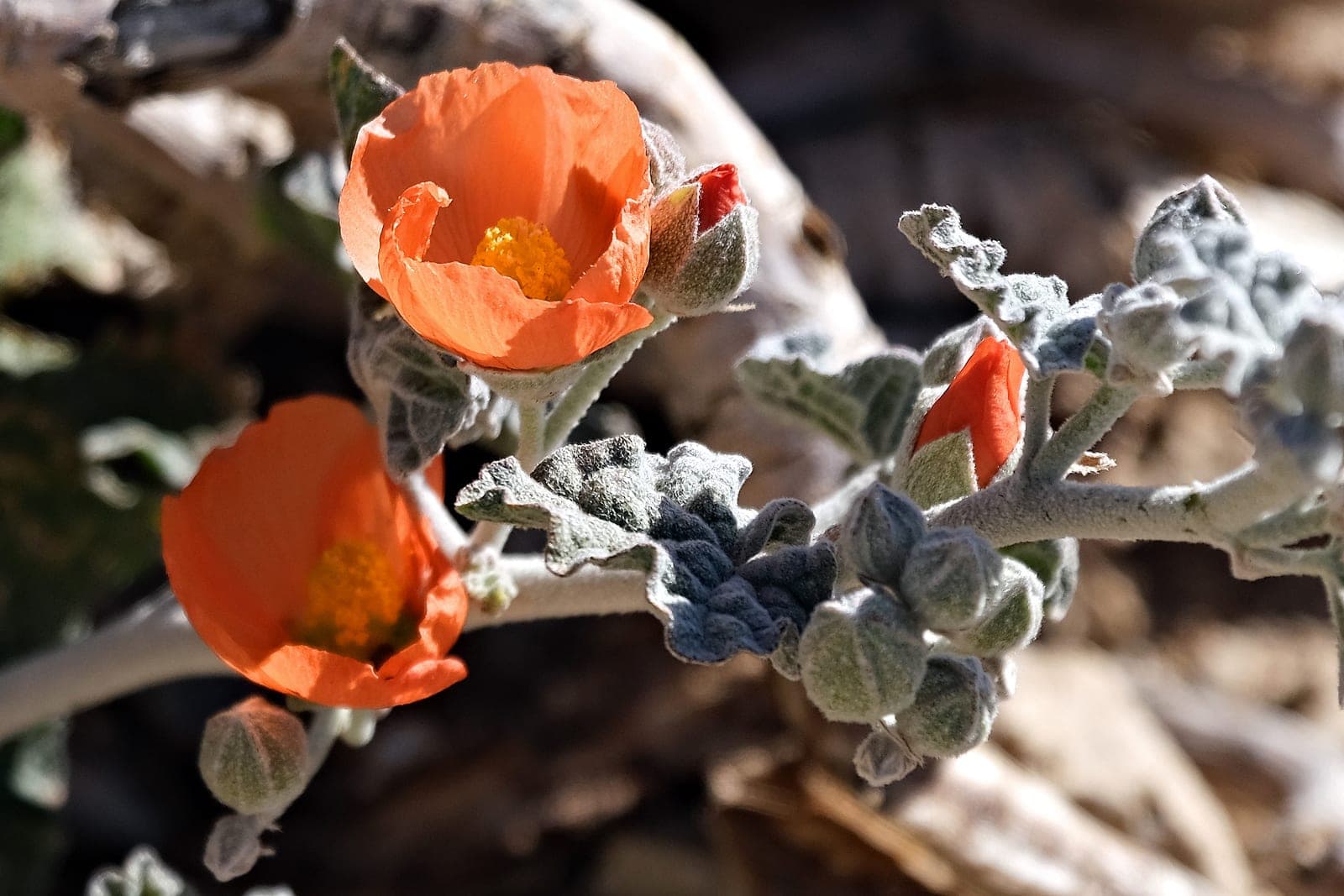
Desert globemallow (Sphaeralcea ambigua) is a drought-tolerant perennial subshrub native to the Mojave, Sonoran, and Great Basin deserts of the southwestern United States and northwestern Mexico. Its apricot-orange cup-shaped flowers and fuzzy grey-green foliage make it one of the most recognizable wildflowers of the desert Southwest. It has significant value in xeriscape and low-water gardens, producing color for months with virtually no supplemental irrigation once established.
This plant tolerates extreme heat, alkaline soils, and rocky or sandy ground. It grows naturally along roadsides, dry washes, and rocky slopes. Established plants perform best with occasional deep watering rather than frequent light irrigation; overwatering in heavy soils is the primary cause of failure in garden settings. Cut stems back by one-third in late winter to prevent a woody, open base and encourage dense branching. The stellate (star-shaped) trichomes covering leaves and stems can cause eye irritation - avoid touching eyes after handling foliage.
Several indigenous groups of the Southwest used Sphaeralcea species as a demulcent for sore throats and coughs and applied poultices of the mucilaginous leaves and roots to wounds and skin irritations. The plant provides critical forage for native specialist bees in the genus Diadasia, which are closely associated with the mallow family and depend on its pollen.
Ecoregions:North American DesertsMediterranean CaliforniaTemperate Sierras
Phytophthora Root Rot
Wilting despite moist soil, yellowing leaves, stunted growth, and dark, decayed roots and crown tissue. Vines may collapse during hot weather.
Plant in well-draining soil and avoid waterlogging. Remove and destroy affected vines. Improve drainage with raised beds or amended soil and avoid overwatering.
Powdery mildew
White or grey powdery coating on leaves - usually starting on older growth in humid conditions or when nights cool.
Improve air circulation by thinning plants. Apply neem oil or potassium bicarbonate spray at first sign. Avoid overhead watering.
Texas Root Rot
Sudden wilting of branches or the entire canopy, often following a wet period. White cottony fungal mats develop on infected roots. Wood at the crown appears dark and water-soaked. Decline can progress to tree death within weeks.
No effective chemical cure exists. Ensure excellent drainage and avoid overwatering. Remove and destroy all infected plant material. Avoid replanting susceptible species in the same soil for several years.