
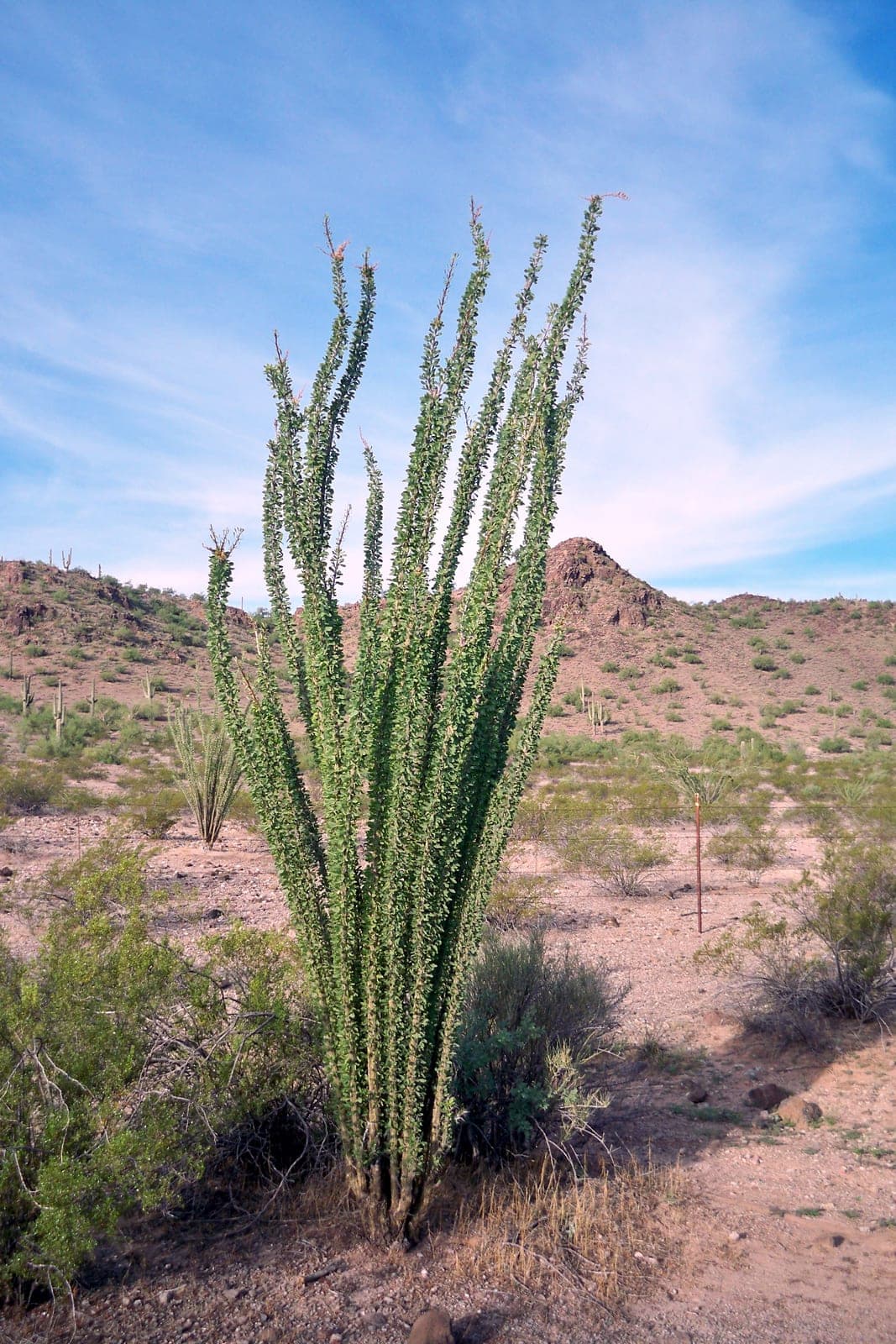
Ocotillo is a tall, whip-stemmed desert shrub native to the Chihuahuan, Sonoran, Mojave, and Colorado deserts of the American Southwest and northern Mexico. It belongs to the family Fouquieriaceae and is not a cactus despite its thorny stems. Scarlet tubular flower clusters at branch tips in spring draw hummingbirds heavily, and the plant's stark architectural silhouette makes it one of the most structurally distinctive choices for low-water Southwestern landscapes. Planted in rows and allowed to root, lashed stems form an effective living fence.
Ocotillo is drought-deciduous: leaves emerge within days of significant rainfall and drop again once the soil dries, a cycle that may repeat several times per year. The plant demands rocky or sandy, sharply drained soil with no organic amendment. Heavy clay or any standing water is nearly always fatal. pH tolerance is broad as long as drainage is excellent. Established specimens need little to no supplemental irrigation. In borderline climates it survives brief light frosts but suffers stem-tip dieback and can die outright below about 10°F.
Hopi, Cahuilla, and other Indigenous peoples consumed ocotillo flowers fresh and prepared flower-infused drinks. In Mexican and Southwestern herbal tradition, bark preparations have been used for fatigue, lymphatic swelling, cough, and benign prostatic conditions. Dried canes serve as building material for ramadas, corrals, and wattle-style fencing throughout Sonora and Chihuahua.
Ecoregions:North American DesertsMediterranean CaliforniaSouthern Semi-Arid HighlandsTemperate Sierras
Phytophthora Root Rot
Wilting despite moist soil, yellowing leaves, stunted growth, and dark, decayed roots and crown tissue. Vines may collapse during hot weather.
Plant in well-draining soil and avoid waterlogging. Remove and destroy affected vines. Improve drainage with raised beds or amended soil and avoid overwatering.
Bacterial Necrosis
Dark, water-soaked patches on the stem surface that expand and turn black, then collapse into soft, foul-smelling cavities. Infected tissue disintegrates, often leaving visible hollow sections within the trunk.
Cut out all infected tissue with a sterilized blade, cutting back to firm, healthy tissue. Allow the wound to callus in dry air away from direct rain exposure. No bactericide provides reliable control once infection is established. Prevention depends on avoiding mechanical wounds to the stem and maintaining sharp soil drainage at all times.