
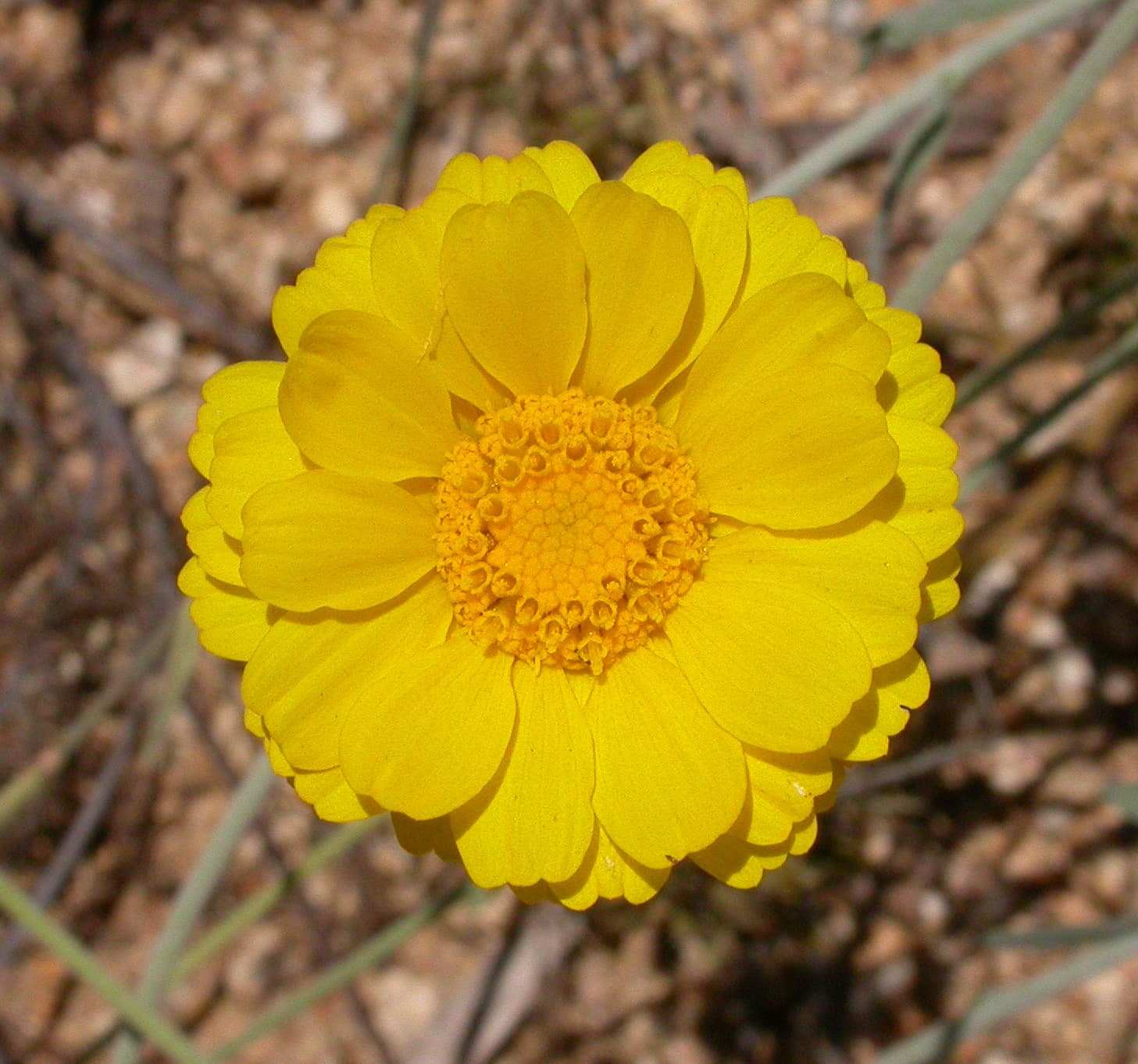
Baileya multiradiata is a perennial wildflower native to the Chihuahuan and Sonoran deserts of the southwestern United States and northern Mexico. It produces bright yellow, daisy-like heads on woolly, gray-green stems and blooms from early spring through fall - one of the longest bloom windows of any arid-land native. It performs well in xeriscape plantings, naturalized desert gardens, and highway medians.
The plant grows naturally in sandy washes, decomposed granite, and rocky slopes with fast drainage. It is short-lived as a perennial but self-seeds prolifically, forming persistent colonies without intervention. Clay or compacted soil causes rapid root failure. Soil pH of 7.0–8.5 suits it well. Infrequent deep watering during prolonged drought extends the bloom season; in-ground plants in established desert gardens rarely need supplemental irrigation. A gravel or decomposed granite mulch around the crown discourages rot during monsoon rains.
All parts of the plant contain sesquiterpene lactones, including radiatin and hymenin, which are toxic to sheep and in high doses to cattle and horses. Most browsing mammals avoid it in the wild, which contributes to its persistence across overgrazed rangeland. Its extended flowering period makes it a reliable nectar source for native bees, beetles, and painted lady butterflies.
Ecoregions:North American DesertsMediterranean CaliforniaSouthern Semi-Arid HighlandsTemperate Sierras
Phytophthora Root Rot
Wilting despite moist soil, yellowing leaves, stunted growth, and dark, decayed roots and crown tissue. Vines may collapse during hot weather.
Plant in well-draining soil and avoid waterlogging. Remove and destroy affected vines. Improve drainage with raised beds or amended soil and avoid overwatering.
Crown Rot
Lower leaves yellow and wilt; the base of the rosette turns brown and soft, sometimes with white fungal threads at the soil line. Plants collapse in wet conditions.
Remove and destroy affected plants. Improve drainage and avoid overhead watering. Do not mulch directly against the crown. Space plants for airflow and avoid replanting in the same wet spot.
Powdery mildew
White or grey powdery coating on leaves - usually starting on older growth in humid conditions or when nights cool.
Improve air circulation by thinning plants. Apply neem oil or potassium bicarbonate spray at first sign. Avoid overhead watering.