
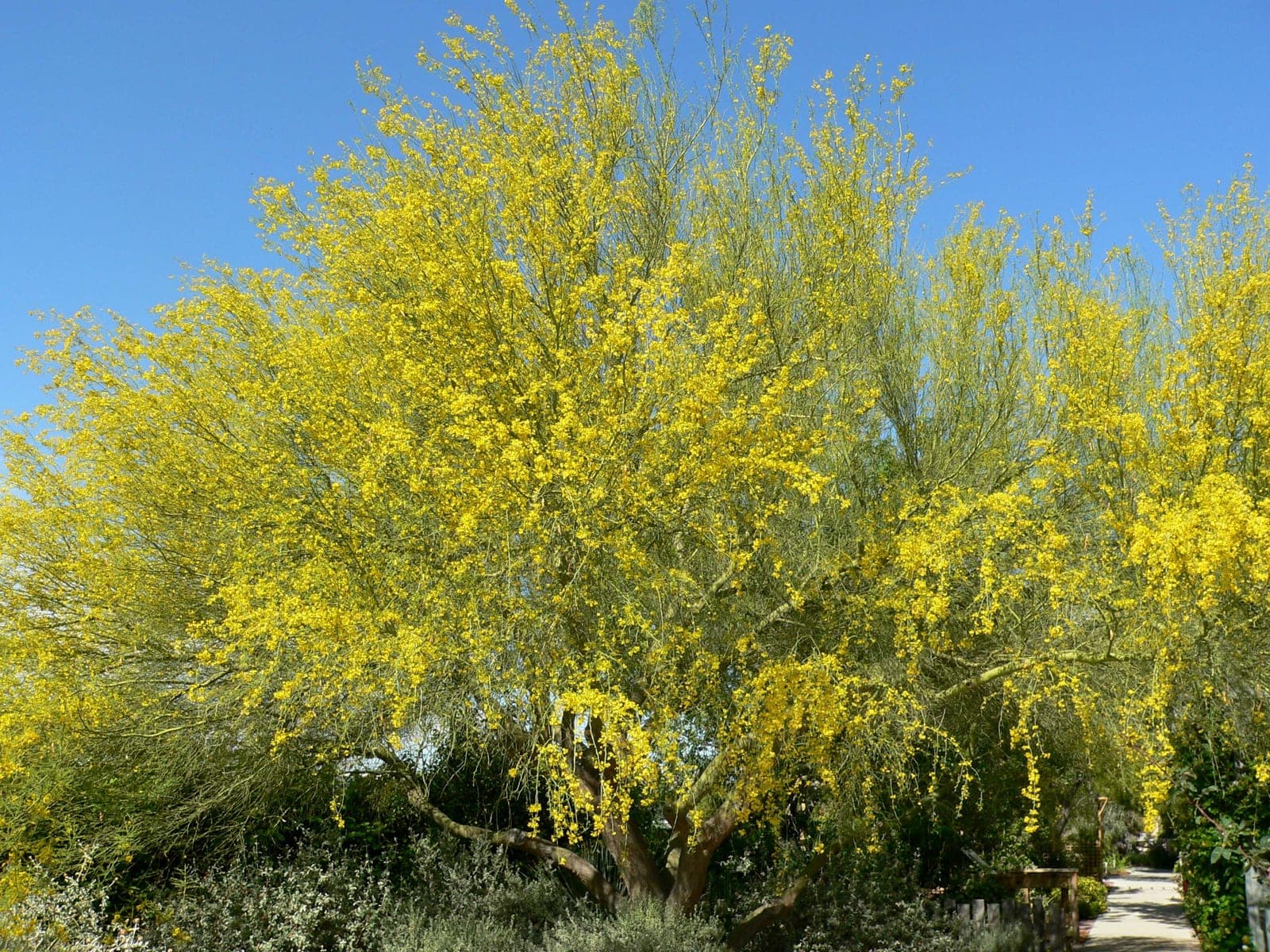
Blue Palo Verde is a medium-sized tree native to the Sonoran Desert of the southwestern United States and northwestern Mexico. Its green bark on trunks and branches performs photosynthesis year-round, allowing the tree to continue producing energy after dropping its small, pinnate leaves during drought or cold. In spring it produces a heavy flush of bright yellow flowers across nearly every branch, making it one of the most visually striking trees in the desert landscape.
Established trees are highly drought tolerant and typically need no supplemental irrigation once rooted. They grow at a moderate to fast rate for a desert tree, reaching 15–30 ft tall with a broad, irregular canopy. Well-drained, sandy or gravelly soil is essential - standing water leads quickly to fatal root rot. Blue Palo Verde fixes atmospheric nitrogen through root associations, improving soil fertility for neighboring plants. Its thorny branching structure provides nesting cover for birds, and spring flowers attract large numbers of native bees and other pollinators. Seed pods mature by early summer and provide forage for quail, ground squirrels, and other desert wildlife.
Seeds inside the pods were a staple food for the Tohono O'odham and other Sonoran Desert peoples. Green seeds can be eaten raw or roasted; dried seeds are ground into flour for porridge or flatbread. The seeds are high in protein and carbohydrates and represent a significant calorie source in desert subsistence traditions.
Ecoregions:North American DesertsSouthern Semi-Arid HighlandsTemperate Sierras
Phytophthora Root Rot
Wilting despite moist soil, yellowing leaves, stunted growth, and dark, decayed roots and crown tissue. Vines may collapse during hot weather.
Plant in well-draining soil and avoid waterlogging. Remove and destroy affected vines. Improve drainage with raised beds or amended soil and avoid overwatering.
Texas Root Rot
Sudden wilting of branches or the entire canopy, often following a wet period. White cottony fungal mats develop on infected roots. Wood at the crown appears dark and water-soaked. Decline can progress to tree death within weeks.
No effective chemical cure exists. Ensure excellent drainage and avoid overwatering. Remove and destroy all infected plant material. Avoid replanting susceptible species in the same soil for several years.