
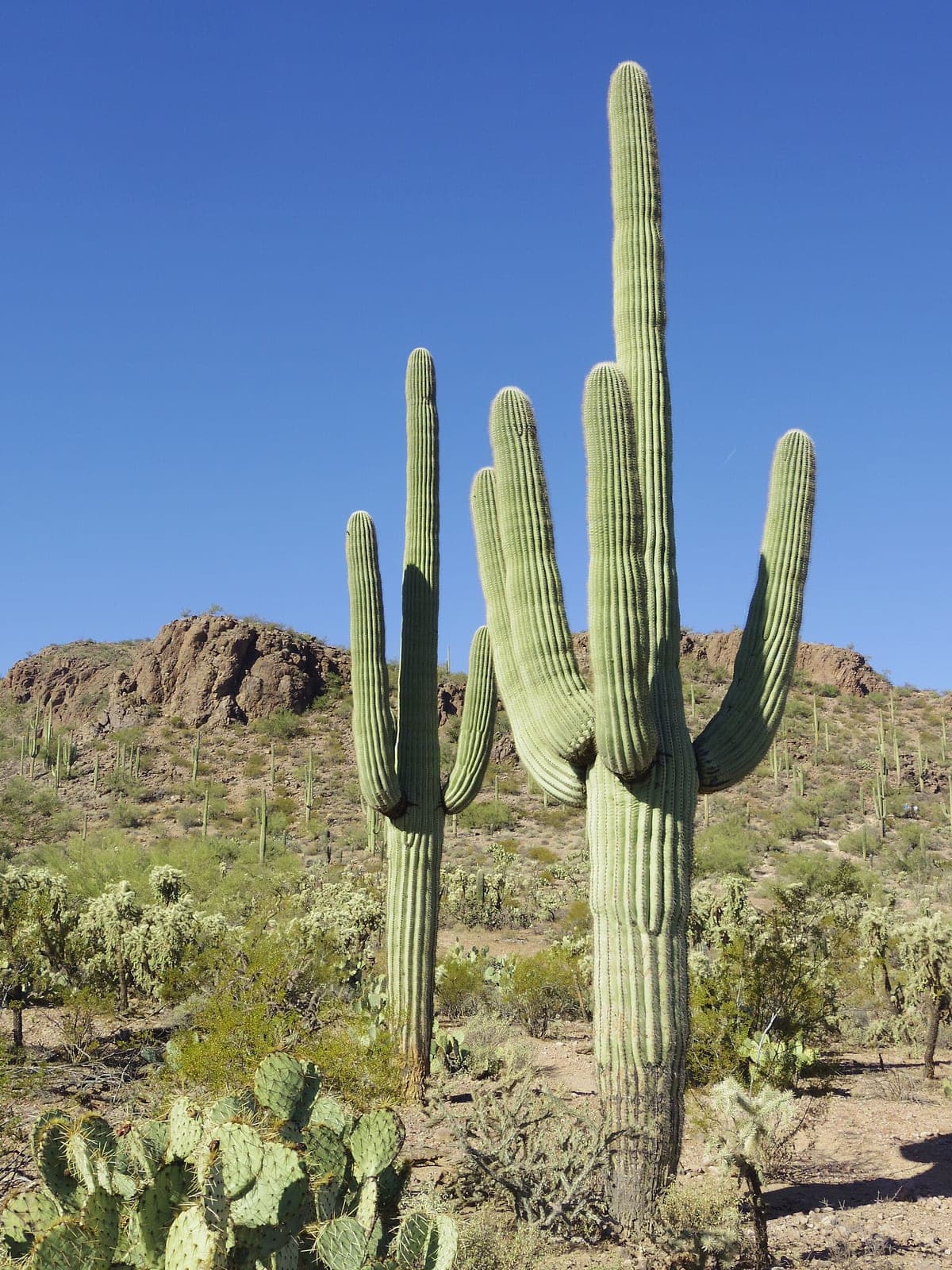
Saguaro is the largest cactus native to the United States and the defining vertical element of the Sonoran Desert. It can exceed 40 feet in height and live 150–200 years, developing its characteristic branching arms only after 75 or more years. Native to Arizona, the Mexican state of Sonora, and isolated sites in California's Whipple Mountains and Imperial County, it is protected within Saguaro National Park near Tucson. Its white nocturnal flowers are Arizona's state wildflower, opening from late April through June and pollinated primarily by lesser long-nosed bats, white-winged doves, and bees.
Saguaro is extremely slow growing and requires no supplemental water once established in suitable desert conditions. It must have sharp drainage - standing water kills roots within days - and full, unobstructed sun. Established plants tolerate brief cold to about 18–20°F, but freezing temperatures sustained for several hours cause tissue death or toppling. Planting against south-facing rocky slopes or near heat-retaining boulders extends cold-hardiness at the zone 9a margin. Overwatering in cultivation is the primary cause of failure.
The Tohono O'odham harvest saguaro fruit each June using poles fashioned from the dried ribs of dead plants. The red pulp is eaten fresh, dried into cakes, or boiled into syrup; seeds are pressed for an oil-rich paste. Fermented saguaro wine plays a central role in traditional rain ceremonies. Cavities excavated by Gila woodpeckers in the trunk are reused by elf owls, screech-owls, and purple martins, making saguaro a keystone habitat species across the Sonoran Desert ecosystem.
Ecoregions:North American DesertsSouthern Semi-Arid HighlandsTemperate Sierras
Crown Rot
Lower leaves yellow and wilt; the base of the rosette turns brown and soft, sometimes with white fungal threads at the soil line. Plants collapse in wet conditions.
Remove and destroy affected plants. Improve drainage and avoid overhead watering. Do not mulch directly against the crown. Space plants for airflow and avoid replanting in the same wet spot.
Phytophthora Root Rot
Wilting despite moist soil, yellowing leaves, stunted growth, and dark, decayed roots and crown tissue. Vines may collapse during hot weather.
Plant in well-draining soil and avoid waterlogging. Remove and destroy affected vines. Improve drainage with raised beds or amended soil and avoid overwatering.
Bacterial Necrosis
Dark, water-soaked patches on the stem surface that expand and turn black, then collapse into soft, foul-smelling cavities. Infected tissue disintegrates, often leaving visible hollow sections within the trunk.
Cut out all infected tissue with a sterilized blade, cutting back to firm, healthy tissue. Allow the wound to callus in dry air away from direct rain exposure. No bactericide provides reliable control once infection is established. Prevention depends on avoiding mechanical wounds to the stem and maintaining sharp soil drainage at all times.