
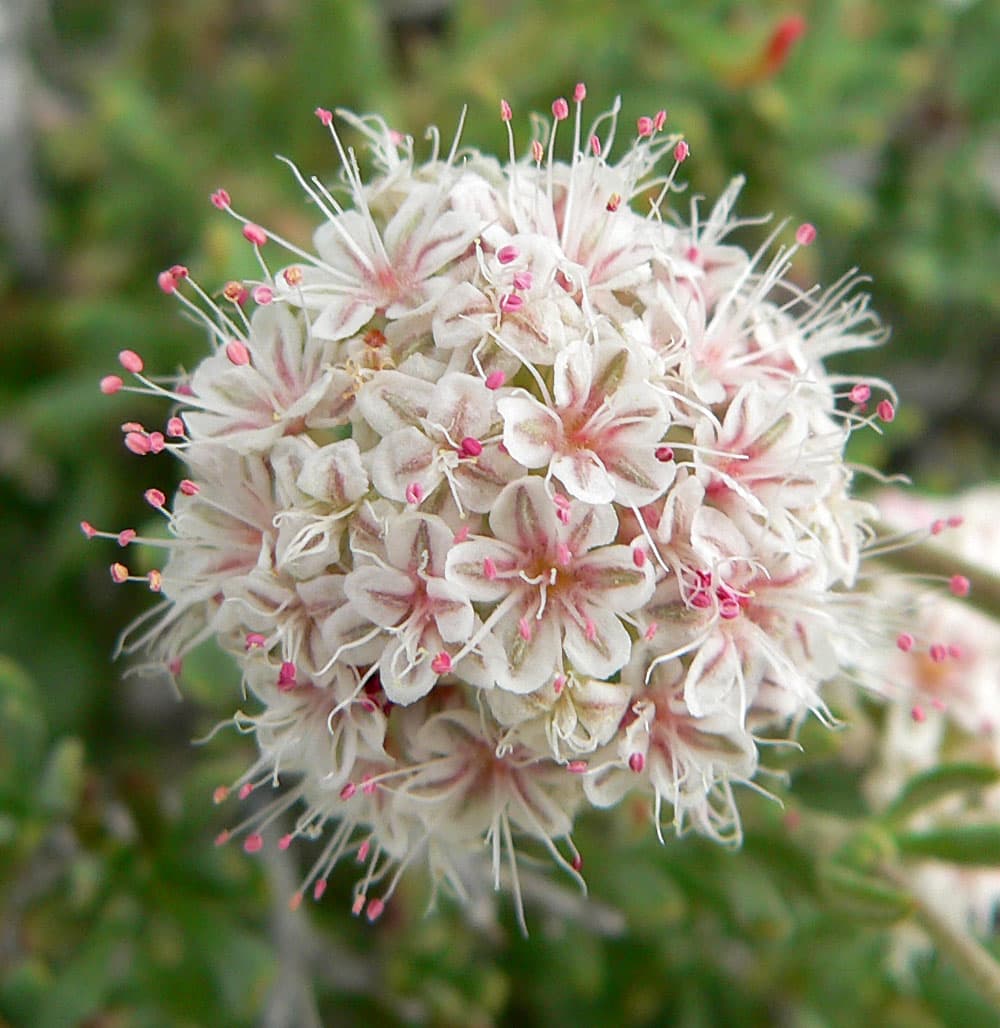
Eriogonum fasciculatum is a native shrub of California's chaparral, coastal sage scrub, and dry foothills, ranging from Baja California north into Utah and Nevada. It grows from a low spreading mat to a dense shrub, producing clusters of small white to pink flowers that dry to a persistent rusty red-brown and hold through winter. Gardeners in arid western climates value it for drought tolerance, year-round structure, and its standing as one of the most important native pollinator plants in California.
Plants establish quickly from container stock set out in fall, using winter rains to develop roots before summer heat arrives. They require no supplemental irrigation once established in most California climates and perform best in rocky, sandy, or decomposed granite soils with sharp drainage. Clay soil and overwatering cause rapid root rot and are the most common reasons plants fail in garden settings. Light pruning after the main flowering period encourages compact form; hard cuts into old wood rarely regenerate. Plants are short-lived by shrub standards, typically peaking at 10–15 years, and are best renewed from rooted cuttings or fresh nursery stock rather than hard renovation pruning.
The flowers are a critical nectar and pollen source for native bees, including specialist Perdita and Andrena species that forage almost exclusively on Eriogonum, and the plant is a documented larval host for the Acmon blue and square-spotted blue butterflies. Chumash and Cahuilla peoples brewed leaf tea for stomach complaints and used plant preparations externally for headaches and skin irritation. In restoration work, California buckwheat colonizes burned sites rapidly and is widely deployed for erosion control on dry slopes and cut roadsides.
Ecoregions:North American DesertsMediterranean CaliforniaTemperate Sierras
Phytophthora Root Rot
Wilting despite moist soil, yellowing leaves, stunted growth, and dark, decayed roots and crown tissue. Vines may collapse during hot weather.
Plant in well-draining soil and avoid waterlogging. Remove and destroy affected vines. Improve drainage with raised beds or amended soil and avoid overwatering.
Powdery mildew
White or grey powdery coating on leaves - usually starting on older growth in humid conditions or when nights cool.
Improve air circulation by thinning plants. Apply neem oil or potassium bicarbonate spray at first sign. Avoid overhead watering.