
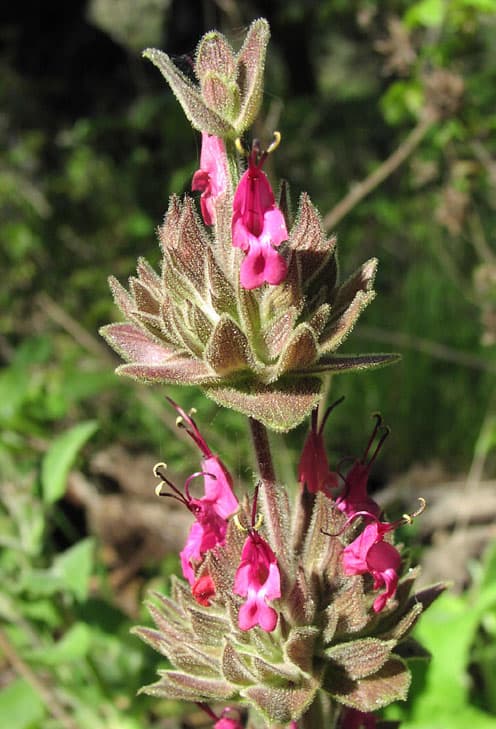
Salvia spathacea is a rhizomatous perennial native to central and southern California, found in coastal scrub, chaparral margins, and oak woodland understory from sea level to about 610 m. It spreads by underground stems to form broad colonies and is one of the few sages that performs reliably in dry shade, making it useful under trees or on slopes where moisture is scarce.
Large, wrinkled, gray-green leaves carry a strong fruity-grape fragrance when brushed. In spring, flowering stems rise 3–4 ft above the foliage and bear whorled dark rose-lilac flowers that attract hummingbirds and native bees. Once established, plants need virtually no supplemental irrigation in Mediterranean climates and are semi-deciduous in colder winters at the edge of their hardiness range. In garden beds with rich, moist soil, rhizomes can spread aggressively; use edging or periodic division to contain them. pH tolerance is broad, roughly 6.0–8.0; the plant is not acid-dependent.
Chumash and other California indigenous peoples used the leaves as a food flavoring and brewed them as a tea for coughs and respiratory ailments. The leaves have a distinctive grape-sage flavor and are edible, used occasionally in teas and as a culinary seasoning.
Ecoregions:Mediterranean California
Root rot
Plants wilt, yellow, and stunt even in moist soil; lower stems and roots turn brown, soft, and mushy and the plant may collapse. Most common in heavy, wet, or poorly drained ground.
Improve drainage and stop overwatering, and never plant too deep. Lift and destroy badly affected plants along with the soil around the roots. Grow in raised or free-draining beds to prevent it returning.
Powdery mildew
White or grey powdery coating on leaves - usually starting on older growth in humid conditions or when nights cool.
Improve air circulation by thinning plants. Apply neem oil or potassium bicarbonate spray at first sign. Avoid overhead watering.
Verticillium Wilt
Lower leaves yellow and wilt, often on one side of the plant, with brown streaking in the stem and crown tissue when cut open. Plants are stunted and decline over the season.
Remove and destroy affected plants. Avoid planting in soil that has grown infected tomatoes, peppers, or other susceptible crops. Rotate beds and improve drainage; there is no cure once a plant is infected.