
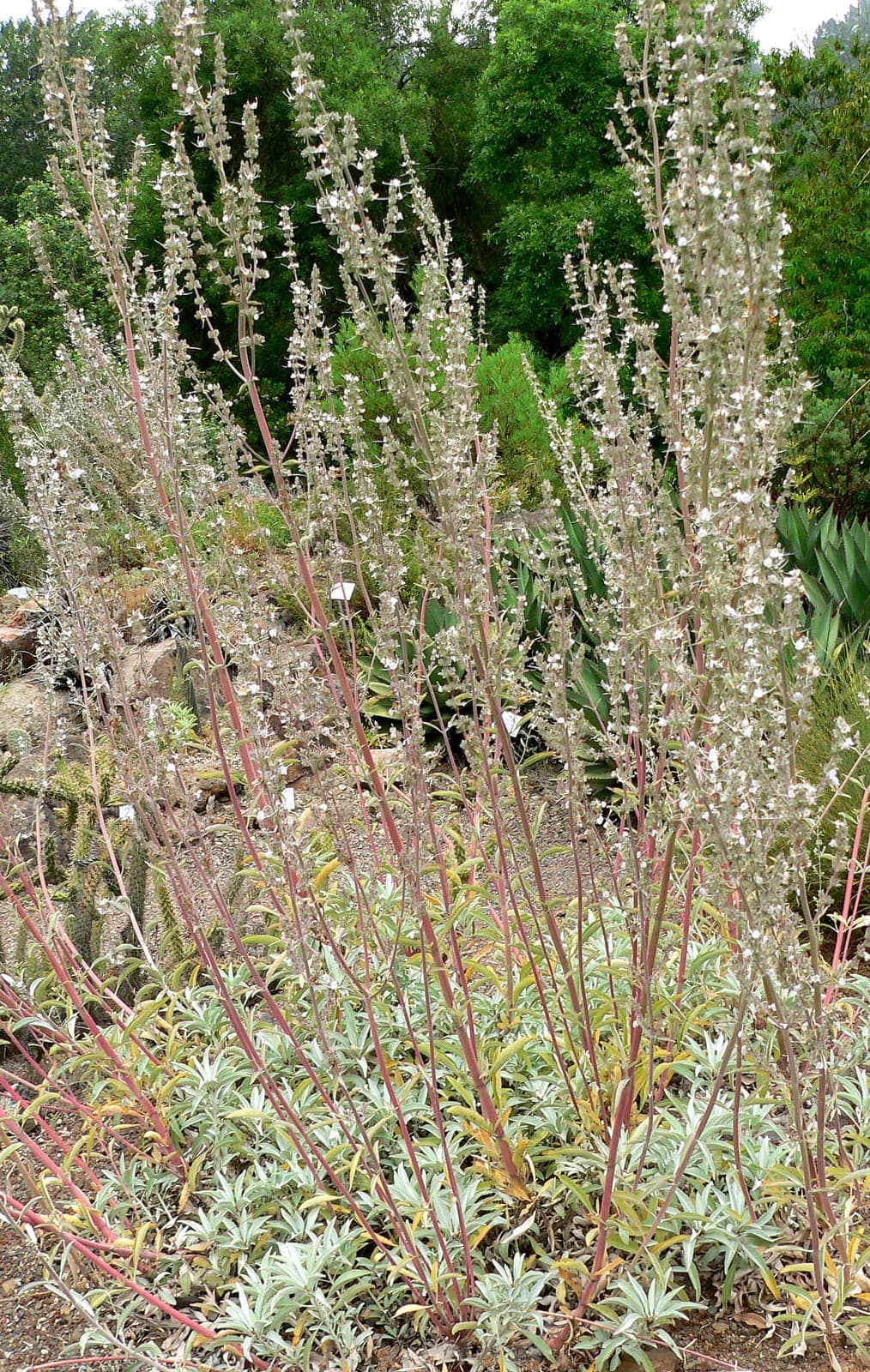
White sage (Salvia apiana) is an evergreen perennial shrub native to the coastal sage scrub of Southern California and Baja California, with range extending to the western edges of the Mojave and Sonoran deserts. It forms a dense mound of silver-white aromatic foliage and sends up tall stalks to 5 ft when in growth. It is a cornerstone species for low-water ornamental plantings, habitat restoration, and native plant gardens in western North America, providing heavy forage for bees, hummingbirds, and native butterflies.
Established plants require sharp drainage and minimal to no summer irrigation. They are acutely sensitive to wet soils, particularly in summer dormancy, and will collapse rapidly in clay or regularly irrigated beds. Soil pH of 6.5–8.0 is appropriate. The shrub tolerates brief light frost to around 20°F in sheltered sites, placing it comfortably in zones 9–11 and at risk in exposed zone 8a winters. Wild populations have been significantly depleted by commercial overharvesting; planting nursery-propagated stock is strongly recommended over collection from the wild.
Salvia apiana has been used ceremonially and medicinally by Indigenous peoples of California and the Southwest for centuries. Dried leaf bundles are burned for purification and ritual use. Laboratory studies confirm antimicrobial and antifungal activity in leaf extracts. Traditional applications include treatment of colds, sore throats, respiratory congestion, and topical use for skin infections.
Root rot
Plants wilt, yellow, and stunt even in moist soil; lower stems and roots turn brown, soft, and mushy and the plant may collapse. Most common in heavy, wet, or poorly drained ground.
Improve drainage and stop overwatering, and never plant too deep. Lift and destroy badly affected plants along with the soil around the roots. Grow in raised or free-draining beds to prevent it returning.
Powdery mildew
White or grey powdery coating on leaves - usually starting on older growth in humid conditions or when nights cool.
Improve air circulation by thinning plants. Apply neem oil or potassium bicarbonate spray at first sign. Avoid overhead watering.