
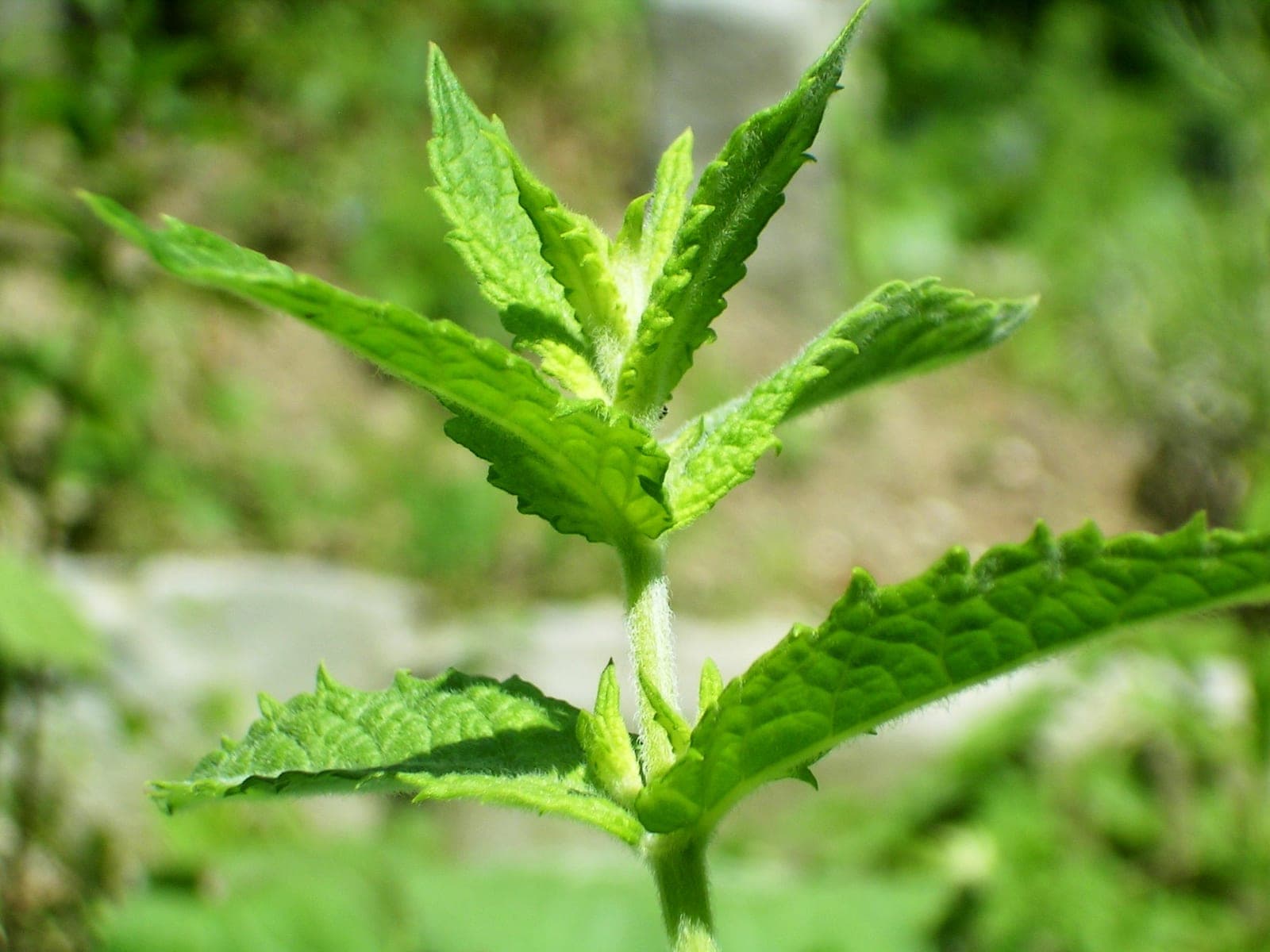
Spearmint is the mint of mojitos, mint sauce and tabbouleh: lighter and sweeter than peppermint, with a clean, cool flavour that does not overpower. It grows 12 to 24 inches in sun or part shade and rich, moist soil, and it is the mint most people mean when they say mint.
It is aggressively invasive. The underground runners travel several feet a season and come up through anything, so plant it only in a buried container, a raised bed with solid sides, or between hard surfaces; a forgotten corner of mint can take half a bed in a year. Harvest regularly to keep it from flowering, since the flavour declines once it sets seed, and cut it back to 2 inches after the first flush for a second one.
If you let it flower, the lilac spikes are busy with bees, hoverflies and small butterflies in late summer. Divide in spring or fall; a runner with roots pots up in minutes. Cut it to the ground in late fall. Deer and rabbits leave it alone, and rust on the leaves in a wet year is the only trouble it ever has.
Powdery mildew
White or grey powdery coating on leaves - usually starting on older growth in humid conditions or when nights cool.
Improve air circulation by thinning plants. Apply neem oil or potassium bicarbonate spray at first sign. Avoid overhead watering.