
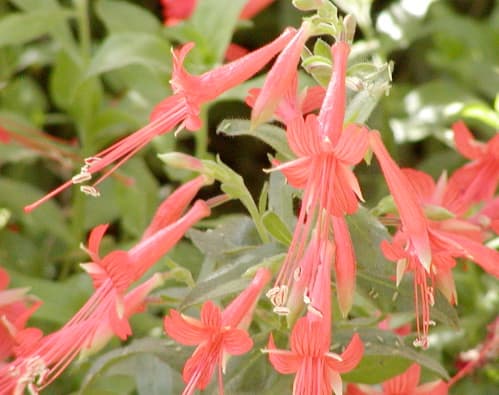
Epilobium canum is a drought-tolerant perennial subshrub native to the dry slopes and chaparral of western North America, with the greatest diversity in California. It produces dense clusters of tubular scarlet flowers from late summer through fall, making it one of the most important late-season nectar sources for hummingbirds on their southward migration. Foliage is narrow and gray-green to silver, giving the plant ornamental value even outside of its flowering period.
It thrives on neglect once established - lean soil, excellent drainage, and full sun are essential. Supplemental water in summer frequently triggers root rot and early decline. The plant spreads moderately by rhizomes and self-seeds lightly, which makes it useful for dry banks and erosion-prone slopes but requires periodic division in formal beds. Cut all stems to the ground in late winter before new growth emerges. In the coldest part of its range, a coarse gravel or grit mulch over the crown improves survival through hard freezes. It performs poorly in clay or any soil that holds moisture.
Some indigenous peoples of California, including the Kumeyaay, used Epilobium canum preparations as a topical wash for skin sores and to address fever. Related Epilobium species appear in European herbal practice for urinary and prostate complaints, though clinical evidence specific to E. canum is limited.
Ecoregions:Northwestern Forested MountainsMarine West Coast ForestNorth American DesertsMediterranean CaliforniaSouthern Semi-Arid Highlands
Powdery mildew
White or grey powdery coating on leaves - usually starting on older growth in humid conditions or when nights cool.
Improve air circulation by thinning plants. Apply neem oil or potassium bicarbonate spray at first sign. Avoid overhead watering.
Phytophthora Root Rot
Wilting despite moist soil, yellowing leaves, stunted growth, and dark, decayed roots and crown tissue. Vines may collapse during hot weather.
Plant in well-draining soil and avoid waterlogging. Remove and destroy affected vines. Improve drainage with raised beds or amended soil and avoid overwatering.