
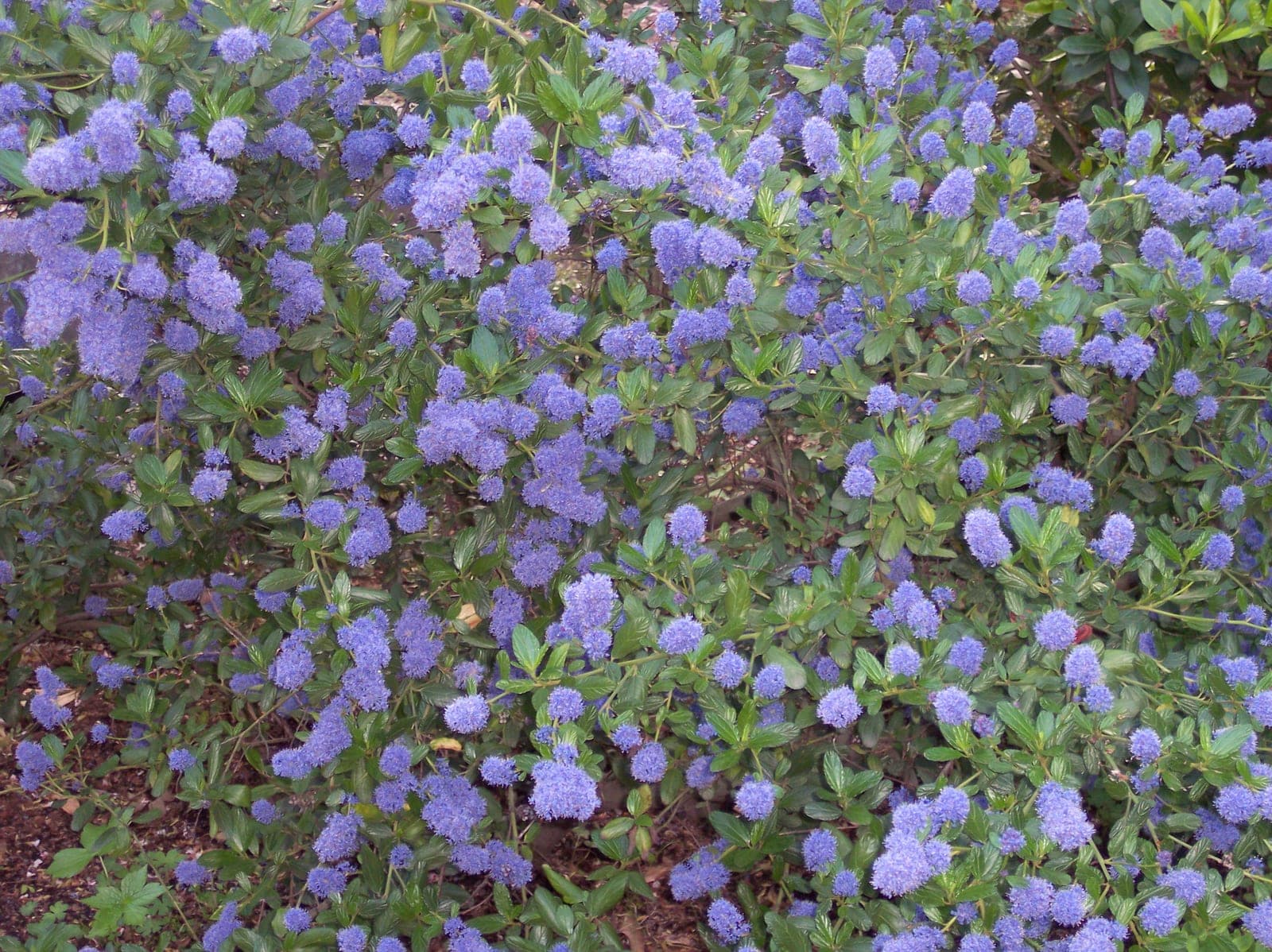
Ceanothus thyrsiflorus is a fast-growing evergreen shrub native to the coastal ranges of Oregon and California, capable of reaching 20 feet tall in favorable conditions. Its dense clusters of blue to violet flowers appear in spring and are among the most striking of any West Coast native shrub. Despite the common name, it is not related to true lilac (Syringa).
This species is highly drought tolerant once established and requires little to no summer irrigation - overwatering during the dry season is the most common cause of death in cultivated plants. It performs best in lean, fast-draining soils and declines quickly in clay or waterlogged sites. In mild-winter regions, plant in fall so roots can establish through the wet season before summer drought arrives. Avoid mounding mulch against the crown. Expect a lifespan of 10–15 years; gradual decline after that is normal for the genus.
Ceanothus fixes atmospheric nitrogen through symbiotic bacteria in root nodules, gradually improving soil fertility in lean native plantings. The spring flowering period is a significant forage resource for native bees and bumble bees. Indigenous peoples of California used the bark - which contains saponins - as a soap substitute, and flexible stems in basketry.
Ecoregions:Northwestern Forested MountainsMarine West Coast ForestMediterranean California
Root rot
Plants wilt, yellow, and stunt even in moist soil; lower stems and roots turn brown, soft, and mushy and the plant may collapse. Most common in heavy, wet, or poorly drained ground.
Improve drainage and stop overwatering, and never plant too deep. Lift and destroy badly affected plants along with the soil around the roots. Grow in raised or free-draining beds to prevent it returning.
Phytophthora Root Rot
Wilting despite moist soil, yellowing leaves, stunted growth, and dark, decayed roots and crown tissue. Vines may collapse during hot weather.
Plant in well-draining soil and avoid waterlogging. Remove and destroy affected vines. Improve drainage with raised beds or amended soil and avoid overwatering.
Powdery mildew
White or grey powdery coating on leaves - usually starting on older growth in humid conditions or when nights cool.
Improve air circulation by thinning plants. Apply neem oil or potassium bicarbonate spray at first sign. Avoid overhead watering.