
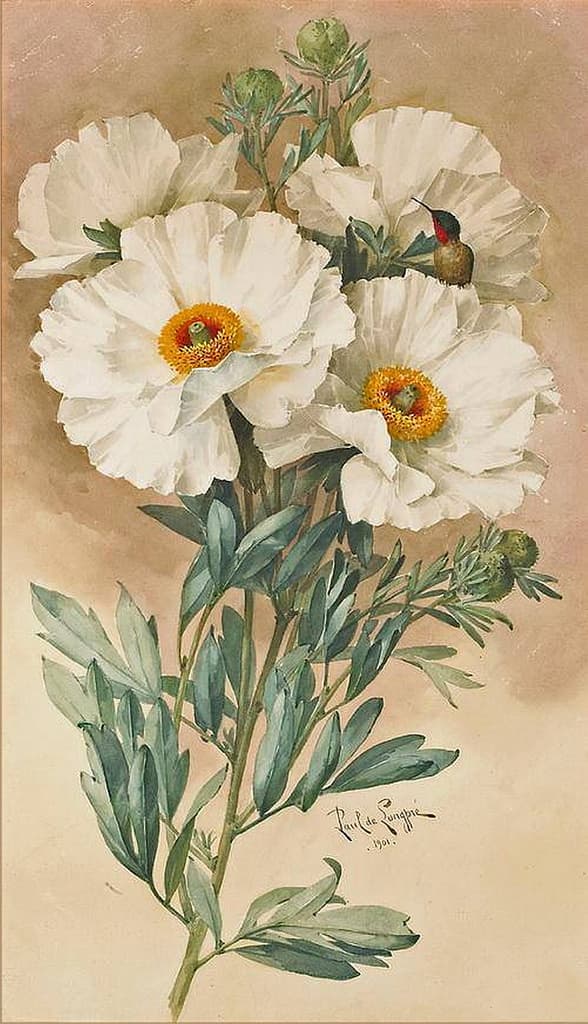
Romneya coulteri is a large perennial native to dry canyons and chaparral of southern California and Baja California. It produces white flowers up to 9 inches across with a dense yellow center, placing it among the largest-flowered native plants in North America. Gardeners in Mediterranean-climate regions value it for extreme drought tolerance and bold summer presence on difficult dry sites.
This plant spreads aggressively by rhizomes and colonizes wide areas over several years. It thrives in lean, fast-draining soil - sandy, rocky, or gravelly - and rots in heavy, wet, or fertilized ground. Established plants resist transplanting because the roots are deep and brittle; broken roots often fail. It is fire-adapted and regenerates vigorously after chaparral burns. Preferred soil pH is 6.0–7.5. Suckers spread well beyond the original crown and require active management in confined spaces. In zones 7–8, roots survive hard freezes but top growth may die back to the ground.
Large native bees, including bumblebees, are the primary pollinators. The flowers provide abundant pollen but no nectar. The plant stabilizes dry slopes, supports native pollinators, and is a documented component of post-fire chaparral recovery communities.
Ecoregions:Mediterranean California
Root rot
Plants wilt, yellow, and stunt even in moist soil; lower stems and roots turn brown, soft, and mushy and the plant may collapse. Most common in heavy, wet, or poorly drained ground.
Improve drainage and stop overwatering, and never plant too deep. Lift and destroy badly affected plants along with the soil around the roots. Grow in raised or free-draining beds to prevent it returning.
Powdery mildew
White or grey powdery coating on leaves - usually starting on older growth in humid conditions or when nights cool.
Improve air circulation by thinning plants. Apply neem oil or potassium bicarbonate spray at first sign. Avoid overhead watering.