
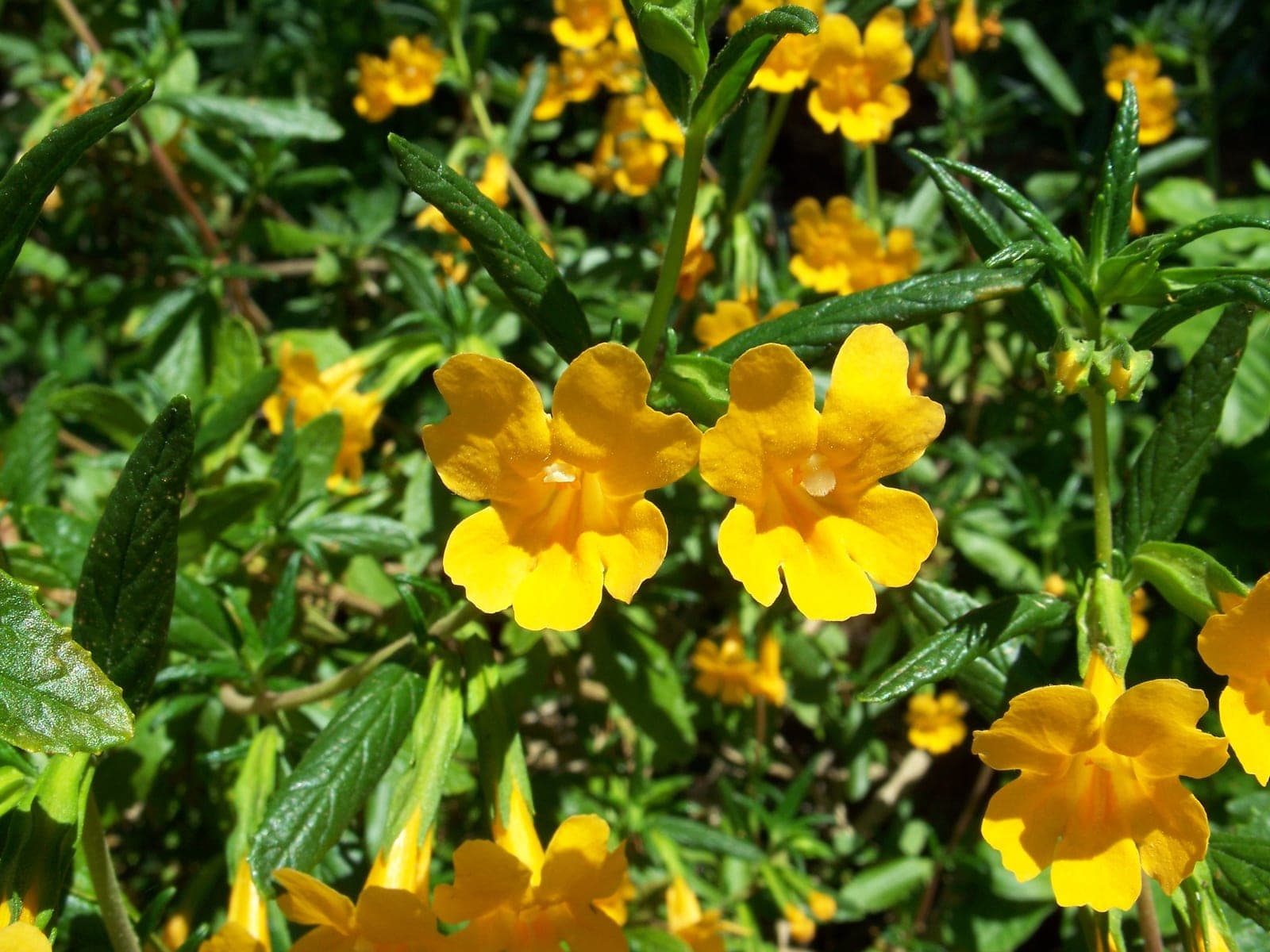
Diplacus aurantiacus is a California native subshrub producing tubular orange or pale-yellow flowers from spring through midsummer. It grows naturally in chaparral, coastal scrub, and rocky slopes from southwestern Oregon through central California. For gardeners in the western US it fills a real gap: a woody, drought-tolerant plant with high pollinator value that thrives on neglect once established.
The glandular, sticky leaves give the plant its name and likely deter herbivores. Growth is dense and twiggy, typically 2–5 ft tall. Plants are short-lived, usually 3–7 years, but often self-layer or self-seed. Annual pruning by about one-third after the main flowering flush extends productive life and prevents excessive woodiness at the base. No summer irrigation is needed in coastal climates; minimal water suffices inland. Excellent drainage is non-negotiable - clay soil or standing water will kill established plants quickly. Soil pH between 6.0 and 7.5 suits it well, and it grows readily in decomposed granite or sandy loam without added fertilizer.
The flowers are heavily visited by hummingbirds, bumblebees, and the specialist bee Anthophora urbana. It is one of the few non-grass California natives that provides nectar well into the summer dry season when few other plants are active.
Powdery mildew
White or grey powdery coating on leaves - usually starting on older growth in humid conditions or when nights cool.
Improve air circulation by thinning plants. Apply neem oil or potassium bicarbonate spray at first sign. Avoid overhead watering.
Phytophthora Root Rot
Wilting despite moist soil, yellowing leaves, stunted growth, and dark, decayed roots and crown tissue. Vines may collapse during hot weather.
Plant in well-draining soil and avoid waterlogging. Remove and destroy affected vines. Improve drainage with raised beds or amended soil and avoid overwatering.