
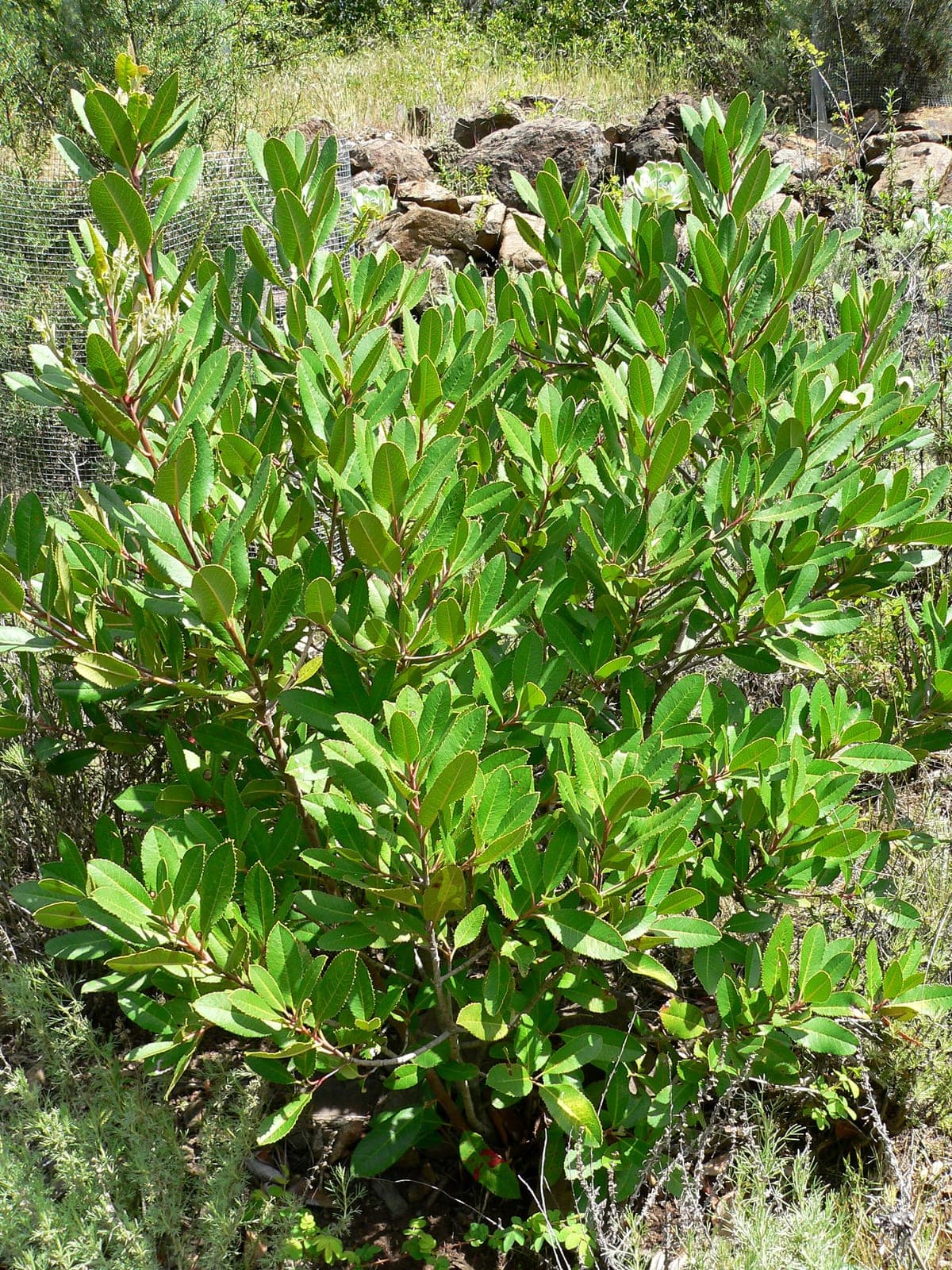
Toyon (Heteromeles arbutifolia) is a California native evergreen shrub and the sole species in the genus Heteromeles. It grows naturally in coastal sage scrub, chaparral, and oak woodland from Northern California to Baja California. The belief that Hollywood, California, takes its name from toyon's historical abundance in the surrounding hills has some documentary support, though it remains debated.
In summer, toyon produces flat-topped clusters of small white flowers that draw native bees and other pollinators. By late fall the clusters ripen into bright red pomes that persist through winter and attract cedar waxwings, American robins, and band-tailed pigeons. The plant resprouts vigorously from its root crown after fire and is a core species in chaparral restoration. It is highly drought tolerant once established and suits slopes, informal screens, and wildlife gardens with little or no supplemental water after year two. pH tolerance is broad, and the plant succeeds in clay or decomposed granite as long as drainage is adequate.
Chumash, Tongva, and other California peoples cooked or roasted toyon berries to reduce cyanogenic glycoside content, then consumed them as food or ground them into preparations used for fever and stomach complaints. Raw berries are mildly toxic in quantity and should not be eaten unprocessed.
Ecoregions:Northwestern Forested MountainsMarine West Coast ForestMediterranean California
Fire Blight
Water-soaked, wilting blossoms and young stems that rapidly turn brown to black. Infected shoot tips curl into a characteristic shepherd's crook. Bark beneath the infection may show reddish-brown discoloration.
Prune infected wood 8–12 inches below visible symptoms during dry weather. Sterilize tools with 70% isopropyl alcohol or a 10% bleach solution between cuts. Avoid high-nitrogen fertilizers that produce soft, disease-susceptible growth. Copper-based bactericides applied at early flowering can reduce spread in high-pressure years.
Phytophthora Root Rot
Wilting despite moist soil, yellowing leaves, stunted growth, and dark, decayed roots and crown tissue. Vines may collapse during hot weather.
Plant in well-draining soil and avoid waterlogging. Remove and destroy affected vines. Improve drainage with raised beds or amended soil and avoid overwatering.
Entomosporium Leaf Spot
Small circular red-purple spots on both leaf surfaces beginning in late spring, enlarging to lesions with gray or tan centers and red-purple margins. Heavy infection leads to early leaf drop by late summer.
Rake and dispose of fallen leaves each season. Prune selectively to improve air circulation. Avoid overhead irrigation. Fungicide applications - myclobutanil, chlorothalonil, or copper-based products - beginning at leaf emergence and repeated every 10–14 days during wet weather can limit disease spread.
Powdery mildew
White or grey powdery coating on leaves - usually starting on older growth in humid conditions or when nights cool.
Improve air circulation by thinning plants. Apply neem oil or potassium bicarbonate spray at first sign. Avoid overhead watering.