
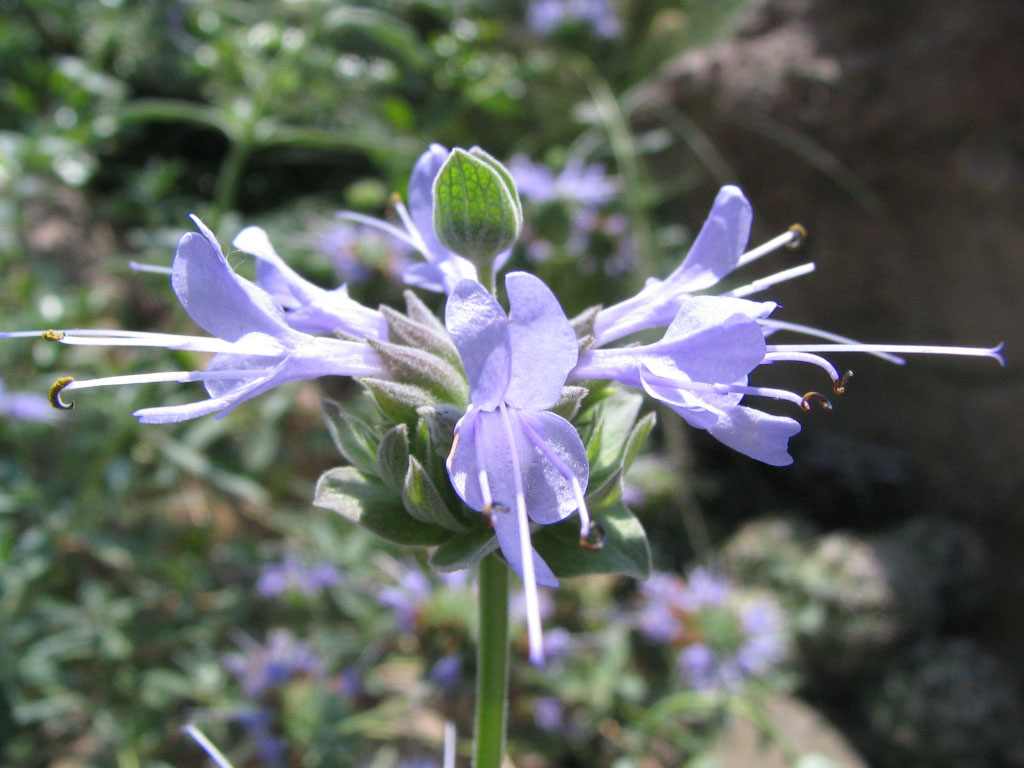
Cleveland sage is a woody perennial shrub native to Southern California and northern Baja California, where it grows in coastal sage scrub and chaparral below 900 m elevation. It produces whorled blue-purple flowers on elongated stems in late spring and early summer and is regarded as one of the most intensely fragrant sages in North America. It is a foundational plant for water-wise, fire-resistant, and California native landscapes.
This shrub requires sharp drainage and does best without supplemental water once established. Irrigation during warm months combined with heat is the primary cause of plant failure, typically through Phytophthora root rot. Plant in fall to allow root establishment during the cool, wet season. Remove one-third of stem length after flowering to prevent excessive woodiness and maintain compact form. Foliage remains aromatic year-round and is strongly attractive to bees, butterflies, and hummingbirds. Prefers slightly alkaline to neutral soil typical of its native chaparral habitat. Hardy to brief light frost; prolonged freezes below 20°F will kill plants to the ground.
Indigenous peoples of Southern California used the leaves as a food flavoring and medicinal tea. The plant is used as a culinary substitute for common sage in cooked dishes and herbal teas. Laboratory studies have confirmed antimicrobial activity in the essential oil, consistent with its traditional use for colds and fever.
Ecoregions:Mediterranean California
Powdery mildew
White or grey powdery coating on leaves - usually starting on older growth in humid conditions or when nights cool.
Improve air circulation by thinning plants. Apply neem oil or potassium bicarbonate spray at first sign. Avoid overhead watering.
Root rot
Plants wilt, yellow, and stunt even in moist soil; lower stems and roots turn brown, soft, and mushy and the plant may collapse. Most common in heavy, wet, or poorly drained ground.
Improve drainage and stop overwatering, and never plant too deep. Lift and destroy badly affected plants along with the soil around the roots. Grow in raised or free-draining beds to prevent it returning.
Phytophthora Root Rot
Wilting despite moist soil, yellowing leaves, stunted growth, and dark, decayed roots and crown tissue. Vines may collapse during hot weather.
Plant in well-draining soil and avoid waterlogging. Remove and destroy affected vines. Improve drainage with raised beds or amended soil and avoid overwatering.