
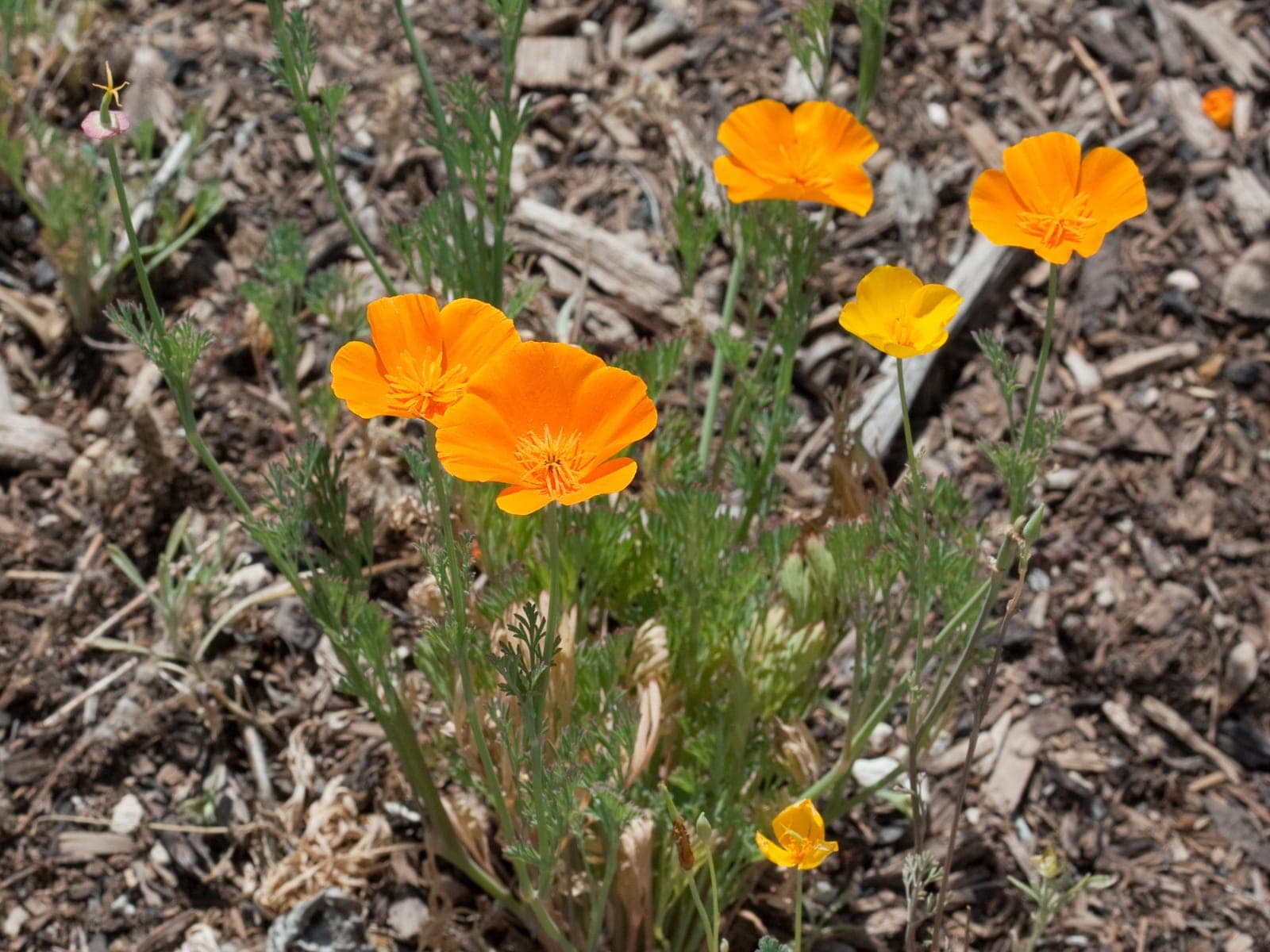
Eschscholzia californica is a western North American native and California's state flower since 1903. It produces silky, cup-shaped flowers in orange, yellow, red, and cream from late spring through summer. Reliable and drought tolerant, it suits dry gardens, gravel plantings, cottage borders, and wildflower meadows.
It behaves as a hardy annual in most gardens and self-sows prolifically once established, returning each year without replanting. Its taproot makes transplanting unreliable, so direct sowing in place is strongly preferred. Lean, gritty, or sandy soil in the neutral-to-slightly-alkaline range produces the best floral display; rich or consistently moist soil promotes rank foliage and raises root rot risk. Seeds need light to germinate and should not be covered. In zones 8b–10b, fall-sown seed overwinters and produces plants that bloom the following spring.
Indigenous peoples of California used the plant as a mild analgesic and sedative. It contains benzylisoquinoline alkaloids - californidine and eschscholzine - that are chemically distinct from opium-poppy alkaloids. Modern herbalism uses preparations of the aerial parts for anxiety, nervous tension, and sleep support. The flowers are edible and used as a garnish.
Ecoregions:Northwestern Forested MountainsMarine West Coast ForestNorth American DesertsMediterranean CaliforniaSouthern Semi-Arid HighlandsTemperate Sierras
Powdery mildew
White or grey powdery coating on leaves - usually starting on older growth in humid conditions or when nights cool.
Improve air circulation by thinning plants. Apply neem oil or potassium bicarbonate spray at first sign. Avoid overhead watering.
Root rot
Plants wilt, yellow, and stunt even in moist soil; lower stems and roots turn brown, soft, and mushy and the plant may collapse. Most common in heavy, wet, or poorly drained ground.
Improve drainage and stop overwatering, and never plant too deep. Lift and destroy badly affected plants along with the soil around the roots. Grow in raised or free-draining beds to prevent it returning.
Damping Off
Seedlings collapse at the soil line with thin, water-soaked stems; seeds may fail to emerge or rot before sprouting.
Sow in well-draining mix, avoid overwatering, and ensure good airflow. Remove affected seedlings and let the surface dry between waterings.