
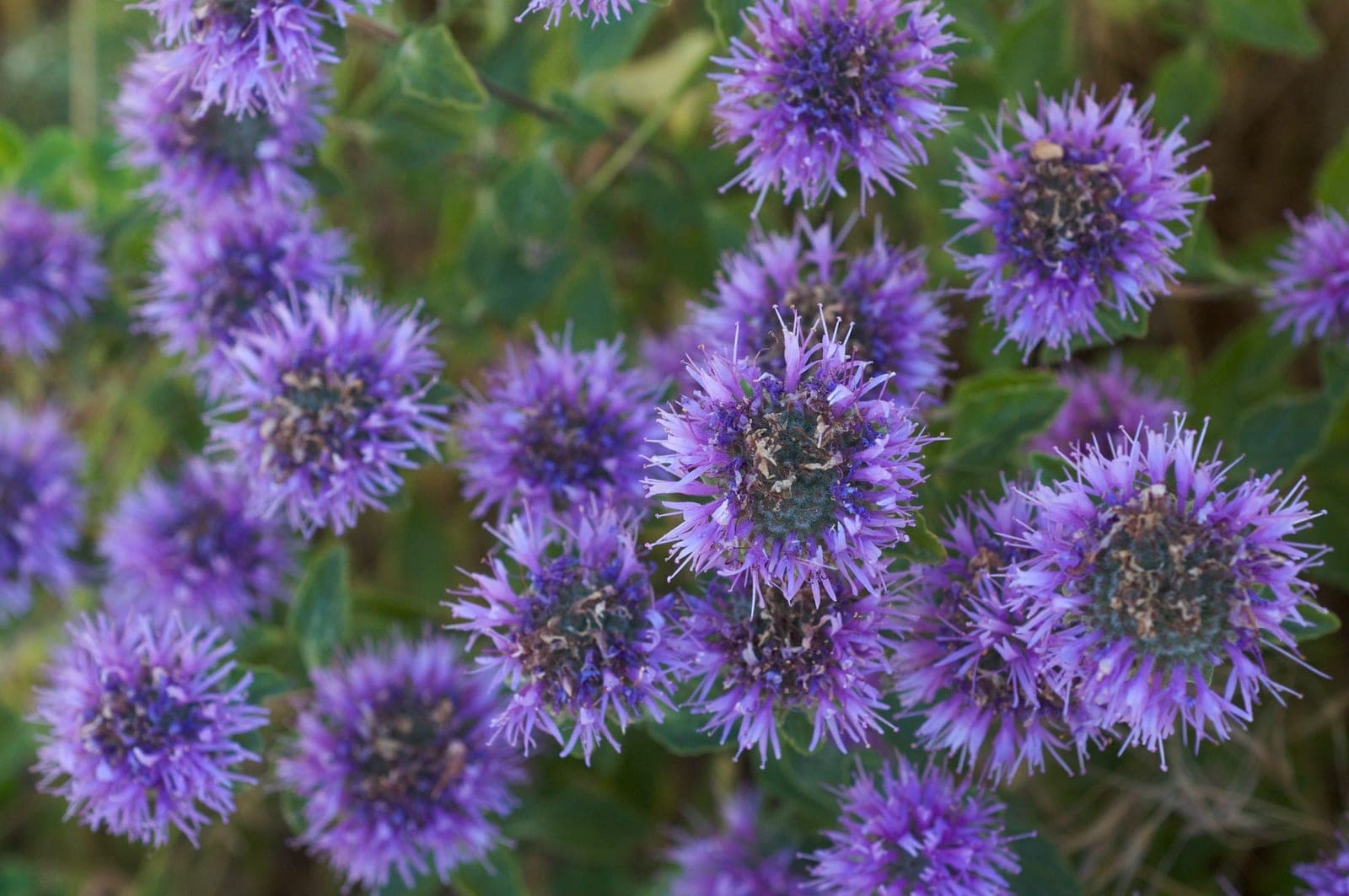
Monardella villosa is a native perennial of California's chaparral, dry woodlands, and rocky slopes. It belongs to the mint family and produces dense clusters of lavender to purple florets through summer, drawing bees, butterflies, and hummingbirds. Foliage is strongly aromatic, with notes of mint and oregano.
Sharp drainage is the primary growing requirement; clay or consistently wet soil leads to root rot and early death. Established plants tolerate extended drought and poor, gravelly soils, making coyote mint well-suited to dry borders, fire-wise plantings, and slope stabilization. It spreads slowly by rhizomes to form low, informal mounds. Trim back by one-third after peak flowering to maintain a compact shape and encourage a secondary flush. A 2020 taxonomic revision merged this species into Monardella odoratissima, though many references continue to treat the two as distinct.
California Indigenous peoples, including the Ohlone and Miwok, prepared leaf tea traditionally associated with headaches, fever, and digestive discomfort. Fresh or dried leaves can substitute for mint or oregano in the kitchen.
Ecoregions:Northwestern Forested MountainsMarine West Coast ForestMediterranean California
Powdery mildew
White or grey powdery coating on leaves - usually starting on older growth in humid conditions or when nights cool.
Improve air circulation by thinning plants. Apply neem oil or potassium bicarbonate spray at first sign. Avoid overhead watering.
Rust
Orange to brown raised pustules on the undersides of leaves, with yellow spotting on the upper surface. Heavy infections cause leaves to yellow and drop.
Remove and destroy infected leaves. Avoid overhead watering and improve air circulation. Apply a sulfur or copper-based fungicide if it spreads. Clear plant debris in fall.
Phytophthora Root Rot
Wilting despite moist soil, yellowing leaves, stunted growth, and dark, decayed roots and crown tissue. Vines may collapse during hot weather.
Plant in well-draining soil and avoid waterlogging. Remove and destroy affected vines. Improve drainage with raised beds or amended soil and avoid overwatering.