
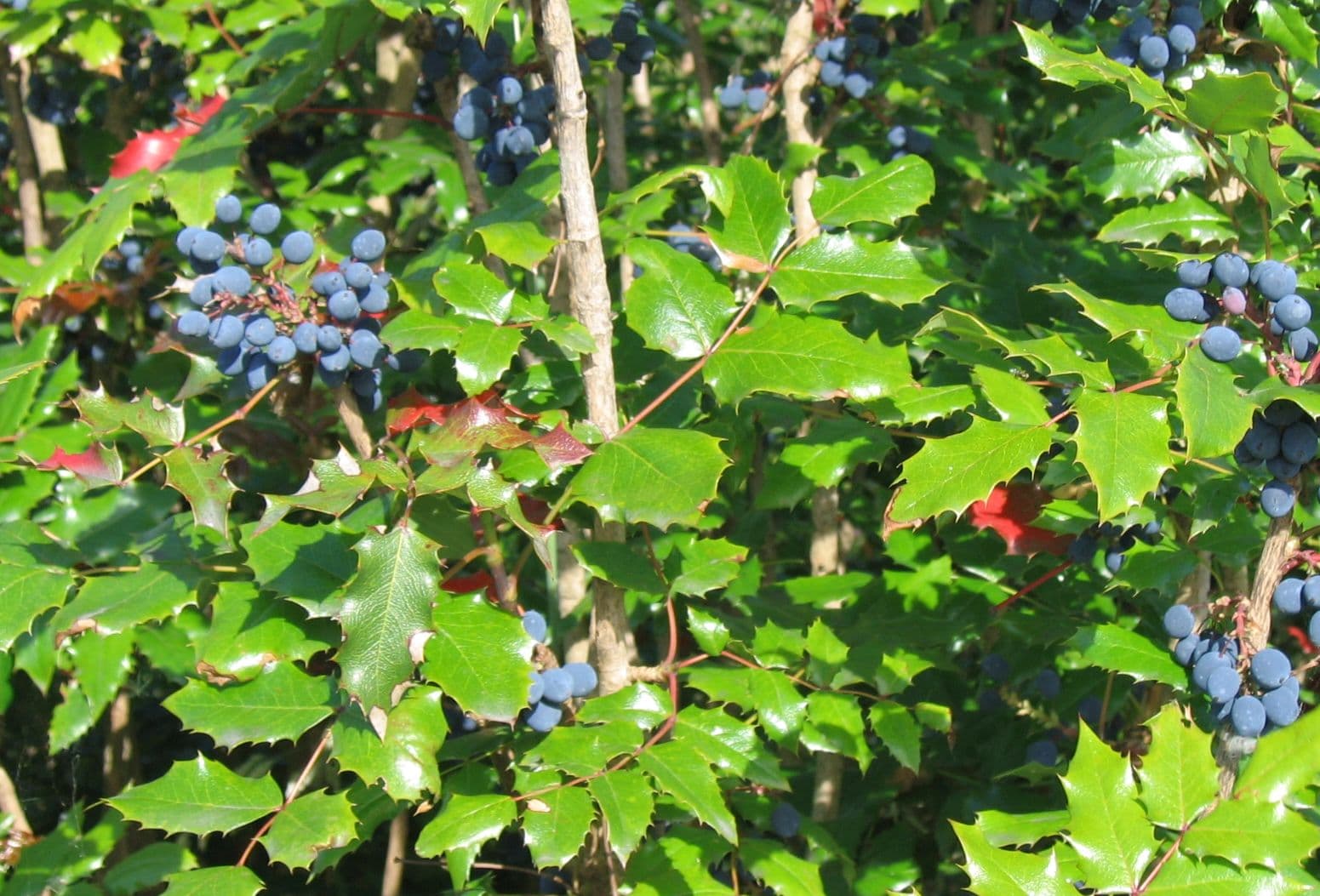
Oregon grape (Mahonia aquifolium) is a native evergreen shrub of the Pacific Northwest with bold pinnate leaves that resemble holly, dense clusters of yellow flowers in early spring, and dark blue-black berries in late summer. Foliage often turns bronze or burgundy in cold weather, then returns to green in spring. It provides year-round structure, early pollinator forage, and edible fruit in a single plant.
In the wild it grows as a forest understory shrub, tolerating both shade and summer drought. In the garden it performs similarly: once established it is highly drought-tolerant and spreads slowly by rhizomes to form a low colony. This spreading habit works well in naturalistic or slope plantings but may need periodic edge control in formal beds. Slightly acidic to neutral soil (pH 5.5–7.0) suits it best; a layer of organic mulch at planting helps retain moisture through the establishment period.
Roots and bark contain berberine, an alkaloid with documented antimicrobial properties in laboratory research. Indigenous peoples of the Pacific Northwest prepared bark decoctions as a digestive bitter and used the plant topically for skin infections and inflammation. The tart berries are high in vitamin C and are used for jelly, syrup, and wine.
Ecoregions:Northwestern Forested MountainsMarine West Coast ForestNorth American DesertsMediterranean California
Powdery mildew
White or grey powdery coating on leaves - usually starting on older growth in humid conditions or when nights cool.
Improve air circulation by thinning plants. Apply neem oil or potassium bicarbonate spray at first sign. Avoid overhead watering.
Rust
Orange to brown raised pustules on the undersides of leaves, with yellow spotting on the upper surface. Heavy infections cause leaves to yellow and drop.
Remove and destroy infected leaves. Avoid overhead watering and improve air circulation. Apply a sulfur or copper-based fungicide if it spreads. Clear plant debris in fall.