
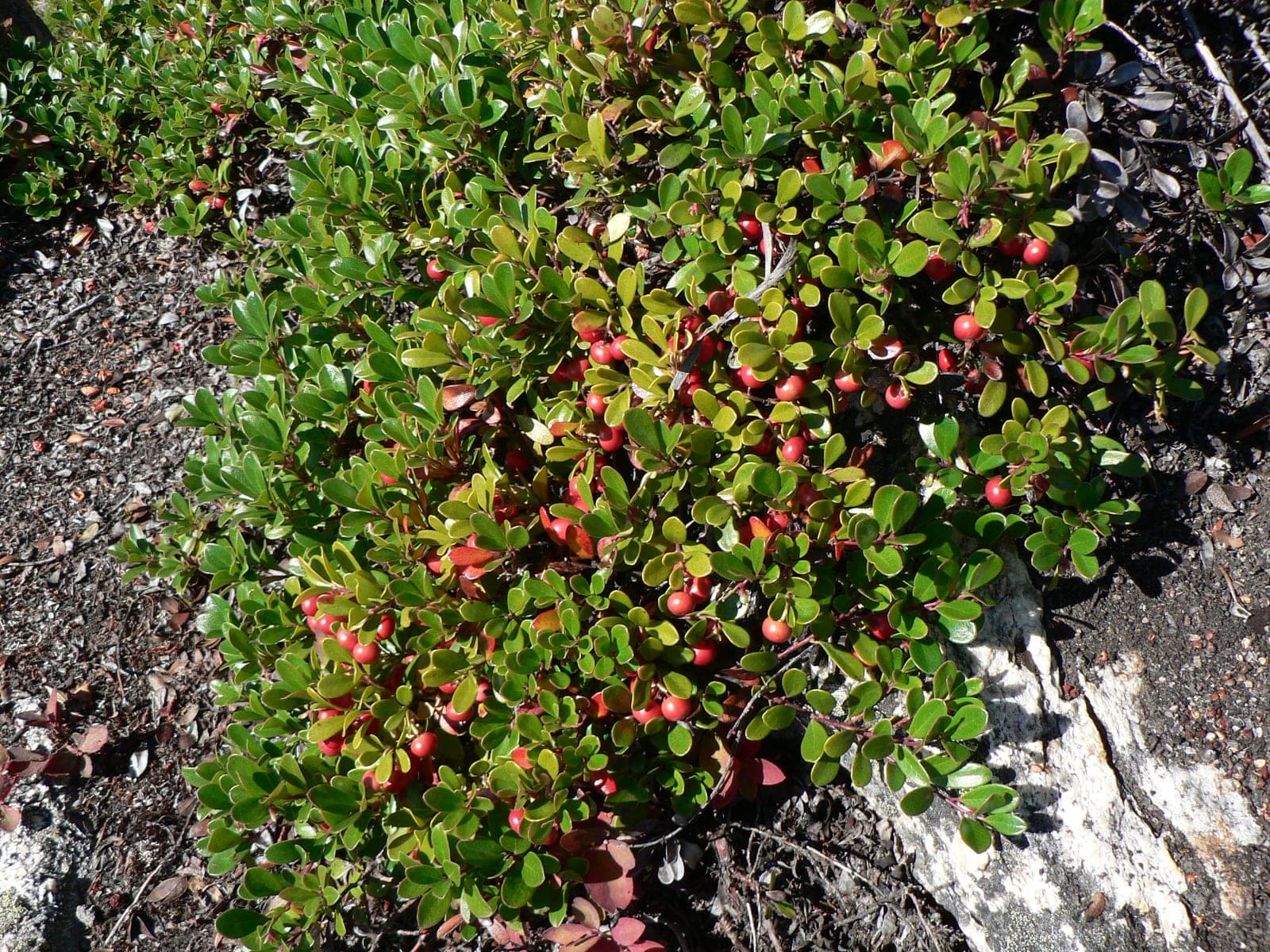
Kinnikinnick is a low, mat-forming evergreen shrub native to circumboreal regions across North America, Europe, and Asia. It spreads by trailing stems to form a dense carpet 4–12 inches tall. Small urn-shaped white to pink flowers appear in spring, followed by bright red berries that ripen in fall and persist through winter, providing food for birds and mammals.
It thrives in well-drained, sandy, acidic soils and becomes highly drought tolerant once established. It performs best on slopes, rocky banks, and sandy soils where other ground covers fail. Establishment from container plants is slow but plants are long-lived once settled. Clay soils and standing water lead to root rot. A soil pH of 4.5–5.5 and a pine bark mulch layer support steady growth. Cold-hardy to zone 2a and undamaged by harsh winters where the snowpack is reliable.
Leaves contain arbutin, a compound converted to hydroquinone in the urinary tract, giving the plant a documented history of use for urinary tract infections and bladder inflammation. Indigenous peoples across North America dried the leaves and mixed them with tobacco and other plant material in ceremonial smoking blends - the name kinnikinnick derives from an Algonquian word meaning mixture.
Ecoregions:TaigaNorthern ForestsNorthwestern Forested MountainsMarine West Coast ForestEastern Temperate ForestsGreat PlainsNorth American DesertsMediterranean California
Phytophthora Root Rot
Wilting despite moist soil, yellowing leaves, stunted growth, and dark, decayed roots and crown tissue. Vines may collapse during hot weather.
Plant in well-draining soil and avoid waterlogging. Remove and destroy affected vines. Improve drainage with raised beds or amended soil and avoid overwatering.
Leaf gall
Leaves, buds, or young shoots thicken into pale green, reddish, or whitish fleshy galls that later turn white with a powdery spore bloom before browning.
Pick off and destroy galls before they turn white and shed spores. Improve air circulation and avoid overhead watering in spring. The damage is largely cosmetic and rarely needs fungicide.