
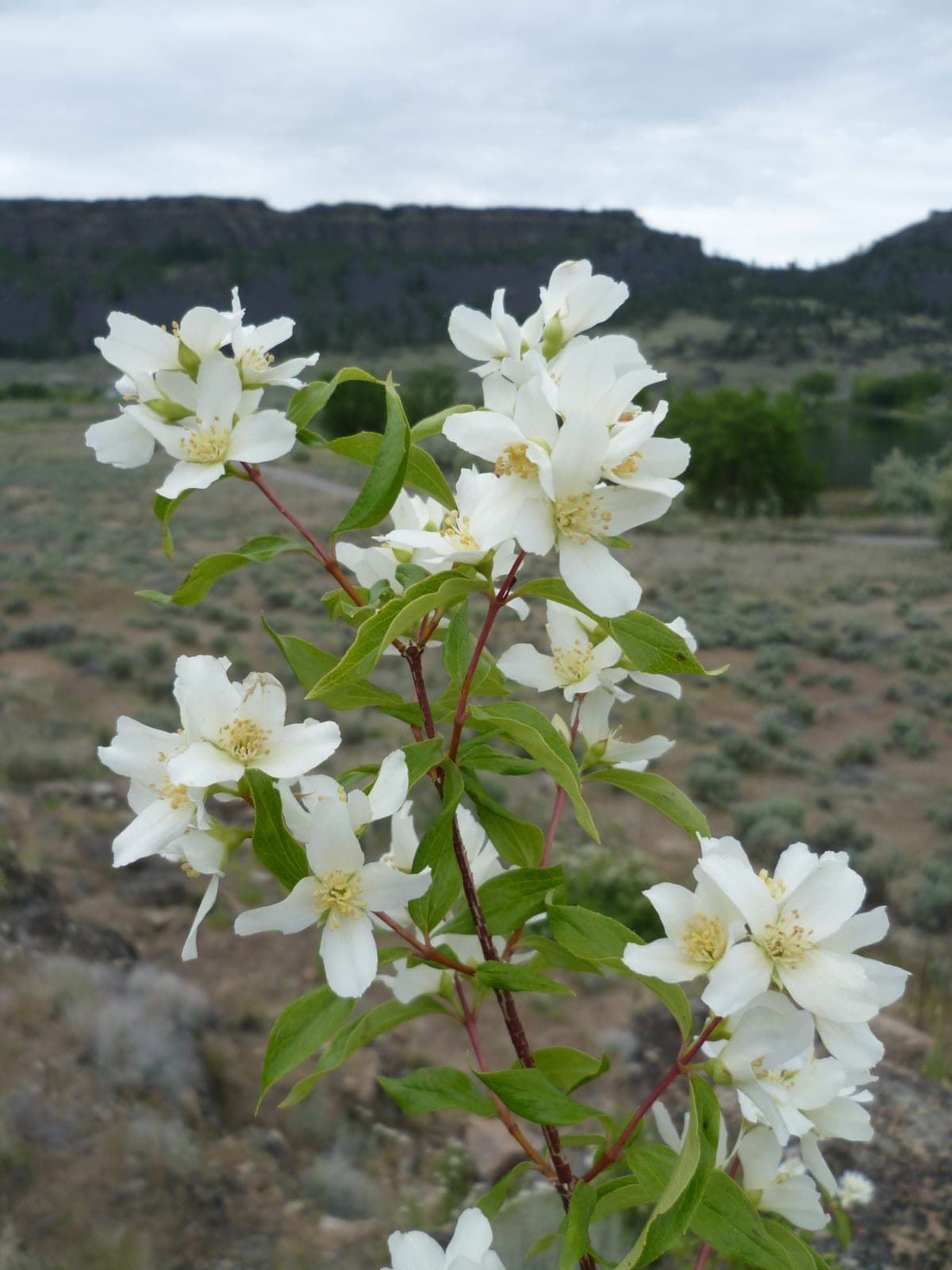
Philadelphus lewisii is a deciduous shrub native to mountain slopes, stream banks, and open forests across western North America, from British Columbia south to California and east to Montana. It is the state flower of Idaho, where it is commonly called syringa-a name unrelated to the genus Syringa (lilac). Gardeners grow it primarily for its intensely fragrant white flowers in late spring to early summer and for its reliability as a drought-tolerant, low-maintenance native suited to naturalistic and wildlife plantings.
The shrub blooms on the previous season's wood, so pruning timing is critical. Cut up to one-third of the oldest, thickest stems to ground level immediately after flowering each year; waiting until late summer or fall removes next year's flowering wood. Without annual renewal pruning, plants develop a leggy, unproductive structure. Established plants handle dry summers well once deeply rooted. The shrub spreads slowly by suckers and can form loose thickets; cold-hardiness is strong, and it tolerates a range of soil types as long as drainage is adequate. Preferred soil pH is 6.0–7.0.
Several Pacific Northwest tribes used the straight, hard wood for arrow shafts-hence the name Indian arrowwood-as well as for combs, pipes, and small tools. The saponin-rich leaves were used as a soap substitute for washing hair and skin. Native bees and butterflies are reliable visitors to the flowers.
Ecoregions:Northwestern Forested MountainsMarine West Coast ForestNorth American DesertsMediterranean California
Powdery mildew
White or grey powdery coating on leaves - usually starting on older growth in humid conditions or when nights cool.
Improve air circulation by thinning plants. Apply neem oil or potassium bicarbonate spray at first sign. Avoid overhead watering.
Fungal leaf spot
Brown or purplish spots on the leaves, often ringed with a yellow halo, that spread and merge in warm, humid, or wet weather; heavily spotted leaves yellow and drop early.
Pick off spotted leaves and clear fallen debris to remove overwintering spores. Improve air circulation by thinning, and water at the base so foliage dries quickly. If it persists, apply a copper- or sulfur-based fungicide at the first sign.