
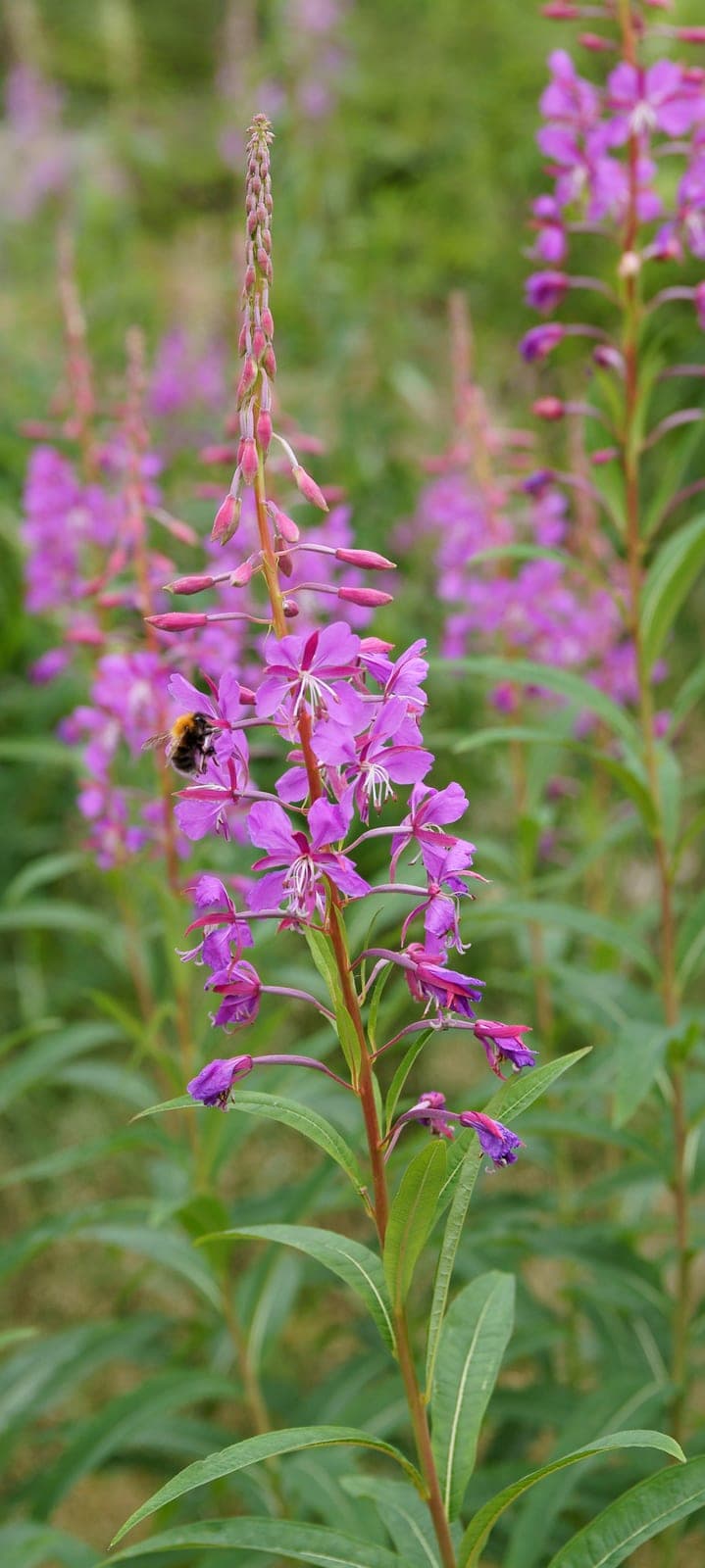
Fireweed (Chamerion angustifolium) is a tall native perennial found throughout the temperate and boreal Northern Hemisphere. It is a classic pioneer species, among the first plants to colonize burned, logged, or otherwise disturbed ground, often forming dense stands within one or two growing seasons. It produces tall racemes of vivid magenta-pink flowers from midsummer into early fall and ranks among the most important honey plants in North America, drawing bees, hummingbirds, and numerous other pollinators.
Fireweed spreads by both rhizome and prolific wind-dispersed seed - a single mature plant can produce up to 80,000 seeds annually. In a garden setting it can become invasive; remove spent flower stems before seeds ripen to limit spread, and install root barriers if growing near formal beds. It tolerates poor, dry, and rocky soils without supplemental fertilization. Cold-hardy across its broad native range, it dies back completely in winter and re-emerges reliably in spring from established roots.
Young spring shoots are edible and have long been used like asparagus by Indigenous peoples across North America; leaves and flowers are brewed into tea or made into syrups and jellies. The foliage is high in vitamins A and C. Leaf preparations have been used traditionally to address digestive inflammation and sore throat, and topical applications appear in several Indigenous wound-care traditions.
Ecoregions:TundraTaigaHudson PlainNorthern ForestsNorthwestern Forested MountainsMarine West Coast ForestEastern Temperate ForestsGreat PlainsNorth American DesertsMediterranean CaliforniaTemperate Sierras
Powdery mildew
White or grey powdery coating on leaves - usually starting on older growth in humid conditions or when nights cool.
Improve air circulation by thinning plants. Apply neem oil or potassium bicarbonate spray at first sign. Avoid overhead watering.
Rust
Orange to brown raised pustules on the undersides of leaves, with yellow spotting on the upper surface. Heavy infections cause leaves to yellow and drop.
Remove and destroy infected leaves. Avoid overhead watering and improve air circulation. Apply a sulfur or copper-based fungicide if it spreads. Clear plant debris in fall.