
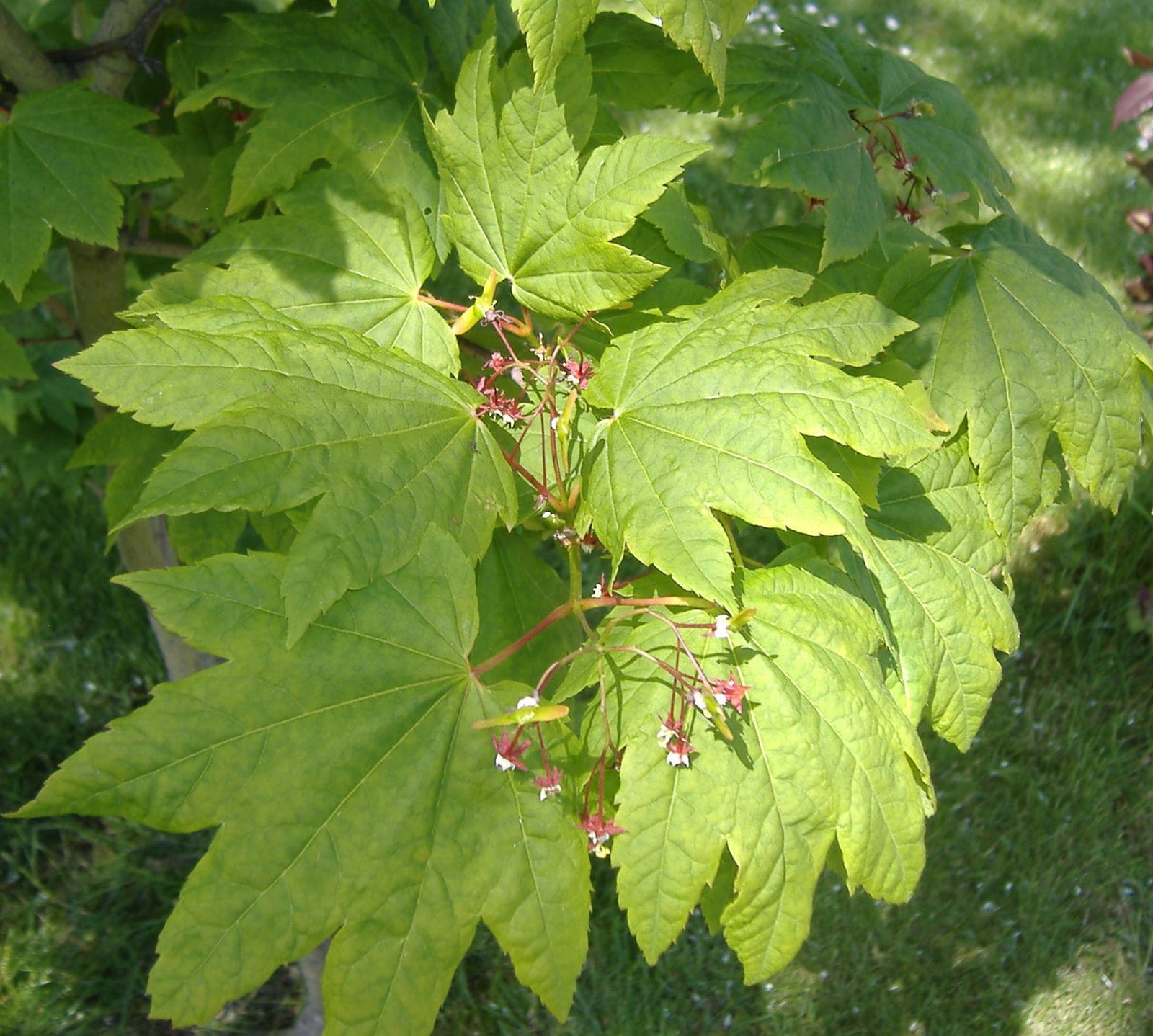
Vine maple is a Pacific Northwest native that grows as a large multi-stemmed shrub or small tree from northern California to British Columbia. It shifts form depending on light: sprawling and arching in deep shade, more upright and compact in open conditions. Fall foliage turns yellow, orange, and red, making it one of the more ornamental native trees for western gardens. It also supports biodiversity by enriching upper soil layers and providing cover and food for birds and small mammals.
In the wild, vine maple occupies forest understories, stream banks, and disturbed forest edges. It tolerates deeper shade than most maples but performs well in full sun if soil moisture is consistent. Acidic, humus-rich soil is ideal; a thick organic mulch layer mimics the forest floor and reduces moisture stress. In shade, arching stems can root where they contact the ground and spread vegetatively. Suckers from the base are common and should be removed or managed to control spread.
Native peoples of the Pacific Northwest used the flexible stems for basket weaving, fish traps, and snowshoe frames, and the hard wood for tool handles. Some Coast Salish traditions used bark decoctions as a mild laxative and as a wash for sore eyes, though vine maple is not a primary medicinal species.
Ecoregions:Northwestern Forested MountainsMarine West Coast Forest
Powdery mildew
White or grey powdery coating on leaves - usually starting on older growth in humid conditions or when nights cool.
Improve air circulation by thinning plants. Apply neem oil or potassium bicarbonate spray at first sign. Avoid overhead watering.
Verticillium Wilt
Lower leaves yellow and wilt, often on one side of the plant, with brown streaking in the stem and crown tissue when cut open. Plants are stunted and decline over the season.
Remove and destroy affected plants. Avoid planting in soil that has grown infected tomatoes, peppers, or other susceptible crops. Rotate beds and improve drainage; there is no cure once a plant is infected.
Phytophthora Root Rot
Wilting despite moist soil, yellowing leaves, stunted growth, and dark, decayed roots and crown tissue. Vines may collapse during hot weather.
Plant in well-draining soil and avoid waterlogging. Remove and destroy affected vines. Improve drainage with raised beds or amended soil and avoid overwatering.
Maple Anthracnose
Irregular brown or tan spots that follow and spread between leaf veins, giving leaves a scorched or blighted appearance. Severe infections cause premature leaf drop. In wet springs, small cankers may appear on young shoots.
Rake and remove fallen leaves each autumn to reduce overwintering fungal spores. Avoid overhead irrigation. Apply a copper-based fungicide at bud break during wet spring conditions. Prune selectively to improve canopy airflow.