
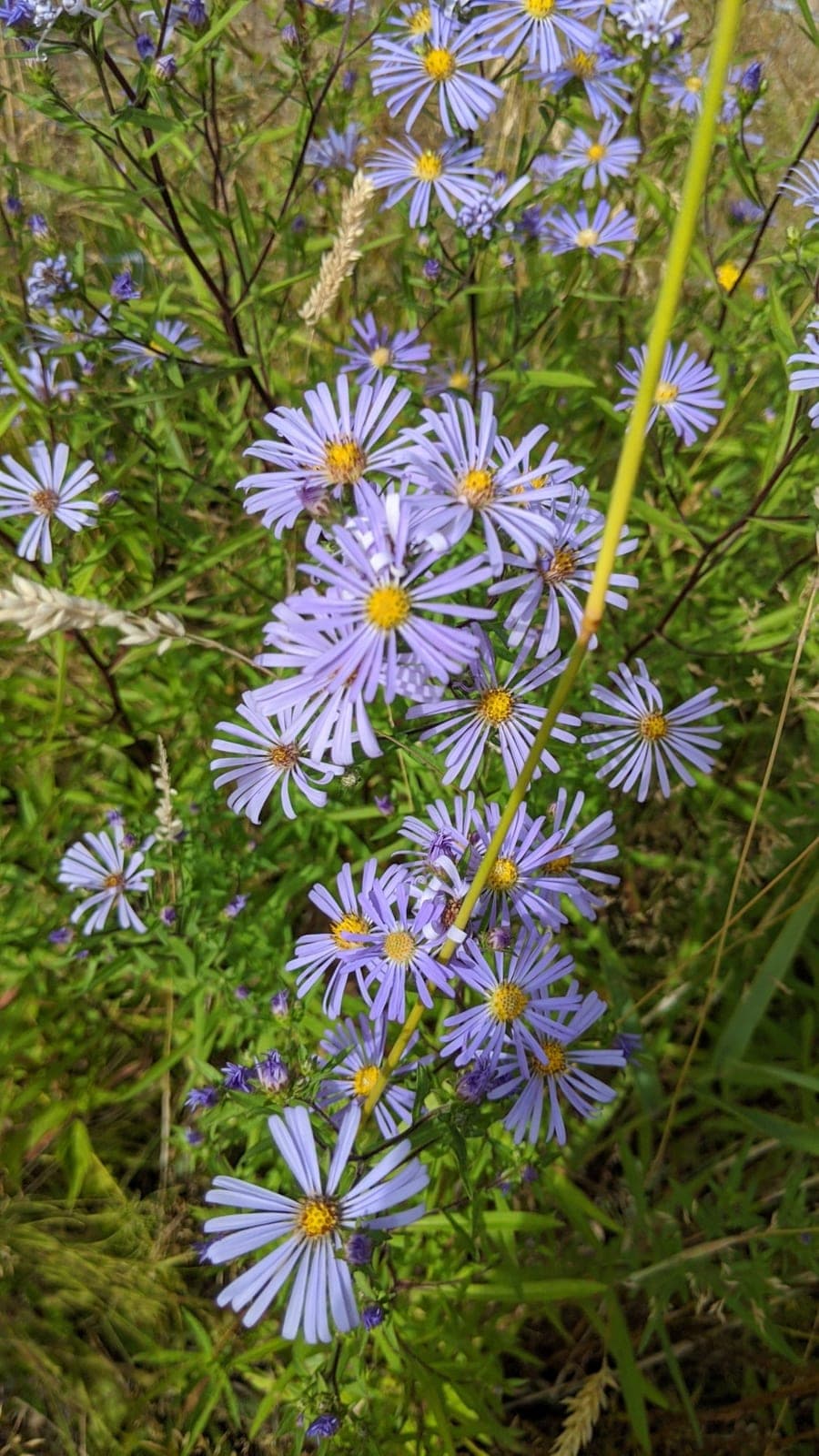
Douglas aster is a perennial wildflower native to western North America, ranging from Alaska south to California and east into the Rocky Mountain foothills. It grows 18 to 48 inches tall and produces violet ray florets around yellow-to-red disk florets from midsummer into fall, making it one of the latest-blooming natives in its range.
It grows naturally along stream banks, coastal bluffs, and moist forest edges but adapts to average garden soils with consistent moisture. Plants spread gradually by rhizomes and self-seed freely; in smaller gardens, removing spent heads after bloom limits unwanted spread. Cutting plants back by half in early summer reduces flopping without significantly delaying the bloom period. A 2–3 inch mulch layer helps retain soil moisture and moderates root temperature in the warmer parts of its range.
Douglas aster is a critical late-season foraging resource for native bees, including oligolectic specialists in the tribe Astereae, as well as for migrating monarch butterflies. Seed heads left standing through fall and winter provide food for finches and sparrows.
Ecoregions:Northwestern Forested MountainsMarine West Coast ForestNorth American DesertsMediterranean California
Aster Yellows
Deformed, greenish flowers, stunted growth, and yellowed foliage. Flower centers may produce tufts of leafy growth instead of normal petals.
No cure. Remove and destroy infected plants immediately to stop spread. Control leafhoppers, which transmit the disease, and remove nearby weed hosts.
Powdery mildew
White or grey powdery coating on leaves - usually starting on older growth in humid conditions or when nights cool.
Improve air circulation by thinning plants. Apply neem oil or potassium bicarbonate spray at first sign. Avoid overhead watering.
Rust
Orange to brown raised pustules on the undersides of leaves, with yellow spotting on the upper surface. Heavy infections cause leaves to yellow and drop.
Remove and destroy infected leaves. Avoid overhead watering and improve air circulation. Apply a sulfur or copper-based fungicide if it spreads. Clear plant debris in fall.