
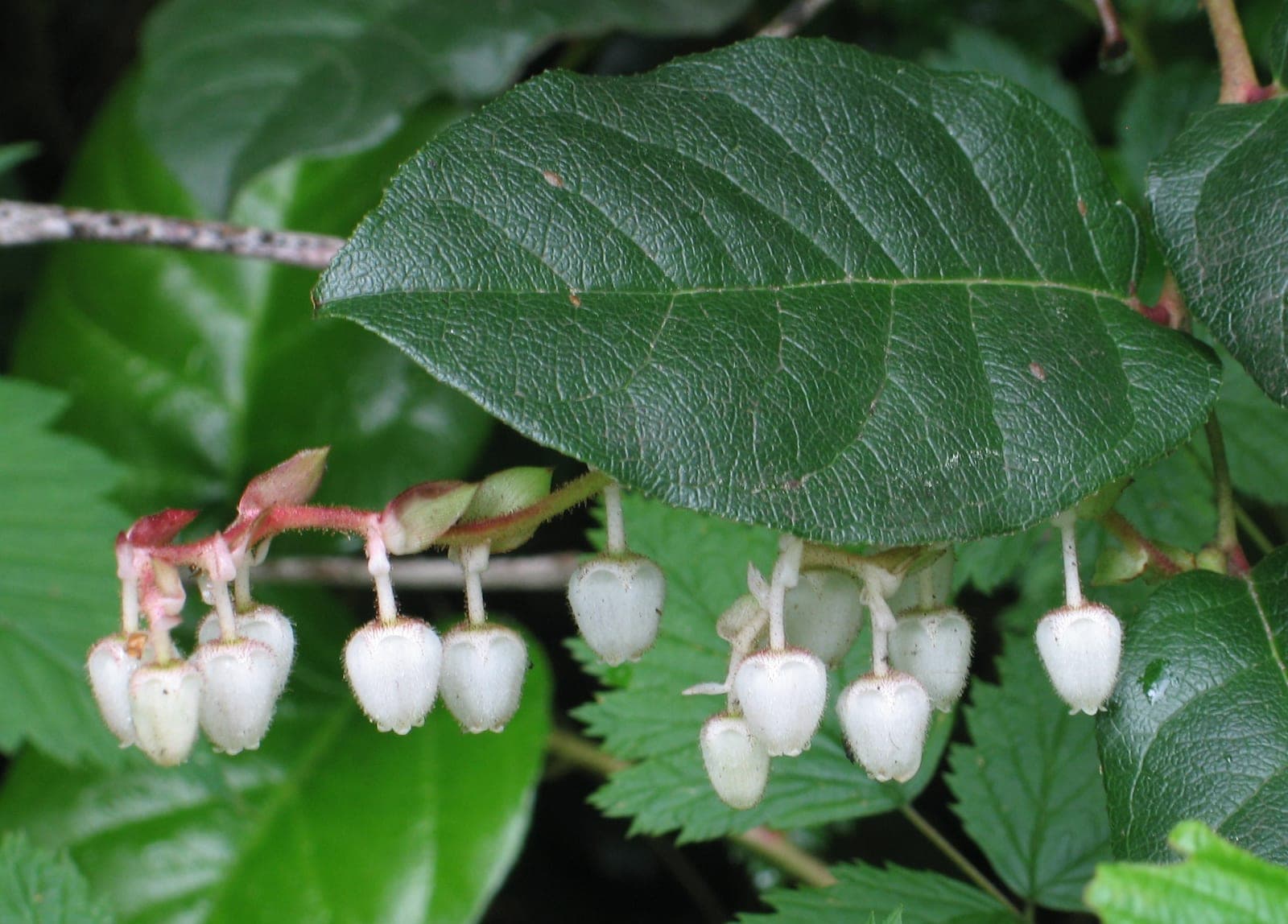
Salal (Gaultheria shallon) is a broadleaf evergreen shrub native to the Pacific Coast from southeast Alaska to southern California. It produces small urn-shaped white to pink flowers in spring followed by dark purple-black berries in late summer and fall. It provides year-round structure in shady native plantings and is extensively harvested by the floral industry for its glossy, long-lasting cut foliage.
Salal spreads by underground rhizomes and forms dense thickets over time, making it an effective weed-suppressing groundcover under conifers and mixed woodland canopy. It performs best in cool, humid climates. In hot or dry inland sites it requires supplemental irrigation and afternoon shade. A deep mulch of wood chips or conifer needles helps retain soil moisture and maintain the low pH it requires. Rhizome spread can be managed by edging or periodic pruning at the plant's perimeter.
Berries were a dietary staple for many Pacific Northwest Indigenous peoples, eaten fresh or dried into cakes for winter storage. Leaves were traditionally chewed to suppress appetite during food scarcity and used to treat coughs. The plant contains arbutin, a compound with documented urinary antiseptic properties also found in bearberry (Arctostaphylos uva-ursi).
Ecoregions:Northwestern Forested MountainsMarine West Coast ForestMediterranean California
Phytophthora Root Rot
Wilting despite moist soil, yellowing leaves, stunted growth, and dark, decayed roots and crown tissue. Vines may collapse during hot weather.
Plant in well-draining soil and avoid waterlogging. Remove and destroy affected vines. Improve drainage with raised beds or amended soil and avoid overwatering.
Powdery mildew
White or grey powdery coating on leaves - usually starting on older growth in humid conditions or when nights cool.
Improve air circulation by thinning plants. Apply neem oil or potassium bicarbonate spray at first sign. Avoid overhead watering.
Fungal leaf spot
Brown or purplish spots on the leaves, often ringed with a yellow halo, that spread and merge in warm, humid, or wet weather; heavily spotted leaves yellow and drop early.
Pick off spotted leaves and clear fallen debris to remove overwintering spores. Improve air circulation by thinning, and water at the base so foliage dries quickly. If it persists, apply a copper- or sulfur-based fungicide at the first sign.