
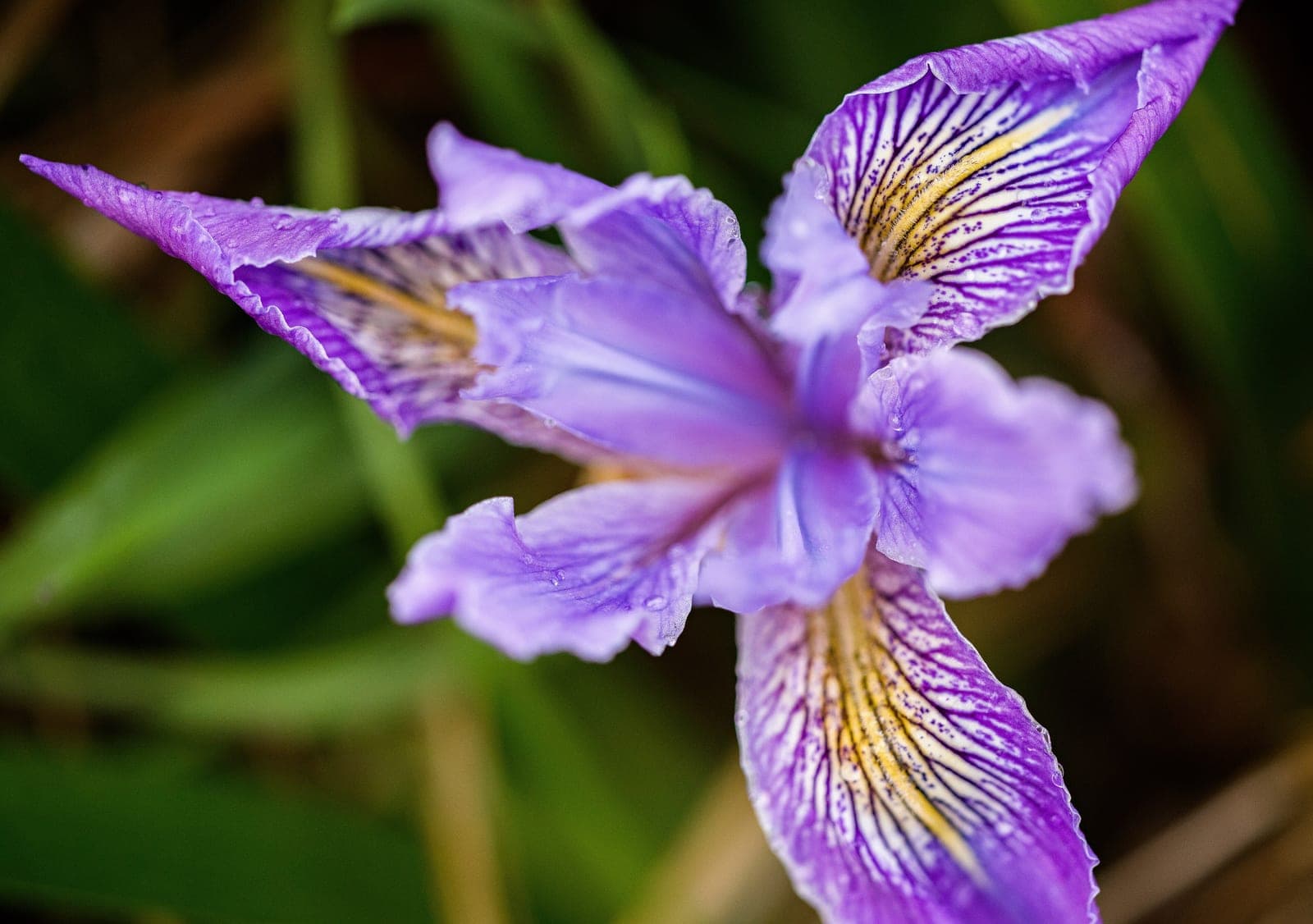
Iris tenax is a native perennial iris endemic to the Pacific Northwest, found in open meadows, grasslands, and oak woodland edges across Oregon and southwestern Washington. It produces violet to lavender flowers in spring on stems 6–14 inches tall, with narrow, grass-like foliage that persists through the growing season. It suits native plant gardens and droughty slopes where bearded iris and garden hybrids typically fail.
Once established, Oregon Iris is highly drought tolerant and performs best in lean, well-drained soils. Rich soil or heavy fertilization produces lush but floppy growth with fewer flowers. Rhizomes should be planted shallowly with the tops at or just at the soil surface. Clumps benefit from division every three to four years in late summer after the bloom period to maintain vigor. The species naturalizes readily in Pacific Northwest meadow plantings and stabilizes slopes effectively.
Indigenous peoples of Oregon and Washington, including the Kalapuya, harvested the tough leaf fibers to make rope, fishing nets, snares, and basket material. The Latin epithet tenax means tough or tenacious, a direct reference to that fiber strength. No significant medicinal applications are documented for this species.
Ecoregions:Northwestern Forested MountainsMarine West Coast Forest
Fungal leaf spot
Brown or purplish spots on the leaves, often ringed with a yellow halo, that spread and merge in warm, humid, or wet weather; heavily spotted leaves yellow and drop early.
Pick off spotted leaves and clear fallen debris to remove overwintering spores. Improve air circulation by thinning, and water at the base so foliage dries quickly. If it persists, apply a copper- or sulfur-based fungicide at the first sign.
Botrytis (grey mould)
Grey fuzzy mould on petals and stems, worst in cool wet conditions.
Remove affected parts immediately. Improve air circulation. Avoid overhead watering. Apply copper fungicide if severe.
Bacterial Soft Rot
Rhizomes turn mushy and foul-smelling; foliage yellows and pulls away easily at the base. Often follows borer damage or overly wet soil.
Cut away all soft tissue back to firm rhizome, let it dry, and dust the cut with sulfur. Improve drainage and avoid burying rhizomes. Destroy badly infected plants.