
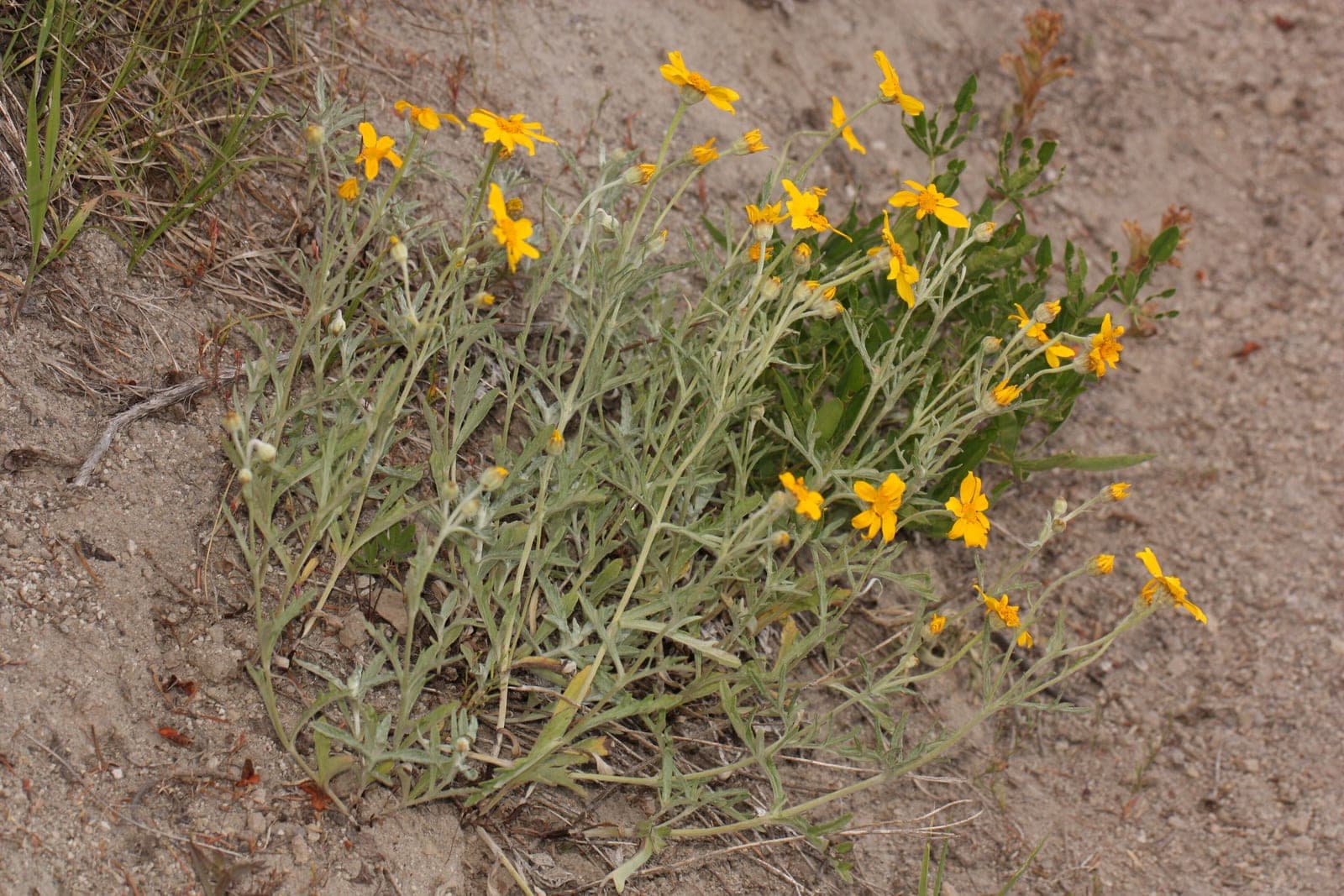
Eriophyllum lanatum is a native perennial forb ranging from the coast ranges of California north through Oregon and Washington and east into the Rocky Mountains. It produces dense clusters of bright yellow daisy-like flowers above silvery, woolly foliage. Gardeners in the West value it for dry slopes, rock gardens, and native habitat plantings where few ornamentals perform without supplemental irrigation.
Plant in fast-draining soil in full sun. Once established it tolerates extended summer drought and lean, sandy or gravelly soils. Plants are short-lived in heavy clay or high-rainfall gardens, but self-sow freely where conditions suit. Cutting back after the main flush can prompt secondary growth. Avoid overhead watering; persistent crown moisture promotes rot. Prefers a neutral to slightly acidic soil pH and performs best with no added fertilizer.
The plant supports native bees, small butterflies, and beneficial wasps with accessible pollen and nectar. Deer resistant and tolerant of coastal conditions, it is used in erosion control and habitat restoration across the Pacific states.
Ecoregions:Northwestern Forested MountainsMarine West Coast ForestNorth American DesertsMediterranean California
Powdery mildew
White or grey powdery coating on leaves - usually starting on older growth in humid conditions or when nights cool.
Improve air circulation by thinning plants. Apply neem oil or potassium bicarbonate spray at first sign. Avoid overhead watering.
Phytophthora Root Rot
Wilting despite moist soil, yellowing leaves, stunted growth, and dark, decayed roots and crown tissue. Vines may collapse during hot weather.
Plant in well-draining soil and avoid waterlogging. Remove and destroy affected vines. Improve drainage with raised beds or amended soil and avoid overwatering.