
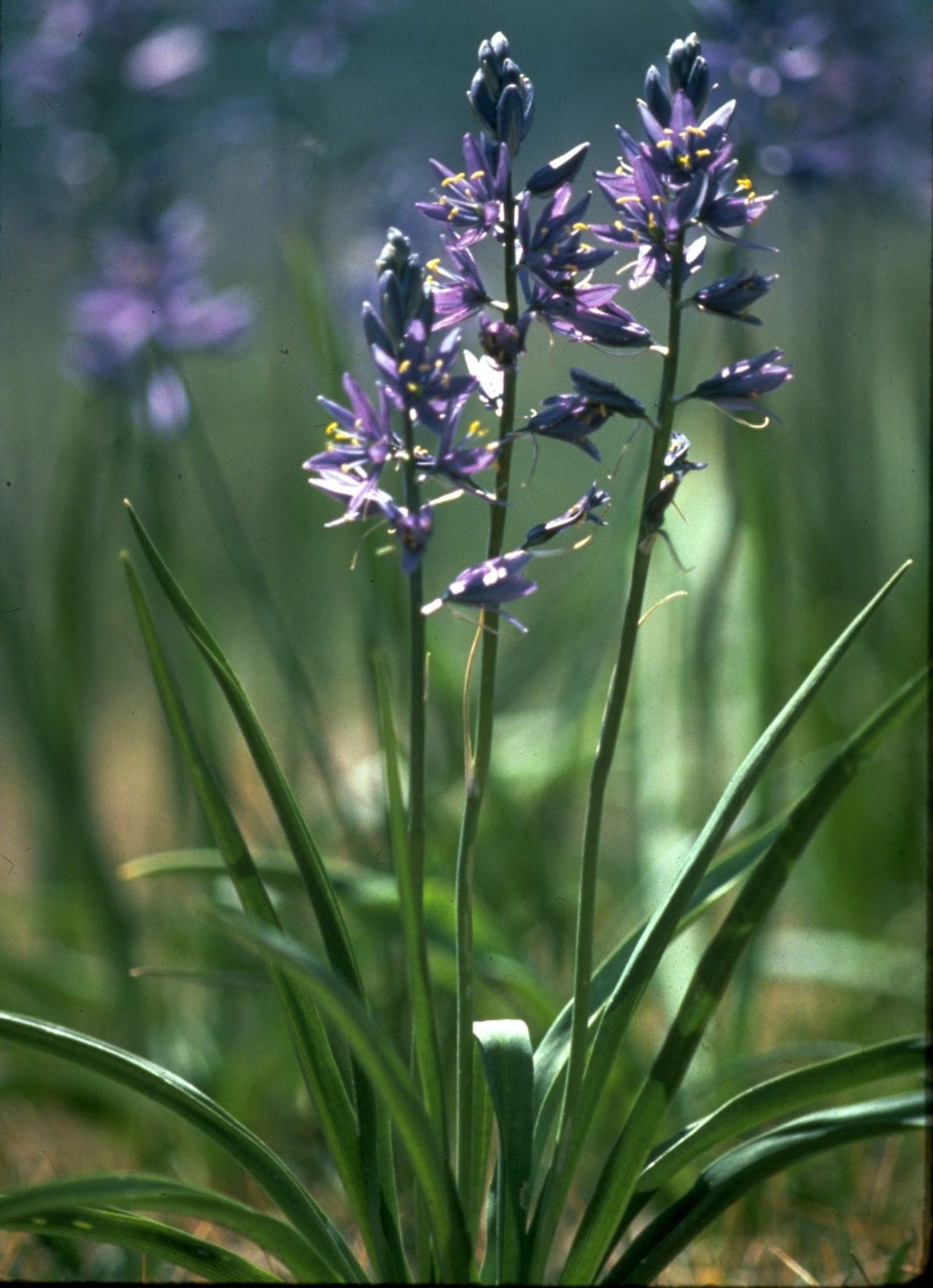
Camassia quamash is a spring-blooming perennial corm native to moist prairies, meadows, and open woodlands from British Columbia to California and east to Montana and Utah. It produces upright stems lined with pale to deep blue-violet flowers in mid-spring and naturalizes readily into rain gardens, lawn meadows, and low-maintenance native plantings.
Plants grow from fleshy corms planted in fall. They need consistent moisture from fall through spring but tolerate summer drought during dormancy. Camassia performs well in heavy clay soils and seasonally wet areas where most bulbs would rot. Colonies spread slowly by corm offsets and self-seeding; leaving seed heads intact encourages naturalization. Ideal soil pH is 6.0–7.0. Corms planted shallower than 3 inches are prone to frost heaving in zones 4–5; mulching in late fall helps stabilize soil temperature.
Camassia quamash corms were among the most important carbohydrate sources for Indigenous peoples across the Pacific Northwest, including the Nez Perce, Blackfoot, Kalapuya, and many Coast Salish peoples. Corms were pit-roasted or steam-cooked to convert inulin to fructose, then dried for winter storage or traded across wide territories. Access to camas prairies was central to territorial economies and a factor in the 1863 Nez Perce treaty conflicts. Any gardener harvesting corms must distinguish this species from death camas (Anticlea elegans), which grows in similar habitats; death camas produces white to cream flowers and is toxic.
Ecoregions:Northwestern Forested MountainsMarine West Coast ForestNorth American Deserts
Bacterial Soft Rot
Rhizomes turn mushy and foul-smelling; foliage yellows and pulls away easily at the base. Often follows borer damage or overly wet soil.
Cut away all soft tissue back to firm rhizome, let it dry, and dust the cut with sulfur. Improve drainage and avoid burying rhizomes. Destroy badly infected plants.
Crown Rot
Lower leaves yellow and wilt; the base of the rosette turns brown and soft, sometimes with white fungal threads at the soil line. Plants collapse in wet conditions.
Remove and destroy affected plants. Improve drainage and avoid overhead watering. Do not mulch directly against the crown. Space plants for airflow and avoid replanting in the same wet spot.