
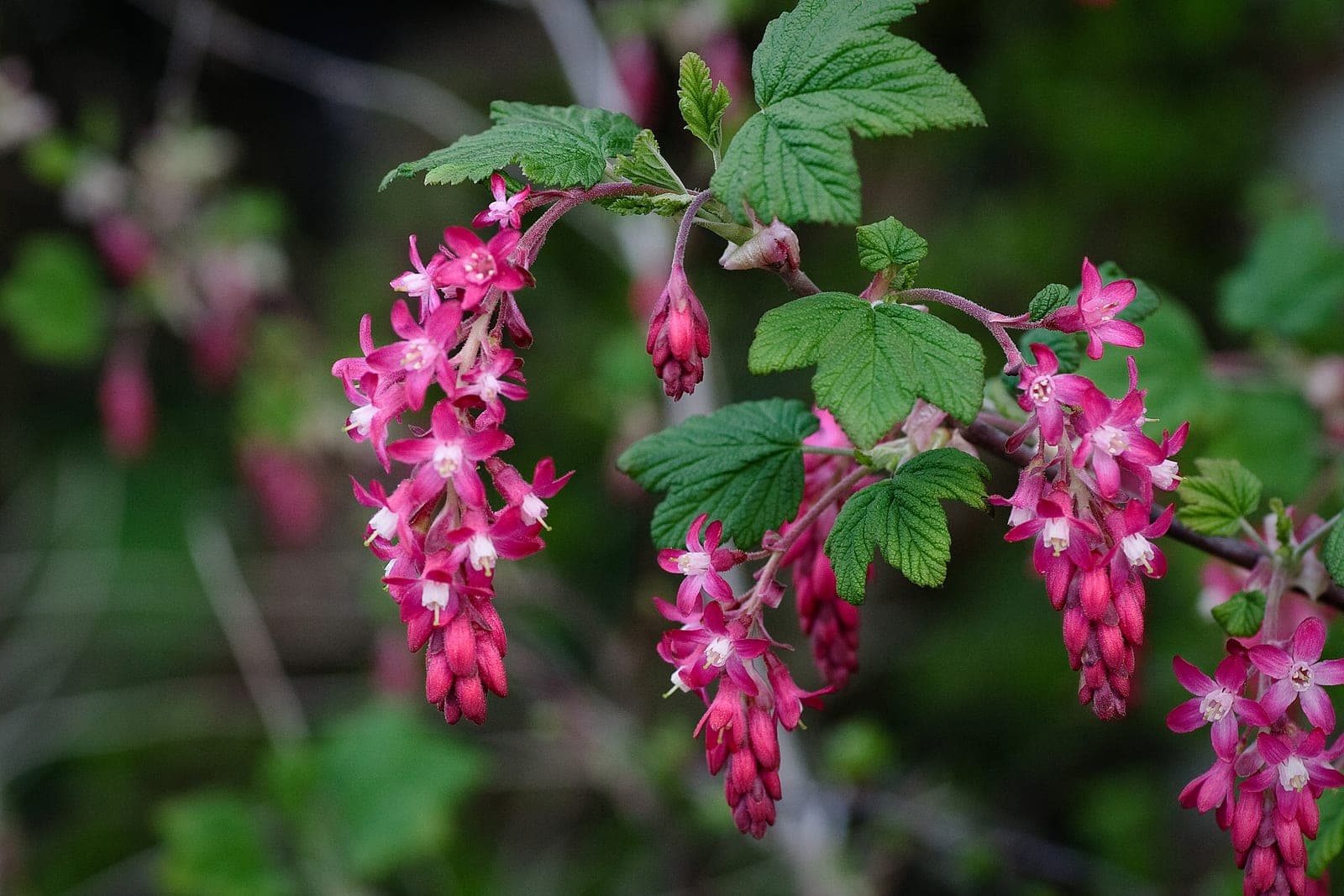
Ribes sanguineum is a deciduous shrub native to the Pacific Coast ranges from British Columbia south to northern California. It produces dense, pendulous clusters of deep pink to red tubular flowers in early spring, often before its leaves fully emerge, making it one of the earliest significant nectar sources of the season. Berries ripen to blue-black with a waxy bloom by late summer and are consumed readily by birds; they are edible for humans but low in flavor compared to cultivated currants.
The shrub is well adapted to the dry summers of the Pacific Northwest and becomes drought tolerant after its first two seasons. It performs best in well-drained soil and benefits from annual removal of the oldest canes after its spring display to prevent legginess. Ribes sanguineum is an alternate host for Cronartium ribicola, the pathogen causing white pine blister rust; planting near five-needled pines is regulated or discouraged in several western states. Suckers can be removed for a tidy form or left to develop a naturalistic thicket. Tolerates coastal conditions including salt spray and partial fog.
Native peoples of the Pacific Northwest used bark decoctions as a general tonic and blood purifier, and the berries were eaten fresh or dried and occasionally worked into preserves. The shrub is a key early-season resource for Anna's and rufous hummingbirds and supports native mason bees before most other woody plants have broken dormancy.
Ecoregions:Northwestern Forested MountainsMarine West Coast ForestMediterranean California
Powdery mildew
White or grey powdery coating on leaves - usually starting on older growth in humid conditions or when nights cool.
Improve air circulation by thinning plants. Apply neem oil or potassium bicarbonate spray at first sign. Avoid overhead watering.
White Pine Blister Rust
Orange-yellow spore pustules appear on the undersides of leaves in late summer, followed by yellowing and premature leaf drop on the currant. On nearby five-needled pines, look for elongated sunken cankers with blistered bark producing white or orange spore masses.
Remove and destroy all infected leaves; do not compost. Avoid siting Ribes within several hundred feet of five-needled pines such as eastern white pine, western white pine, and sugar pine. Preventive copper-based fungicide applied at bud break can reduce spore load on the currant in high-risk areas. No curative treatment reverses established infection on pines. Check state and provincial regulations, as Ribes planting may be restricted in some jurisdictions to protect commercial timber.
Cane Anthracnose
Small purple spots on young canes that enlarge into gray, sunken lesions with purple borders. Severe infections weaken canes and reduce fruit quality.
Prune and destroy infected canes. Improve air circulation by thinning. Apply lime sulfur during dormancy before bud break. Avoid overhead watering.