
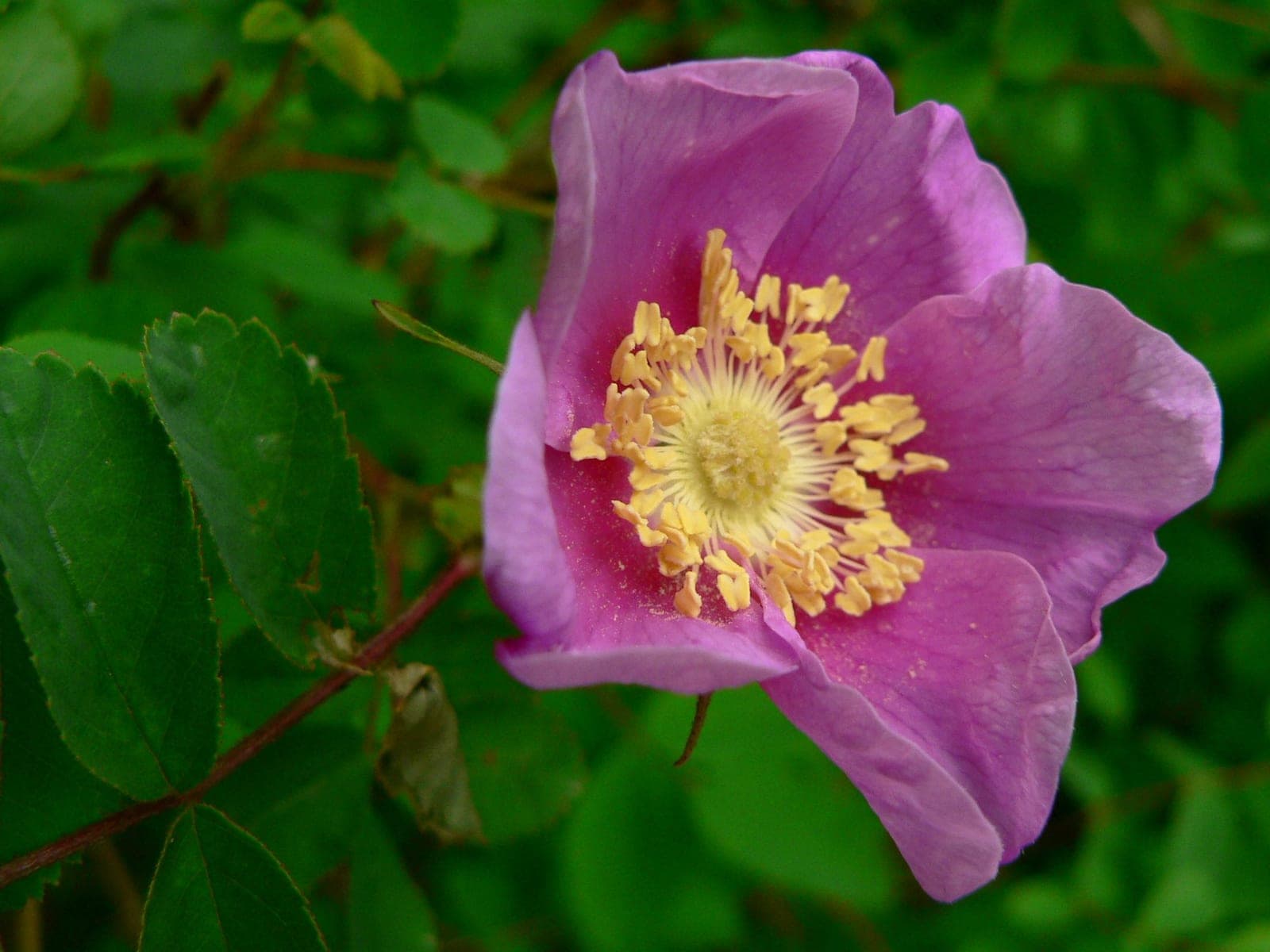
Nootka rose is a native shrub of western North America, ranging from Alaska south to California and east to the Rocky Mountains. It produces single pink flowers in late spring and large red hips that persist well into winter, making it a strong choice for wildlife plantings, hedgerows, and naturalistic gardens.
This shrub spreads by root suckers and can build dense thickets over time - useful for bank stabilization and erosion control, but requiring mowing or edging at the perimeter to keep it contained in smaller spaces. It tolerates clay soils, seasonal flooding, coastal salt spray, and a soil pH of 5.5–7.0. Mulching the root zone in the first year improves establishment on drier sites. Coldest winters in zone 4 do not damage established plants.
Rose hips are high in vitamin C and have been eaten fresh, dried, and made into syrups, teas, and jellies by Indigenous peoples throughout the plant's range. The petals are edible and were used as a mild astringent for skin irritation. Contemporary herbal use focuses on the hips for immune support and anti-inflammatory applications.
Growing roses? Read the Rose Care Calendar - pruning by class, feeding, pests, climbers, and growing for hips, timed to your frost dates.Ecoregions:Northwestern Forested MountainsMarine West Coast ForestNorth American Deserts
Rose Black Spot
Round black spots with fringed edges on leaves, often surrounded by yellowing. Affected leaves drop early, weakening the plant.
Remove and destroy infected leaves and fallen debris. Avoid overhead watering. Apply a fungicide labeled for black spot at first sign and repeat per label. Choose resistant varieties and space plants for airflow.
Powdery mildew
White or grey powdery coating on leaves - usually starting on older growth in humid conditions or when nights cool.
Improve air circulation by thinning plants. Apply neem oil or potassium bicarbonate spray at first sign. Avoid overhead watering.
Rust
Orange to brown raised pustules on the undersides of leaves, with yellow spotting on the upper surface. Heavy infections cause leaves to yellow and drop.
Remove and destroy infected leaves. Avoid overhead watering and improve air circulation. Apply a sulfur or copper-based fungicide if it spreads. Clear plant debris in fall.
Rose Crown Gall
Rough, corky galls form on roots, the crown, or lower stems. Galls begin small and pale, enlarge irregularly, and turn brown and woody with age. Affected plants show reduced vigor and stunted new growth.
No chemical cure exists once a plant is infected. Remove and destroy infected plants; do not compost galled material. Sterilize cutting tools with a 10% bleach solution between uses. Avoid wounding roots during planting or cultivation. Source certified disease-free stock and replant in uninfested soil.