
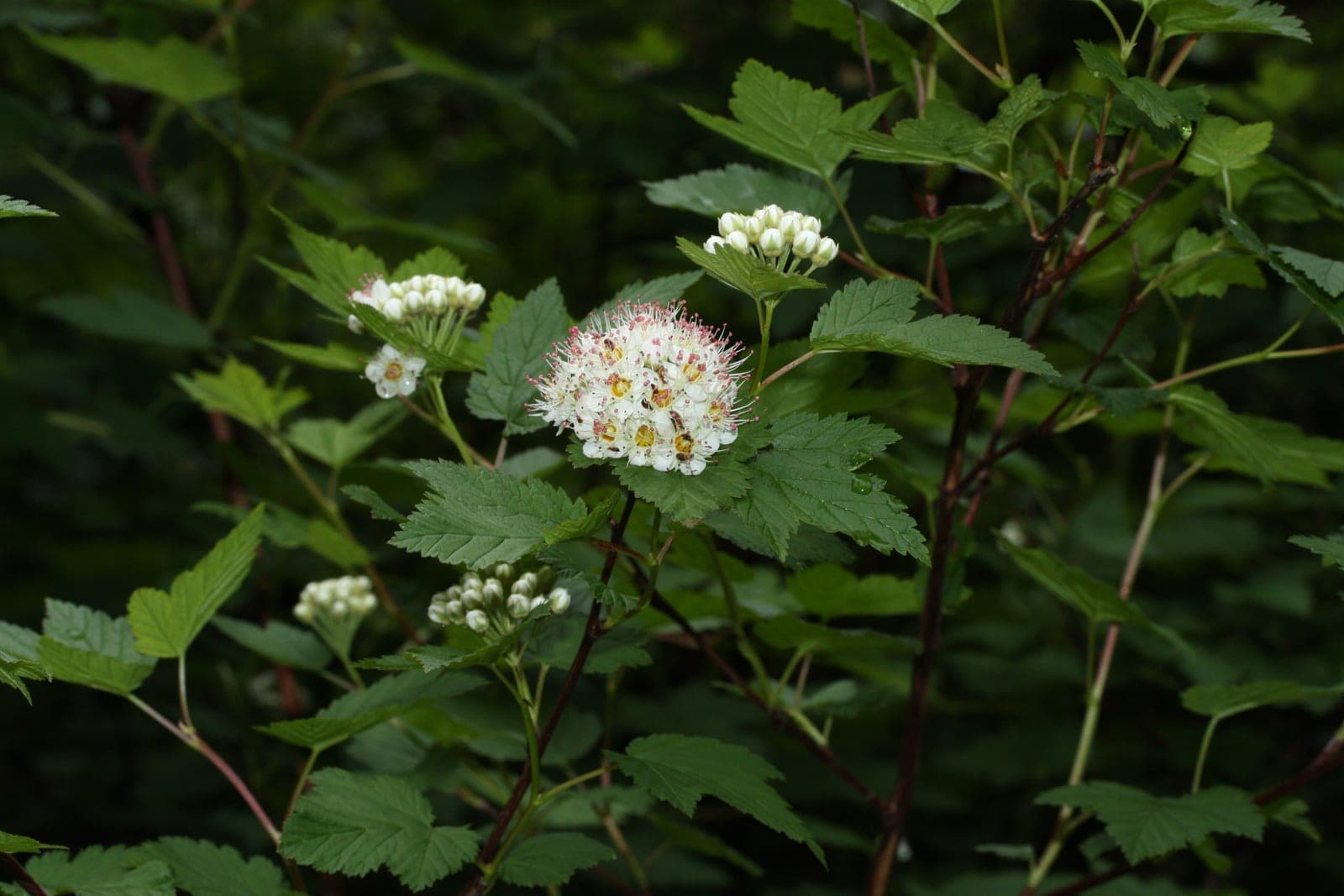
Pacific Ninebark is a large deciduous shrub native to stream banks, moist ravines, and forest margins from southern Alaska to northern California. It produces dense clusters of small white flowers in late spring that attract native bees, followed by reddish papery seed clusters that persist into fall and provide food for birds. The bark peels in multiple thin layers to reveal reddish-brown inner bark, which gives the plant its common name and adds structure through winter.
It is well suited to rain gardens, riparian restoration, and low-lying spots with seasonal flooding where other shrubs fail. Established plants tolerate moderate summer drought in coastal climates but need consistent moisture through the first two growing seasons. It spreads by root suckers and forms dense thickets in moist sites; remove suckers regularly where spread is not wanted. A 3–4 inch mulch layer retains root moisture and suppresses competing vegetation. Soil pH of 5.5–7.0 suits it well, and it adapts to the clay-heavy soils common to Pacific Northwest lowlands.
Ecoregions:Northwestern Forested MountainsMarine West Coast ForestMediterranean California
Powdery mildew
White or grey powdery coating on leaves - usually starting on older growth in humid conditions or when nights cool.
Improve air circulation by thinning plants. Apply neem oil or potassium bicarbonate spray at first sign. Avoid overhead watering.
Fire Blight
Water-soaked, wilting blossoms and young stems that rapidly turn brown to black. Infected shoot tips curl into a characteristic shepherd's crook. Bark beneath the infection may show reddish-brown discoloration.
Prune infected wood 8–12 inches below visible symptoms during dry weather. Sterilize tools with 70% isopropyl alcohol or a 10% bleach solution between cuts. Avoid high-nitrogen fertilizers that produce soft, disease-susceptible growth. Copper-based bactericides applied at early flowering can reduce spread in high-pressure years.
Fungal leaf spot
Brown or purplish spots on the leaves, often ringed with a yellow halo, that spread and merge in warm, humid, or wet weather; heavily spotted leaves yellow and drop early.
Pick off spotted leaves and clear fallen debris to remove overwintering spores. Improve air circulation by thinning, and water at the base so foliage dries quickly. If it persists, apply a copper- or sulfur-based fungicide at the first sign.