
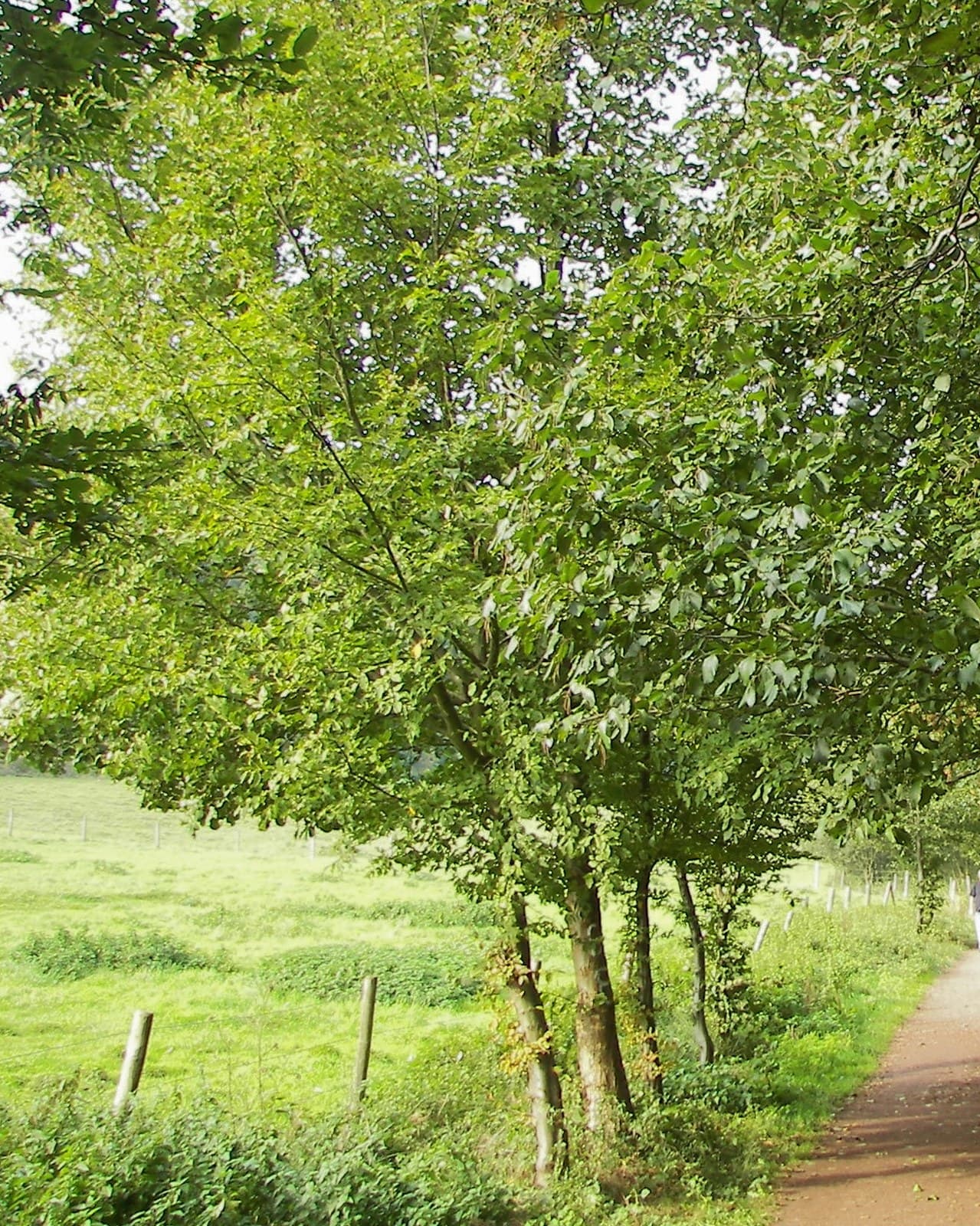
Gray alder (Alnus incana) is a multi-stemmed deciduous tree in the birch family, native to wetlands, streambanks, and riparian edges across the cooler Northern Hemisphere. It thrives in waterlogged and periodically flooded soils where few trees survive, making it a practical choice for bioswales, wet buffer zones, and streambank erosion control.
Like all alders, it forms root nodules with Frankia bacteria that fix atmospheric nitrogen, steadily improving soil fertility for surrounding plants. It spreads gradually by root runners and is a reliable pioneer species for stabilizing disturbed, wet ground. Male catkins form in late summer, persist through winter, and release pollen in early spring before leaves emerge, serving early-flying insects. Small woody seed cones remain on bare stems through winter, adding structural interest. Sucker management determines whether the plant develops as a tight multi-stem clump or a broader colony. Prefers slightly acidic to neutral pH and performs well in heavy clay that would exclude most ornamental trees.
The bark of Alnus species has a documented history of use in European and Native American herbal traditions. It is rich in tannins and contains compounds with astringent and anti-inflammatory properties, used historically for fever, toothache, and skin irritations.
On the Pacific coast the native alder is red alder, and along southwestern streams Arizona alder. In the Rockies, this species grows as thinleaf alder.
Ecoregions:TaigaNorthern ForestsNorthwestern Forested MountainsMarine West Coast ForestEastern Temperate ForestsGreat PlainsNorth American DesertsTemperate Sierras
Phytophthora Root Rot
Wilting despite moist soil, yellowing leaves, stunted growth, and dark, decayed roots and crown tissue. Vines may collapse during hot weather.
Plant in well-draining soil and avoid waterlogging. Remove and destroy affected vines. Improve drainage with raised beds or amended soil and avoid overwatering.
Fungal leaf spot
Brown or purplish spots on the leaves, often ringed with a yellow halo, that spread and merge in warm, humid, or wet weather; heavily spotted leaves yellow and drop early.
Pick off spotted leaves and clear fallen debris to remove overwintering spores. Improve air circulation by thinning, and water at the base so foliage dries quickly. If it persists, apply a copper- or sulfur-based fungicide at the first sign.
Rust
Orange to brown raised pustules on the undersides of leaves, with yellow spotting on the upper surface. Heavy infections cause leaves to yellow and drop.
Remove and destroy infected leaves. Avoid overhead watering and improve air circulation. Apply a sulfur or copper-based fungicide if it spreads. Clear plant debris in fall.
Cytospora Canker
White or blue-white pitch masses ooze from bark on lower branches and the trunk. Affected branches die back progressively from the tip inward; bark beneath the resin is discolored brown and may have a resinous, sunken appearance.
Prune infected branches well below the canker margin into healthy wood and destroy all cuttings. Sterilize pruning tools with 70% isopropyl alcohol between each cut. No effective fungicide is available; prevent recurrence by avoiding drought stress, soil compaction, and mechanical bark injury.