
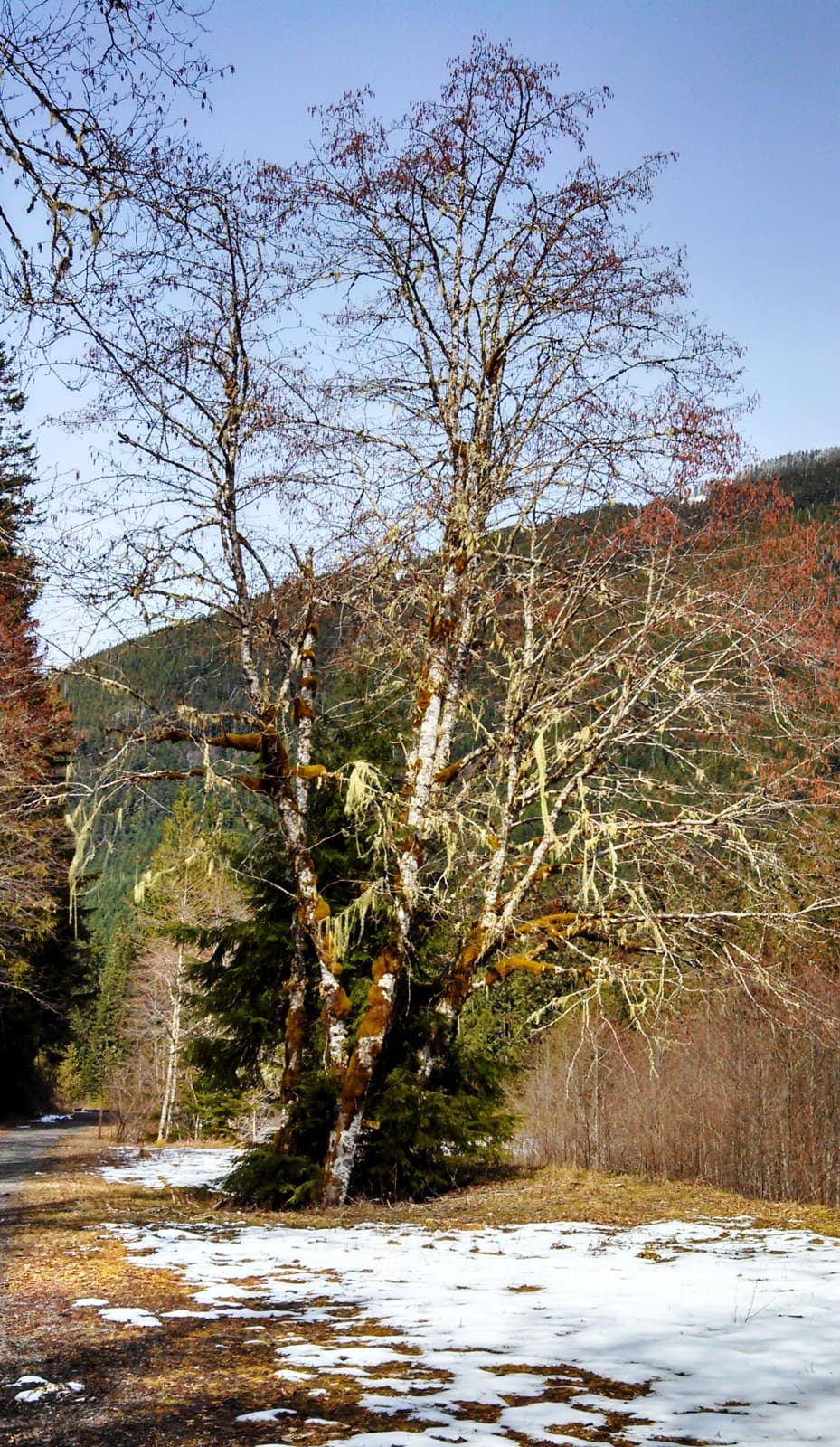
Red Alder is the largest native alder in North America and the dominant hardwood of the Pacific Northwest coastal lowlands. It establishes quickly on moist and disturbed ground, making it the most practical choice for riparian buffers, stream bank stabilization, and habitat restoration across the region.
Through Frankia bacteria in root nodules, red alder fixes atmospheric nitrogen and steadily improves soil fertility-functioning as a nurse tree for the conifers and hardwoods that succeed it in forest succession. Growth rates of 3–5 feet per year are common in youth; the tree matures and declines within 60–100 years. Inner bark turns distinctly red-orange when cut, which gives the species its Latin name. Plant in full sun on consistently moist to wet, acidic soil. In landscapes, maintain organic mulch over the root zone but keep it clear of the trunk to reduce collar rot risk. This tree does not perform well on dry, upland sites.
Pacific Northwest Indigenous peoples used the bark to treat fever, pain, toothache, and skin inflammation; it contains salicin, a precursor to aspirin. The wood produces a mild, slightly sweet smoke that remains the traditional and widely preferred fuel for curing Pacific salmon and other fish.
Inland and across the Rockies, plant gray alder instead; along southwestern streams, Arizona alder.
Ecoregions:Northwestern Forested MountainsMarine West Coast ForestMediterranean California
Phytophthora Root Rot
Wilting despite moist soil, yellowing leaves, stunted growth, and dark, decayed roots and crown tissue. Vines may collapse during hot weather.
Plant in well-draining soil and avoid waterlogging. Remove and destroy affected vines. Improve drainage with raised beds or amended soil and avoid overwatering.
Armillaria Root Rot
Thinning, yellowing canopy with progressive dieback; white, fan-shaped mycelial mats visible beneath bark at or just below the soil line; honey-colored mushroom clusters appearing at the trunk base or on surface roots in autumn.
No chemical cure exists. Improve drainage and avoid any injury to roots or trunk. Remove severely infected trees along with as much root material as possible. Do not replant susceptible species in the same spot.
Fungal leaf spot
Brown or purplish spots on the leaves, often ringed with a yellow halo, that spread and merge in warm, humid, or wet weather; heavily spotted leaves yellow and drop early.
Pick off spotted leaves and clear fallen debris to remove overwintering spores. Improve air circulation by thinning, and water at the base so foliage dries quickly. If it persists, apply a copper- or sulfur-based fungicide at the first sign.
Cytospora Canker
White or blue-white pitch masses ooze from bark on lower branches and the trunk. Affected branches die back progressively from the tip inward; bark beneath the resin is discolored brown and may have a resinous, sunken appearance.
Prune infected branches well below the canker margin into healthy wood and destroy all cuttings. Sterilize pruning tools with 70% isopropyl alcohol between each cut. No effective fungicide is available; prevent recurrence by avoiding drought stress, soil compaction, and mechanical bark injury.
Alder Tongue Gall
Catkin scales elongate into strap-shaped, waxy, tongue-like structures up to 2 inches long. Affected catkins are distorted and fail to release pollen or viable seed. Leaves may develop puckered, reddish-green blisters in heavy infections.
The disease is cosmetic and rarely threatens tree health. Remove and dispose of visibly infected catkins before spore release to reduce local inoculum. Improve canopy air circulation where feasible. No fungicide is warranted under typical conditions.