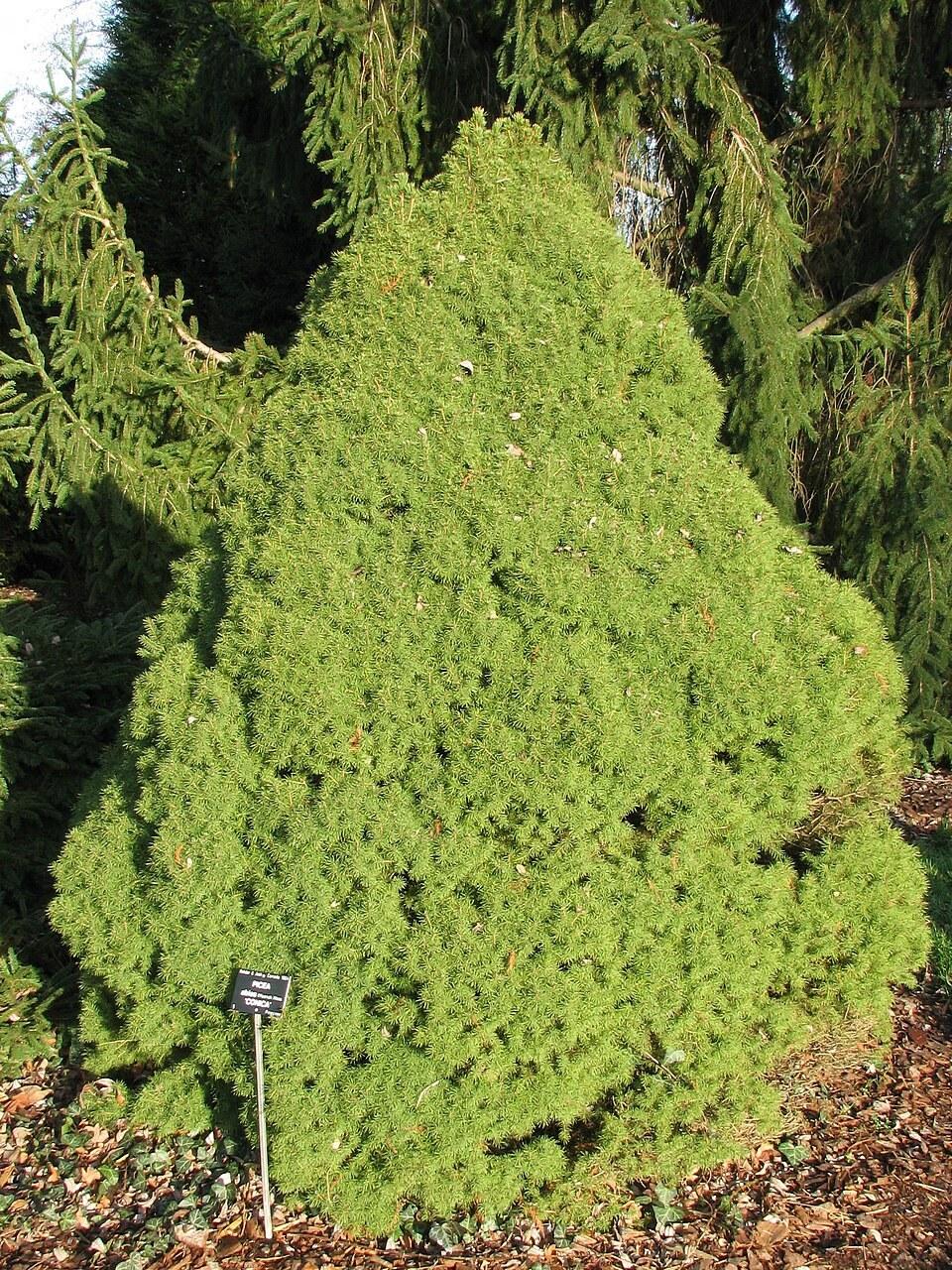
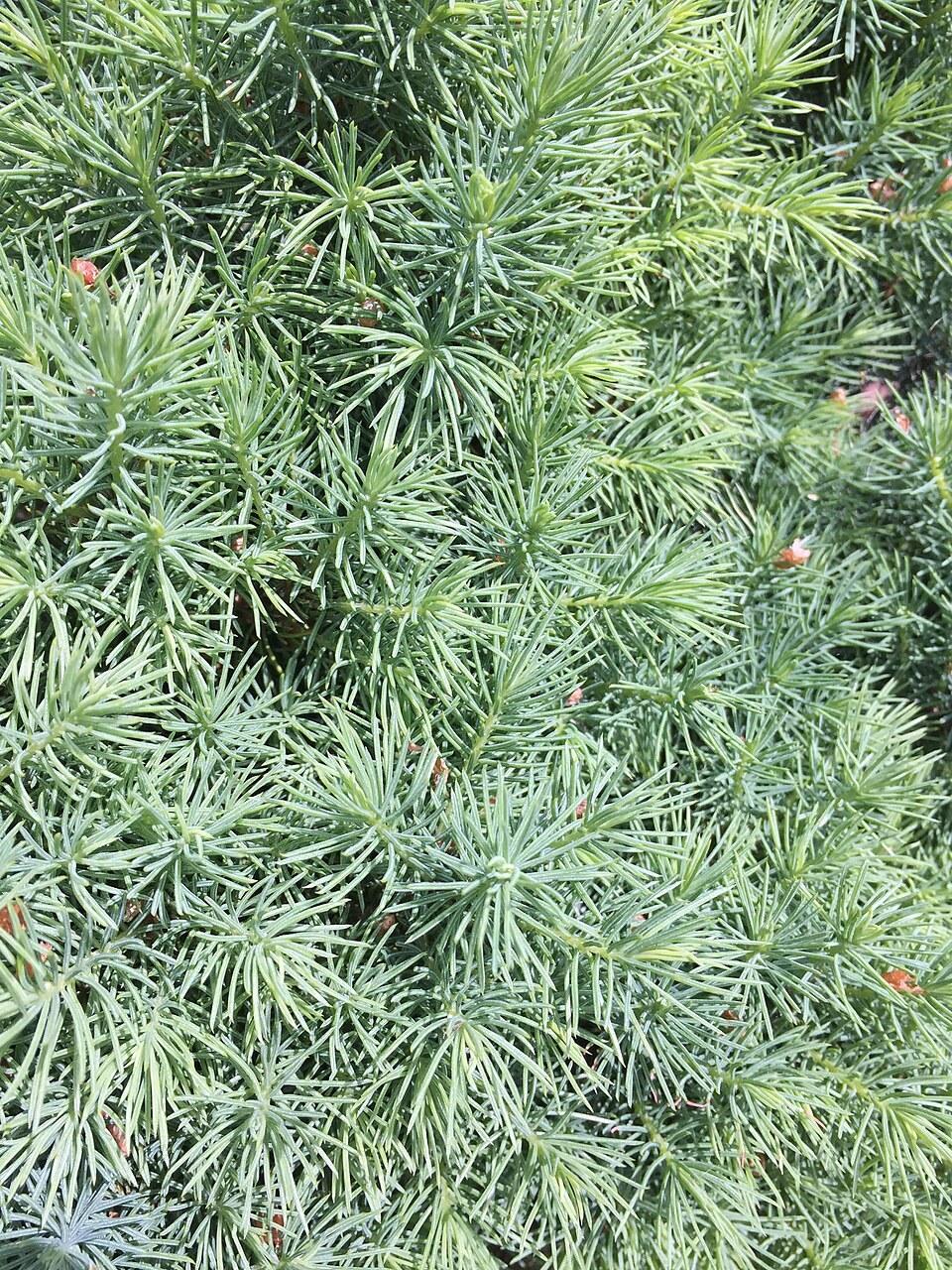
Dwarf Alberta spruce (Picea glauca 'Conica') is a naturally occurring dwarf of the white spruce, found near Lake Laggan in Alberta in 1904 and propagated from that one plant ever since. It grows as a tight, perfect cone of soft, bright green needles without any shearing, adding only 2 to 4 inches a year. Most garden plants stand 3 to 4 feet tall after ten years and 6 to 10 feet after several decades.
That slow, tidy shape makes it a standard for rock gardens, conifer collections, entry containers and formal pairs. It does best where summers are cool and the air moves: full sun, evenly moist soil that drains, and a spot away from walls and paving that reflect heat. In hot, dry or still sites, spruce spider mites bronze the needles from the inside of the plant outward, and the damage does not regrow.
In cold, exposed gardens the side facing winter sun and wind can burn brown, so site it out of the afternoon winter sun or wrap it in burlap for its first few winters. Now and then a plant throws a fast-growing shoot with longer needles, a reversion to the full-size species; cut it out at its base as soon as it appears or it will take over the cone.
Ecoregions:TundraTaigaNorthern ForestsNorthwestern Forested MountainsMarine West Coast ForestEastern Temperate ForestsGreat Plains
These dates are for Zone 6b. Enter your ZIP to time every job to your own frost dates.
- watch · Any time in fallWater well before the ground freezes and screen exposed plants with burlap against winter sun and wind.
- buy · Jan 2 - Jan 16Order plants - about two months before planting
- plant · Mar 13 - Apr 10Plant container-grown stock in full sun with good air movement, away from hot walls; mulch to keep the roots cool and moist.
- watch · Any time in springTap a branch over white paper to check for spruce spider mites; hose the interior of the plant hard with water if moving specks appear.
- cut · Any time in summerCut out any fast-growing shoot with longer needles at its base; these reversions to full-size white spruce will overtake the cone.
Problems & troubleshooting
Common problems
Rhizosphaera Needle Cast
Needles on inner and lower branches turn purple-brown in their second year and drop prematurely, leaving progressively bare branch sections that work upward through the canopy over multiple seasons. Rows of small black fungal fruiting bodies (pycnidia) are visible along needle undersides under a hand lens.
Apply chlorothalonil or copper-based fungicide when new needles reach half their final length; repeat 3–4 weeks later. Rake and remove fallen needles beneath the tree. Maintain adequate spacing for air circulation. Treat for 2–3 consecutive springs on heavily infected trees before evaluating recovery.
Cytospora Canker
White or blue-white pitch masses ooze from bark on lower branches and the trunk. Affected branches die back progressively from the tip inward; bark beneath the resin is discolored brown and may have a resinous, sunken appearance.
Prune infected branches well below the canker margin into healthy wood and destroy all cuttings. Sterilize pruning tools with 70% isopropyl alcohol between each cut. No effective fungicide is available; prevent recurrence by avoiding drought stress, soil compaction, and mechanical bark injury.