
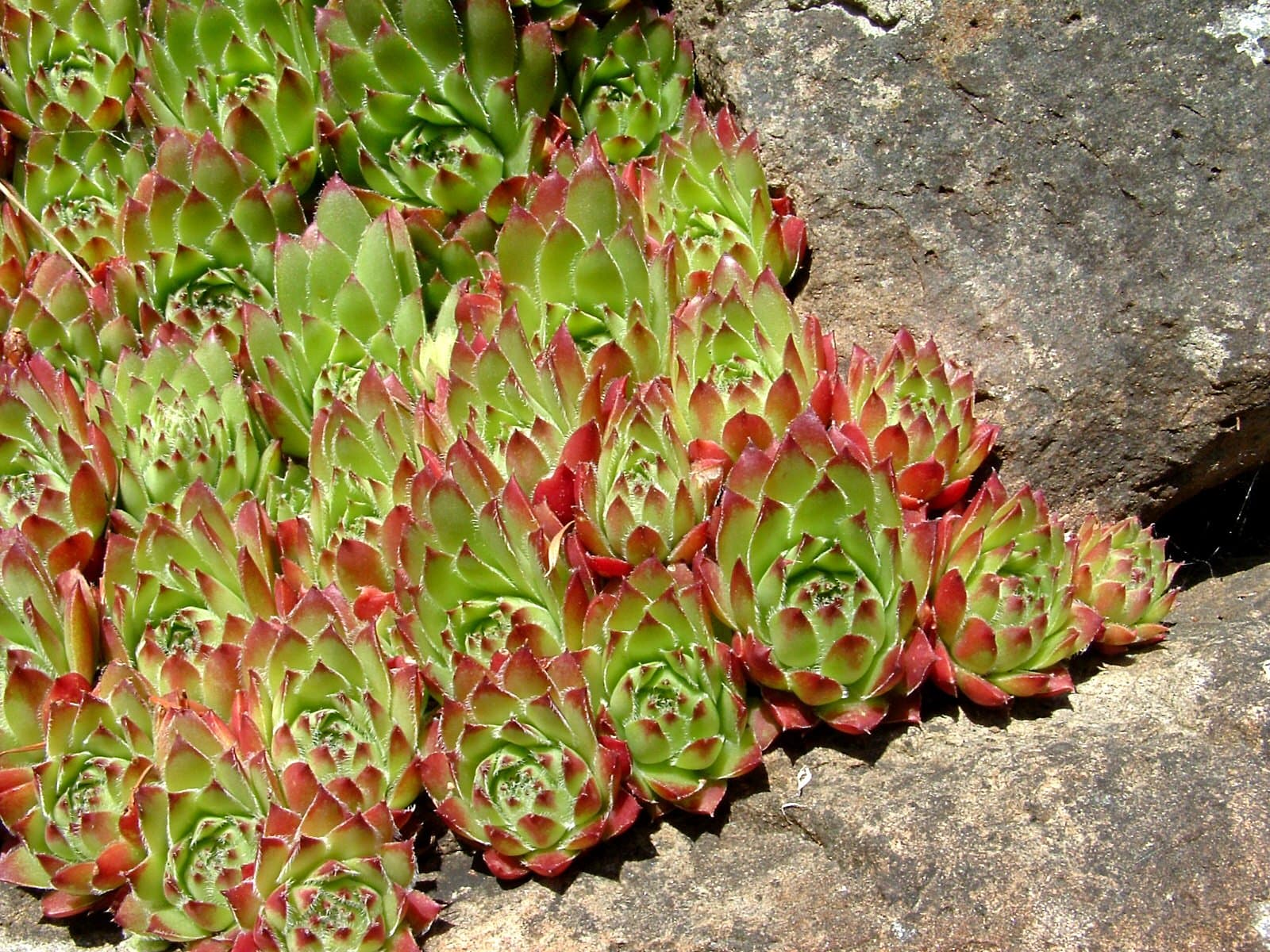
Sempervivum tectorum is a mat-forming succulent native to the mountains of southern Europe. It produces tight rosettes of fleshy leaves and spreads steadily by generating offsets - the chicks - around the parent hen. Extremely cold-hardy and drought-tolerant, it thrives in conditions that defeat most other plants: thin rocky soil, gravel, dry-stone walls, and roof tiles.
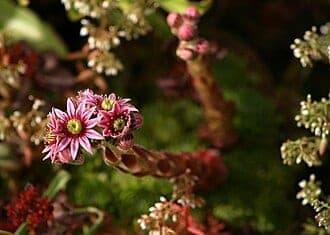
The parent rosette is monocarpic, meaning it dies after sending up a flower stalk. Before dying it generates multiple offsets that fill the gap, keeping established mats dense and self-renewing. Sharp drainage is the single most important growing requirement; crown rot in wet or heavy soil is the primary failure point. It works well in paving crevices, containers, and sloped beds where excess moisture drains freely. Prefers lean, gritty soil - fertility encourages loose, soft growth that is more susceptible to rot.
Romans planted Sempervivum on roof tiles in the belief that it protected buildings from lightning strikes; the species name tectorum means 'of rooftops.' The sap of the leaves has a long history in European folk medicine as a topical application for burns, minor skin irritations, and insect stings.
Crown Rot
Lower leaves yellow and wilt; the base of the rosette turns brown and soft, sometimes with white fungal threads at the soil line. Plants collapse in wet conditions.
Remove and destroy affected plants. Improve drainage and avoid overhead watering. Do not mulch directly against the crown. Space plants for airflow and avoid replanting in the same wet spot.
Root rot
Plants wilt, yellow, and stunt even in moist soil; lower stems and roots turn brown, soft, and mushy and the plant may collapse. Most common in heavy, wet, or poorly drained ground.
Improve drainage and stop overwatering, and never plant too deep. Lift and destroy badly affected plants along with the soil around the roots. Grow in raised or free-draining beds to prevent it returning.
Rust
Orange to brown raised pustules on the undersides of leaves, with yellow spotting on the upper surface. Heavy infections cause leaves to yellow and drop.
Remove and destroy infected leaves. Avoid overhead watering and improve air circulation. Apply a sulfur or copper-based fungicide if it spreads. Clear plant debris in fall.